

A low taper fade buzz cut pairs one short, even length on top with a soft blend that only kicks in near the ears and neckline. It’s become the default request for guys who want a sharp look without a daily styling routine. This guide breaks down every guard number, style variation, face shape pairing, and maintenance detail you actually need before your next barbershop visit.
Whether you’re walking in for your first buzz cut or switching from a higher fade, knowing the right vocabulary changes the outcome. We’ll cover 30 real style variations, how to talk to your barber, and what to expect as the cut grows out.
What is a Low Taper Fade Buzz Cut?
A low taper fade buzz cut is a short, uniform top paired with sides that fade gradually, starting just above the ear instead of higher up the head. The “buzz” part means the top is clipped to one length with a guard, usually somewhere between a #2 and a #4. The “low taper” part describes where the blend begins.
Because the fade stays close to the ear and neckline, most of the head keeps visible hair coverage. That’s different from a high or mid fade, where the contrast starts much closer to the crown and reads as bolder from a distance.
Why is this haircut trending in 2026/2027?
It’s trending because it solves a real scheduling problem: people want to look put-together without spending time on it every morning. A low taper fade buzz cut needs no blow dryer, no product routine, and barely any brushing.
Clipper technology has also gotten better at producing seamless blends, so barbers can execute a subtle low fade with fewer visible lines than a few years ago. That precision is part of why the style photographs so cleanly for social media and profile pictures alike.
Who should choose this haircut?
This cut suits almost anyone who wants low daily maintenance, but a few groups benefit the most. Athletes and anyone who’s active outdoors like it because short hair stays cooler and doesn’t need fixing after a workout.
Students and office workers also gravitate toward it since it reads as neat and professional without looking severe. If your hairline is starting to recede or thin, a uniform buzz length can make thinning patches far less noticeable than longer styles would.
What readers will learn in this guide
This guide walks through the difference between a plain buzz cut and a taper fade, then covers 30 real variations of the low taper fade buzz cut. You’ll also get a barber script, a full guard-number breakdown, and face shape and hair type pairings.
By the end, you’ll know exactly what to ask for, how to maintain the cut between visits, and which mistakes to avoid so the fade doesn’t grow out looking patchy.
What Is a Buzz Cut?
A buzz cut is a haircut where the hair is clipped to one uniform length across the entire head using electric clippers. There’s no blending or layering involved on top; every section gets run over with the same guard.
It’s fast to execute, needs almost no upkeep between trims, and works with almost any hair density. On its own, though, a plain buzz cut can look a little flat once it starts growing past the two-week mark — which is exactly why a buzz cut fade, low or otherwise, has become the more requested version at most barbershops.
What Is a Low Taper Fade?
A low taper fade is the technique that blends the sides and back from the buzzed top down toward the skin, but the transition only begins low on the head, generally right above the ear. Unlike a full fade, a true taper rarely goes all the way to bare skin; it usually stops at a very short length instead — which is what separates this from a straightforward buzz cut low fade version.
That distinction matters because a taper grows out far more gracefully than a fade that’s been taken to skin. The lack of a hard skin line means regrowth blends back in naturally instead of leaving an obvious ring around the head.
Why This Haircut Is So Popular
Pairing a taper with a buzz cut fixes the one weakness of a plain buzz: it adds definition without adding maintenance. The short, dense top contrasts just enough with the tapered sides to look intentional rather than accidental.
It also travels well between settings. The same cut looks appropriate in a boardroom, a gym, or a night out, which is part of why this buzz cut taper fade combination has stayed a top request across barbershops for several years running.
Also Read This Low Taper Fade Slick Back: 30 Best Styles for Men in 2026
Benefits of a Low Taper Fade Buzz Cut
- Minimal daily effort. No comb, no dryer, no product required to leave the house looking put together.
- Cooler in warm weather. Short hair breathes better during summer months or intense physical activity.
- Forgiving regrowth. Because the fade never reaches bare skin, it doesn’t look messy as quickly as a skin fade does.
- Works with thinning hair. A uniform short length disguises early hair loss better than most longer cuts.
- Cost-effective upkeep. Less product usage and simpler trims mean lower grooming costs over time.
30 Best Low Taper Fade Buzz Cut Styles
“Low taper fade buzz cut” isn’t one single haircut — it’s a category with real variation depending on top length, fade depth, and finishing details. Here are 30 versions worth knowing before your appointment.
Classic Low Taper Fade Buzz Cut
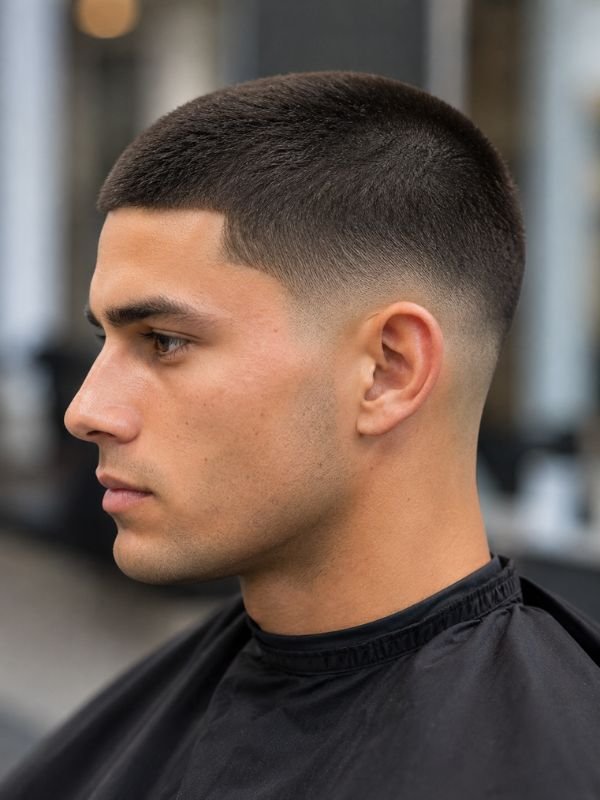
The baseline version uses a #2 or #3 guard on top with a soft blend that tapers down near the ears. It’s the go-to request for anyone who wants the style without any extra detailing.
Suitable Hair Type: Straight, thick, or lightly wavy hair. Styling Tip: No product needed — just towel-dry after washing.
Skin Fade Low Taper Fade Buzz Cut
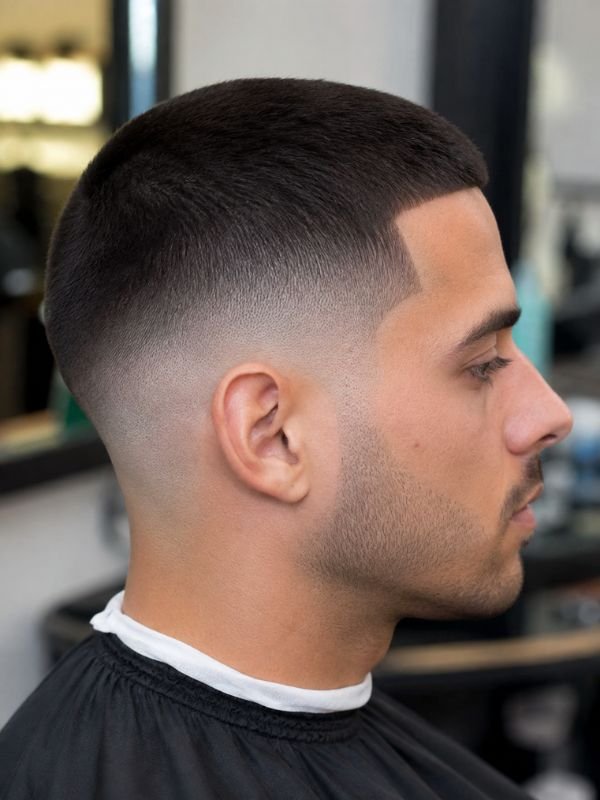
Here the taper is pushed all the way to bare skin right at the bottom edge, while the rest of the head keeps the low starting point. It creates more contrast than a standard taper without turning into a full high fade.
Suitable Hair Type: Works best on thicker hair, where the contrast against skin reads clearly. Styling Tip: Moisturize the exposed skin so it doesn’t look dry against the hair above it.
Military Low Taper Fade Buzz Cut
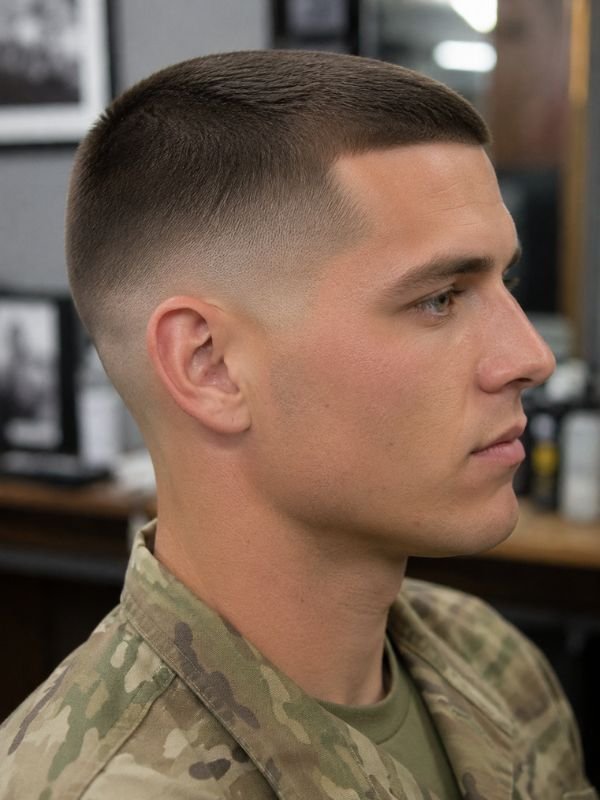
This version drops the top down to a #1 guard for a close, uniform look, with the low taper keeping it from reading as a purely regulation cut. It’s about as low-maintenance as a buzz cut gets.
Suitable Hair Type: Straight or fine hair that doesn’t need length to look full. Styling Tip: Skip products entirely; just rinse and go.
Crew Buzz Cut with Low Taper Fade
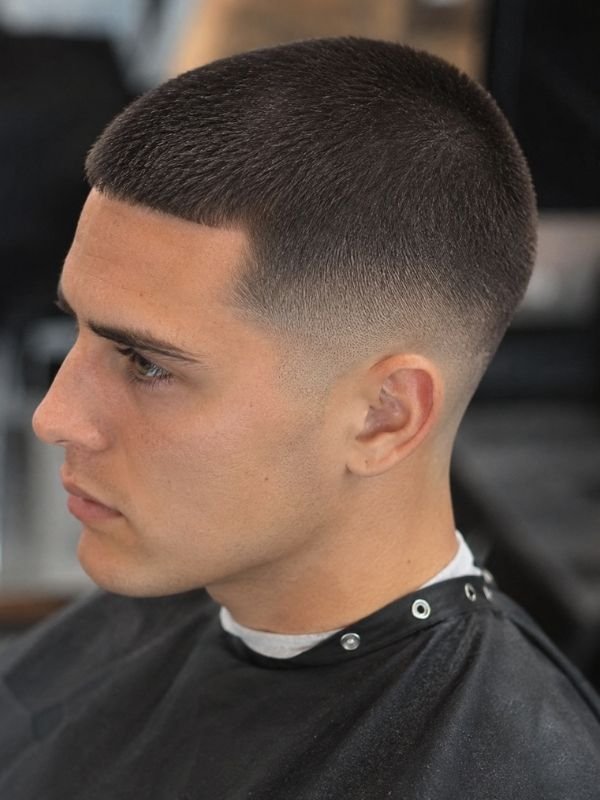
The top sits a little longer here, typically a #4, giving enough length to brush forward if you want a touch of shape. The low taper keeps the sides from looking bulky underneath.
Suitable Hair Type: Straight or wavy hair with decent density. Styling Tip: A light matte cream helps the slightly longer top hold its direction.
Textured Low Taper Fade Buzz Cut
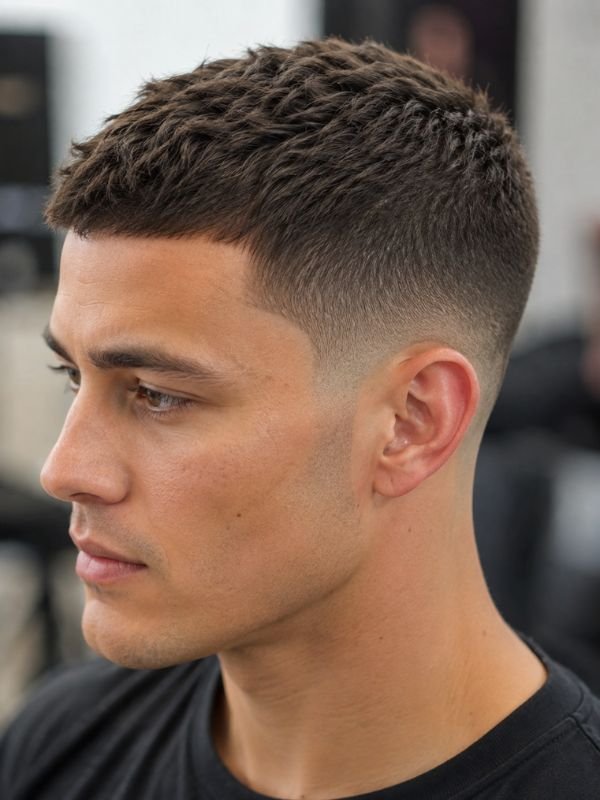
A barber uses scissor-over-comb or point cutting on top to break up the uniform buzz look, adding subtle movement instead of a flat surface. The fade underneath stays clean and low.
Suitable Hair Type: Thick or wavy hair holds texture better than very fine hair. Styling Tip: Work a small amount of clay through damp hair for definition.
Buzz Cut with Beard and Low Taper Fade
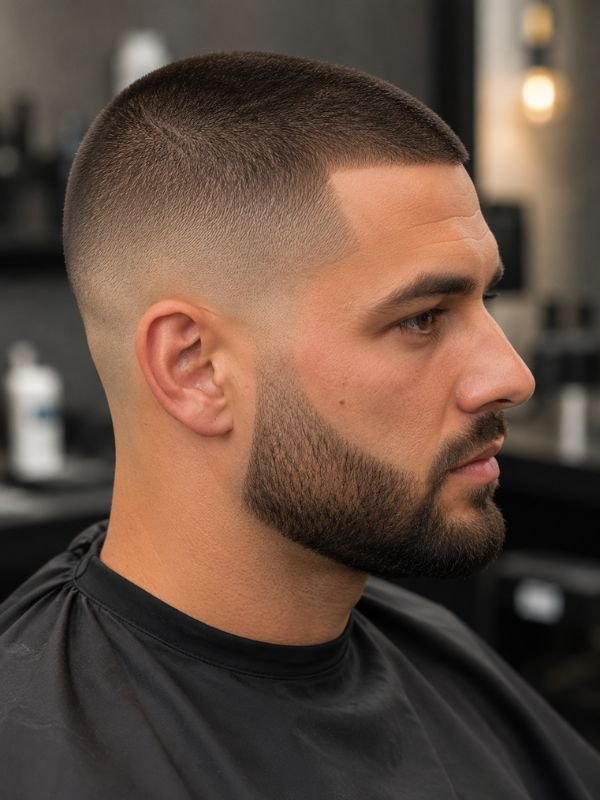
The sideburns fade out to nothing and connect directly into a groomed beard line, so the haircut and facial hair read as one continuous shape. It’s a popular pairing for anyone already keeping a beard.
Suitable Hair Type: Any hair type — the key requirement is beard growth to connect into. Styling Tip: Trim the beard on the same schedule as the haircut so the connection stays sharp.
Buzz Cut with Line Up and Low Taper Fade
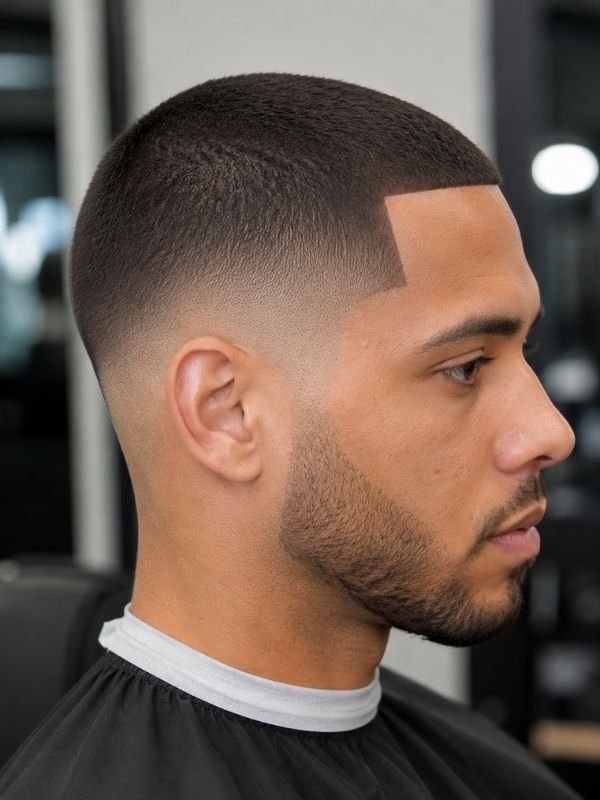
A crisp, straight edge gets cut along the front hairline and temple corners using a trimmer or razor, giving the front a defined border. Combined with the low taper, it looks sharper without adding much upkeep to the sides.
Suitable Hair Type: Thick or coarse hair holds a line-up shape the longest. Styling Tip: Keep the forehead area clean-shaven so the line stands out.
Blonde Low Taper Fade Buzz Cut
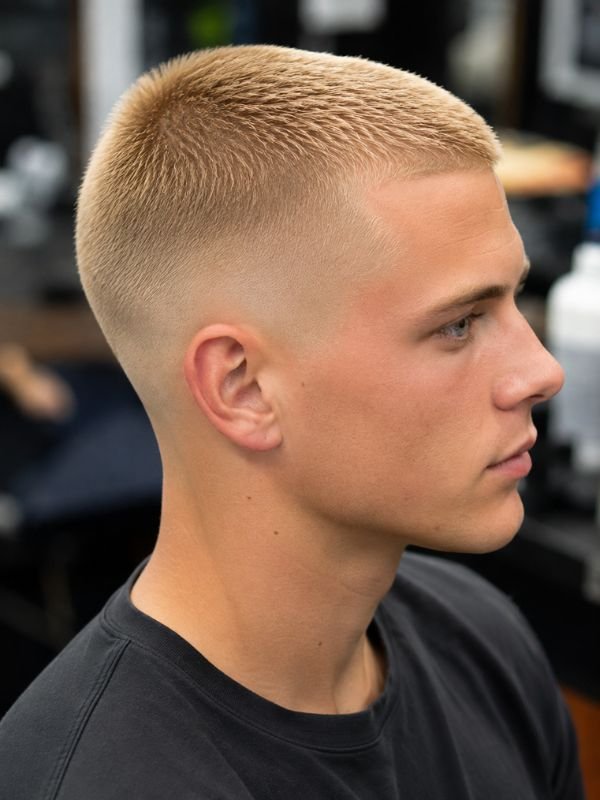
On lightened or naturally blonde hair, the contrast between the buzzed top and the fade softens quite a bit since there’s less color difference against the skin. It tends to read as more understated than the same cut on darker hair.
Suitable Hair Type: Naturally light hair or hair that’s been professionally lightened. Styling Tip: Use a purple or color-safe shampoo if the hair is color-treated, to keep tone even.
Curly Low Taper Fade Buzz Cut
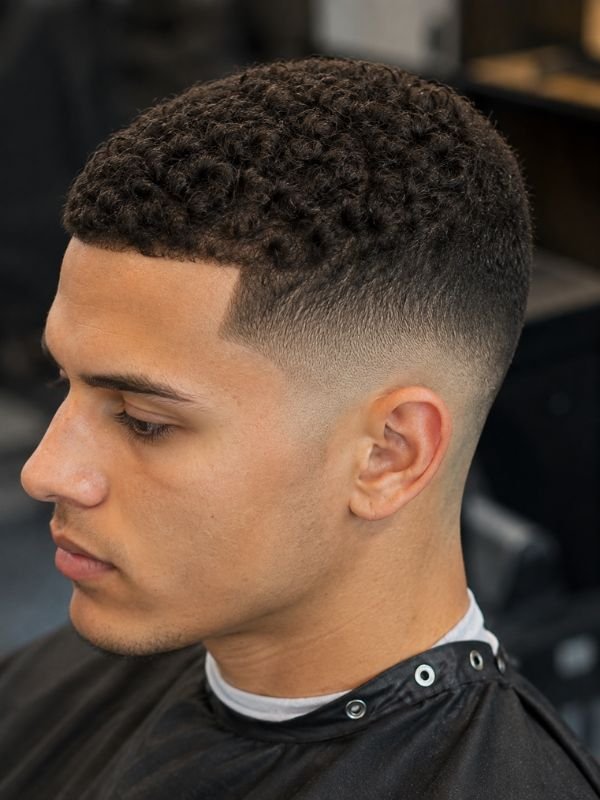
The top is left slightly longer than a standard buzz, usually a #3 or #4, to let natural curl pattern show instead of getting cut away entirely. The low taper cleans up the perimeter without disturbing the curl on top.
Suitable Hair Type: Curly or coily hair. Styling Tip: Apply a light leave-in cream on damp hair to keep curls defined instead of dry.
Straight Hair Low Taper Fade Buzz Cut
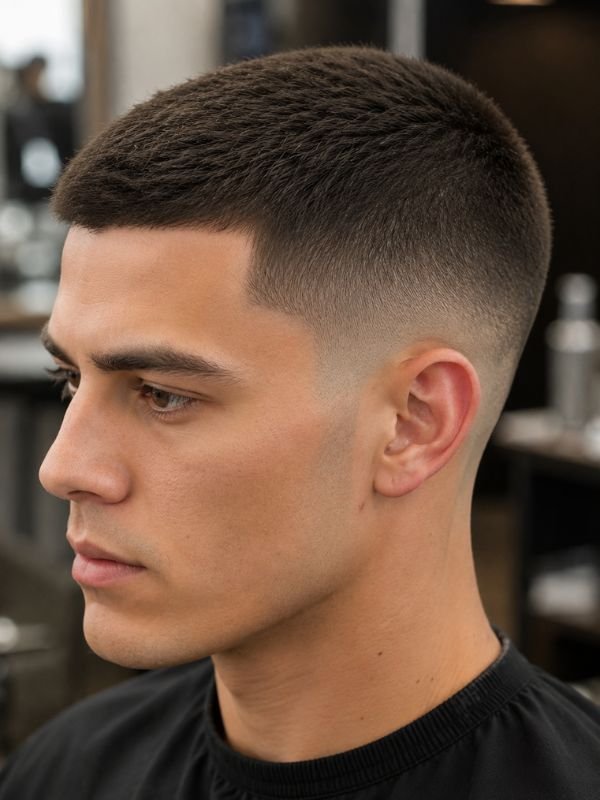
Straight hair lies flat naturally, which makes the line between the buzzed top and the tapered sides look especially crisp. This version tends to need the least product of any hair type.
Suitable Hair Type: Straight hair specifically. Styling Tip: Brush forward while damp if you want the top to sit even flatter.
Wavy Hair Low Taper Fade Buzz Cut
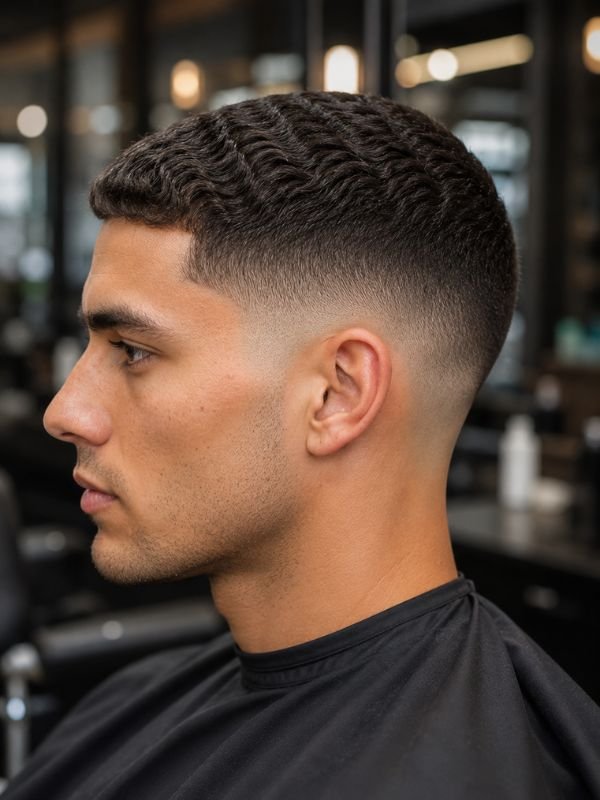
Waves add natural texture on top without needing any styling product, since the movement is already built into the hair. A #2 or #3 guard usually lets enough wave show through to add dimension.
Suitable Hair Type: Naturally wavy hair. Styling Tip: Let it air-dry rather than brushing it flat, so the wave pattern stays visible.
Thick Hair Low Taper Fade Buzz Cut
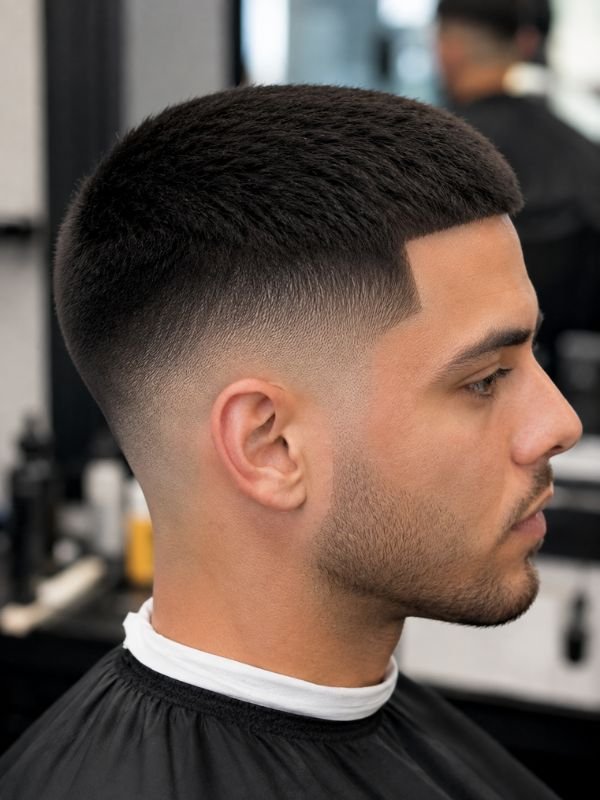
Thick hair holds shorter guards well and still looks dense on top, so this version can go a size shorter than usual without exposing much scalp. The taper removes bulk from the sides that would otherwise look heavy.
Suitable Hair Type: Thick, dense hair. Styling Tip: A matte wax keeps thick strands from standing up in random directions.
Thin Hair Low Taper Fade Buzz Cut
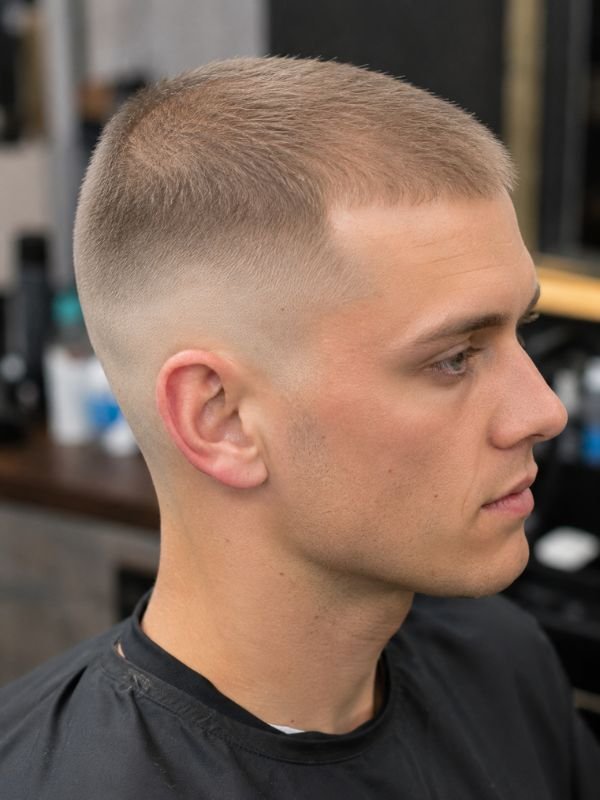
Going short across the board is one of the better tricks for thinning hair, since a uniform length makes it harder to spot where density drops off. A #3 or #4 guard usually looks fuller than going shorter.
Suitable Hair Type: Fine or thinning hair. Styling Tip: Avoid heavy, shiny products — they draw attention to visible scalp.
Gray Low Taper Fade Buzz Cut
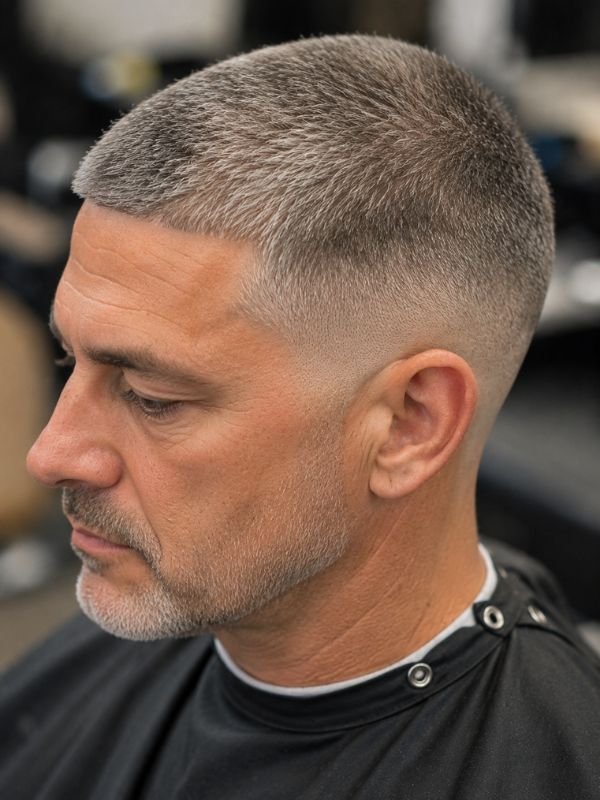
Gray and salt-and-pepper hair actually shows off a low taper fade nicely, since the lighter strands create their own contrast against the skin at the fade line. Keeping the top a touch longer, around a #3, balances the color naturally.
Suitable Hair Type: Graying or fully gray hair, any texture. Styling Tip: A hydrating scalp oil helps since gray hair and the scalp beneath it tend to run drier.
Low Taper Fade Buzz Cut with Hair Design
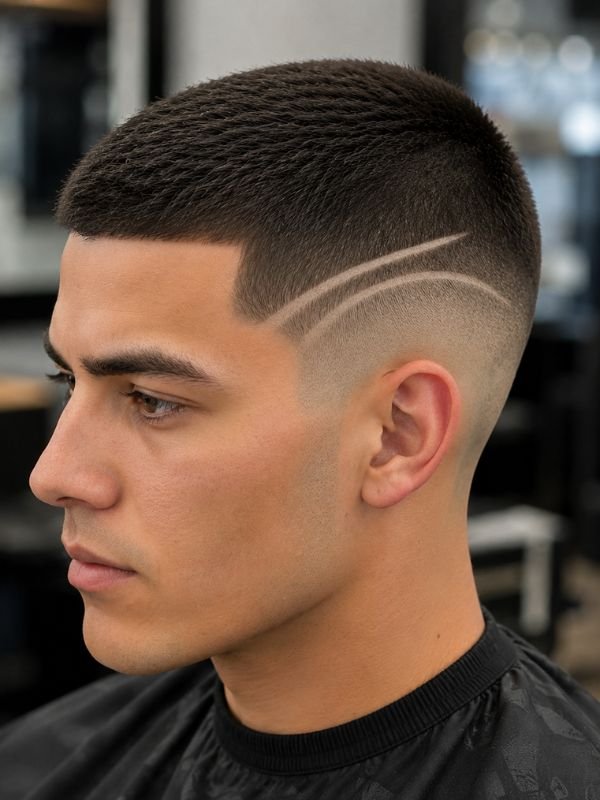
A barber shaves a thin line, shape, or pattern into the tapered section near the temple, giving the cut a personalized detail. The rest of the haircut stays simple so the design has room to stand out.
Suitable Hair Type: Any hair type with enough contrast to make the shaved line visible. Styling Tip: Keep the top minimal so attention stays on the design.
Buzz Cut with Hard Part and Low Taper Fade
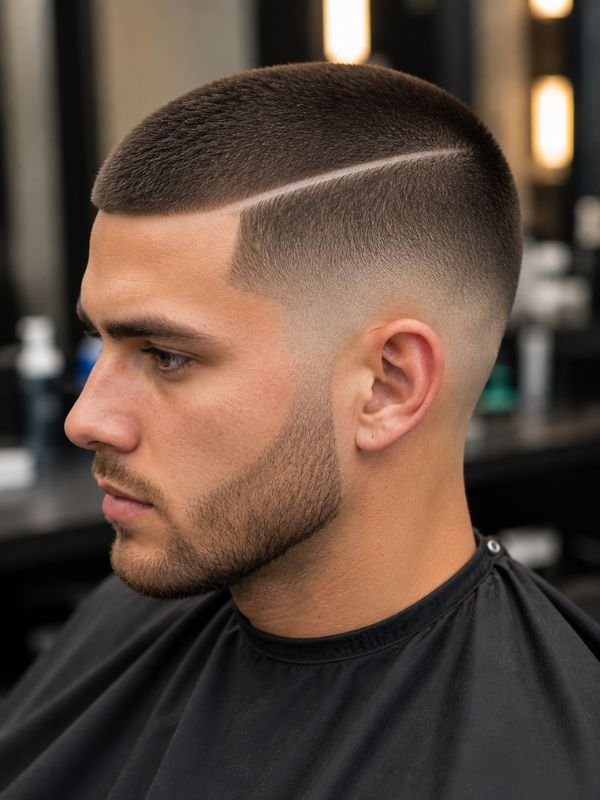
A razor-shaved line is cut into one side of the head where a natural part would sit, adding a graphic detail above the low taper. It’s a small addition that changes the whole look.
Suitable Hair Type: Straight or thick hair holds the part line most clearly. Styling Tip: Touch up the part every one to two weeks since it grows out fastest.
Buzz Cut with Sharp Edge Up
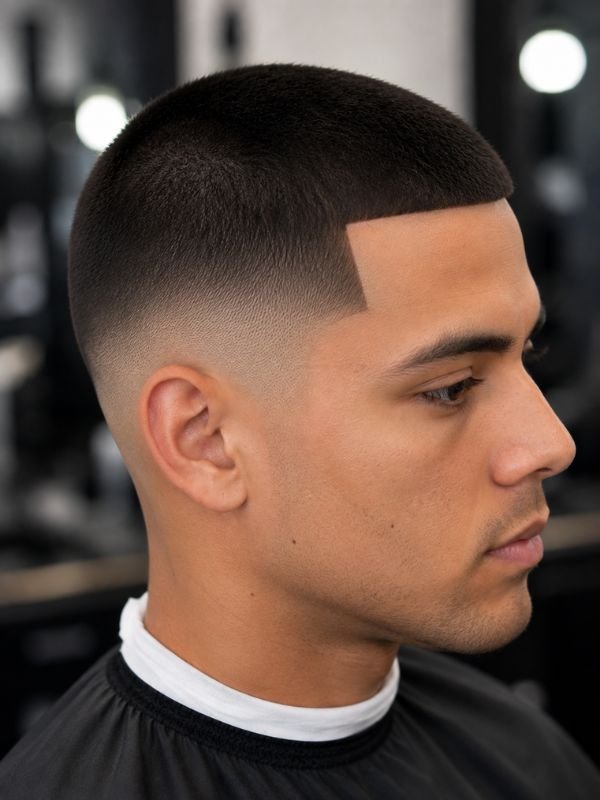
This version puts extra focus on precision at the edges — behind the ears, along the neckline, and at the temples — rather than adding any design. The result looks meticulously clean rather than flashy.
Suitable Hair Type: Coarse or thick hair. Styling Tip: A gentle exfoliating wash around the edges helps prevent razor bumps.
Buzz Cut with Temple Fade
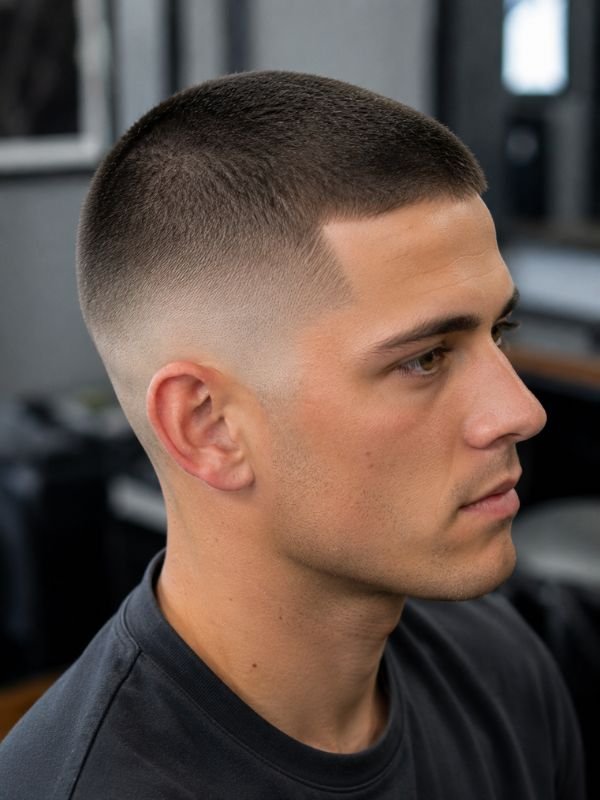
Instead of fading around the whole perimeter, the blend is limited to the temple area while the neckline stays cut in a straight, non-faded line. It reads as neat from the front without extra detailing everywhere.
Suitable Hair Type: Straight or wavy hair. Styling Tip: Brush the front slightly forward to highlight the temple blend.
Low Taper Fade Buzz Cut for Black Men
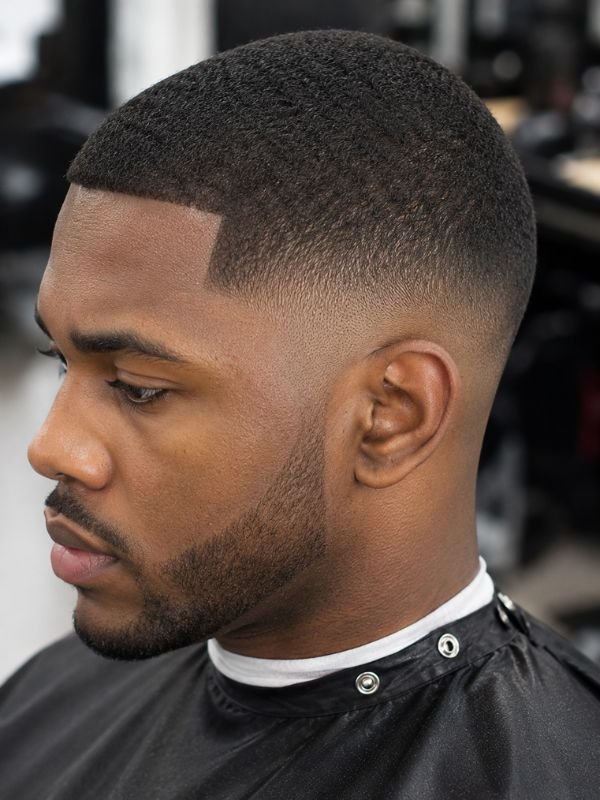
This version works especially well on coily and kinky textures, where the low taper creates a smooth transition into the skin without disturbing the density on top. A #3 or #4 guard usually keeps enough length for the natural texture to show.
Suitable Hair Type: Coily or kinky hair. Styling Tip: A light wave cream and a durag at night help maintain wave pattern between trims.
Low Taper Fade Buzz Cut for Hispanic Men
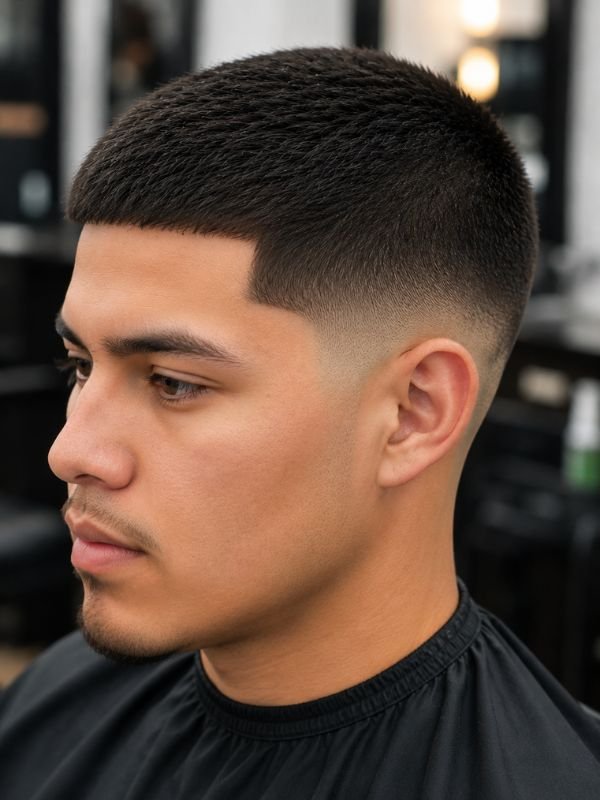
On thicker, darker hair, this cut produces strong contrast between the buzzed top and the fade, which tends to sharpen the jawline and cheekbones. It pairs especially well with a defined line-up.
Suitable Hair Type: Thick, dark, straight-to-wavy hair. Styling Tip: A light pomade adds shine without weighing the top down.
Low Taper Fade Buzz Cut for Asian Men
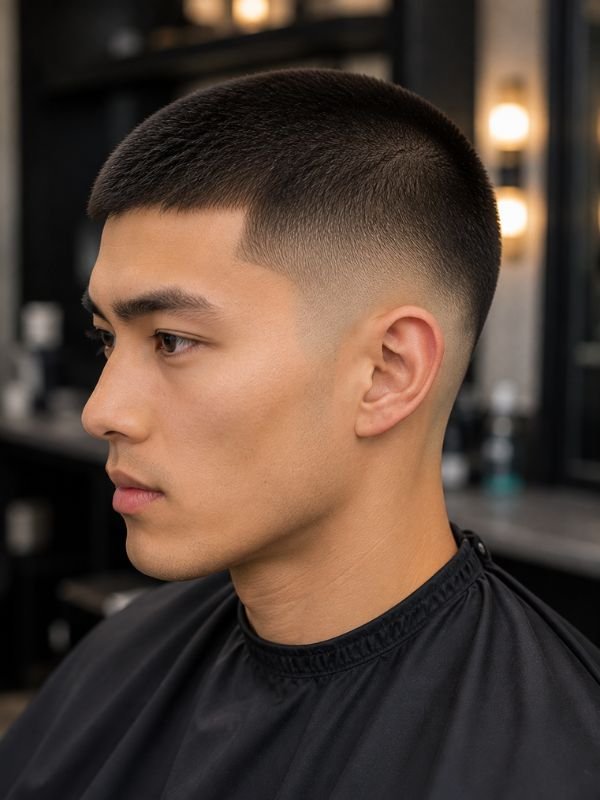
Straight, coarse hair that tends to flare outward benefits from the taper’s ability to remove bulk at the sides, keeping the whole shape closer to the head. This solves a common complaint about buzz cuts looking wide rather than sleek.
Suitable Hair Type: Coarse, straight hair. Styling Tip: A strong-hold matte product helps if you want the top styled forward instead of left natural.
Modern Low Taper Fade Buzz Cut
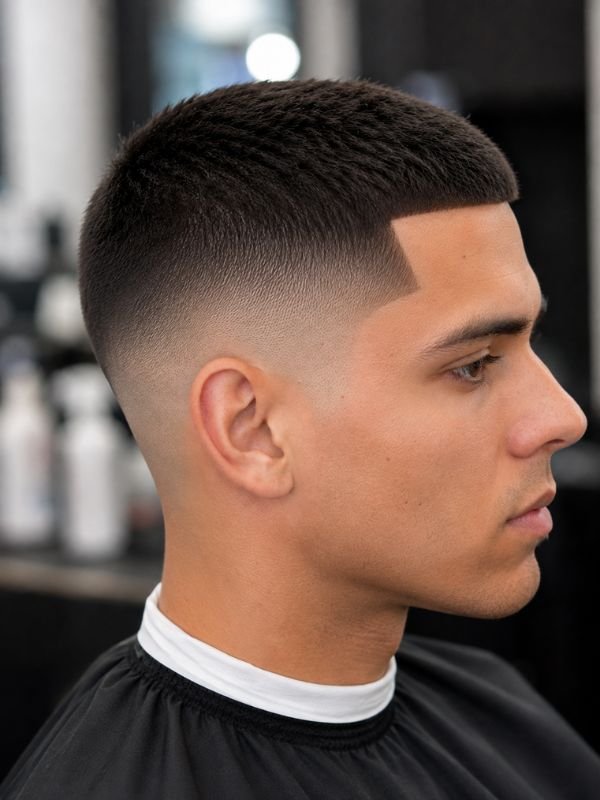
This is the version most barbers default to today: a #4 guard on top blending into a clean, low taper with no extra detailing. It’s casual enough for daily wear but still looks deliberate.
Suitable Hair Type: Wavy or straight hair. Styling Tip: A pinch of texturizing powder adds fullness without stiffness.
Short Low Taper Fade Buzz Cut
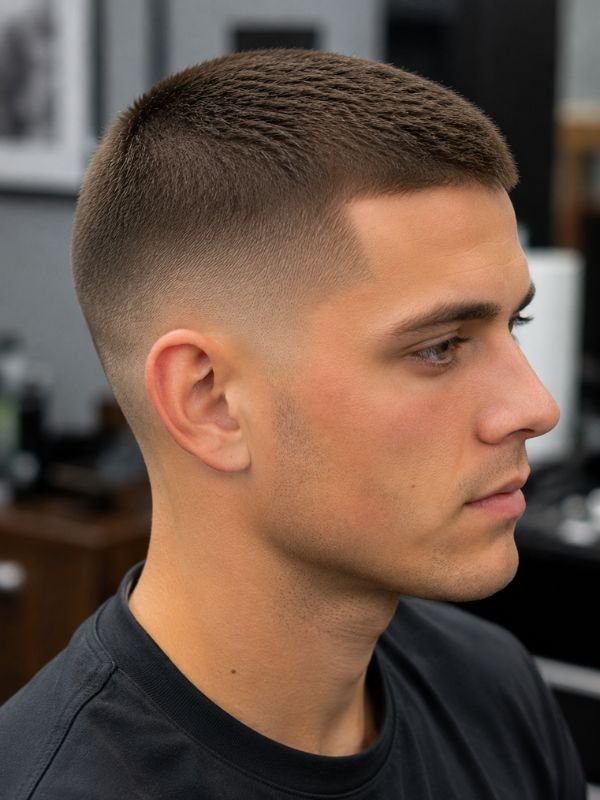
Nearly a full shave, this version uses a #1.5 guard on top with a quick, tight taper at the bottom. There’s very little length anywhere on the head.
Suitable Hair Type: Any hair type, since there’s minimal length to differentiate. Styling Tip: Sunscreen on the scalp matters more here since so much skin is exposed.
High Contrast Low Taper Fade Buzz Cut
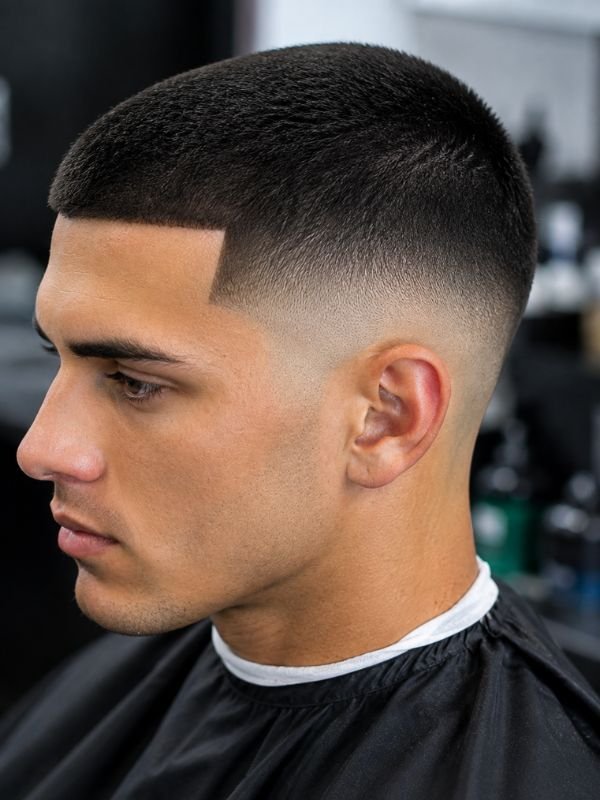
Dark, dense hair against lighter skin tone creates a striking contrast at the fade line in this version, making the cut look bolder even though the taper itself stays low. It photographs particularly well.
Suitable Hair Type: Dark, thick hair. Styling Tip: Keep the hairline razor-clean to preserve the contrast effect.
Professional Low Taper Fade Buzz Cut
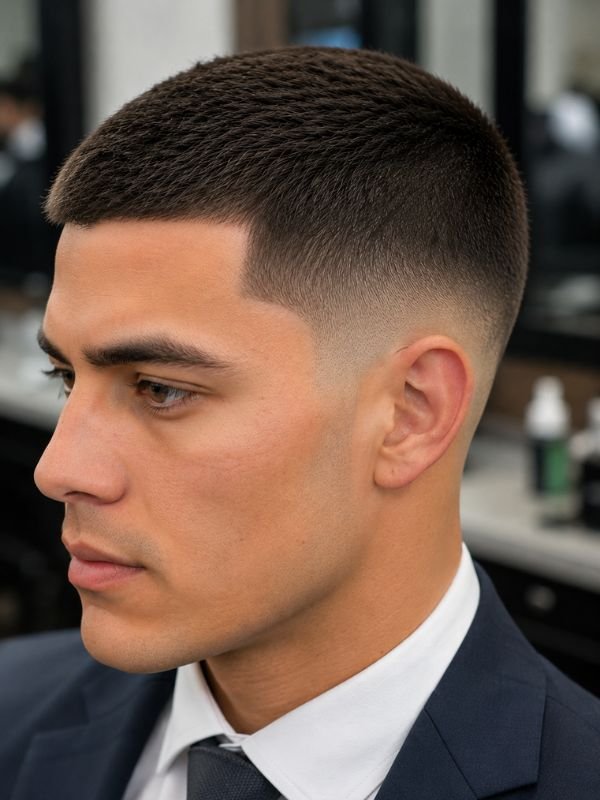
Built for office environments, this version keeps the top a bit longer and stops the fade short of bare skin, landing at a soft stubble finish instead. It reads as polished rather than trend-driven.
Suitable Hair Type: Straight or fine hair. Styling Tip: A small amount of pomade adds subtle shine appropriate for meetings.
Teen Boy Low Taper Fade Buzz Cut
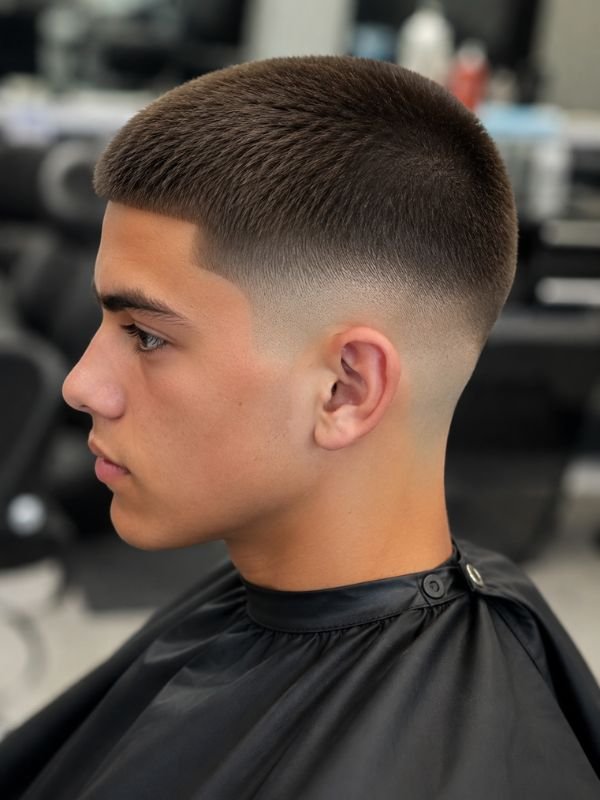
A favorite among middle and high schoolers, this version prioritizes speed and simplicity — dry it with a towel and it’s ready. It still looks current without needing any grooming routine.
Suitable Hair Type: Any hair type. Styling Tip: A standard three-week trim schedule keeps it looking fresh for school photos and everything in between.
Clean Low Taper Fade Buzz Cut
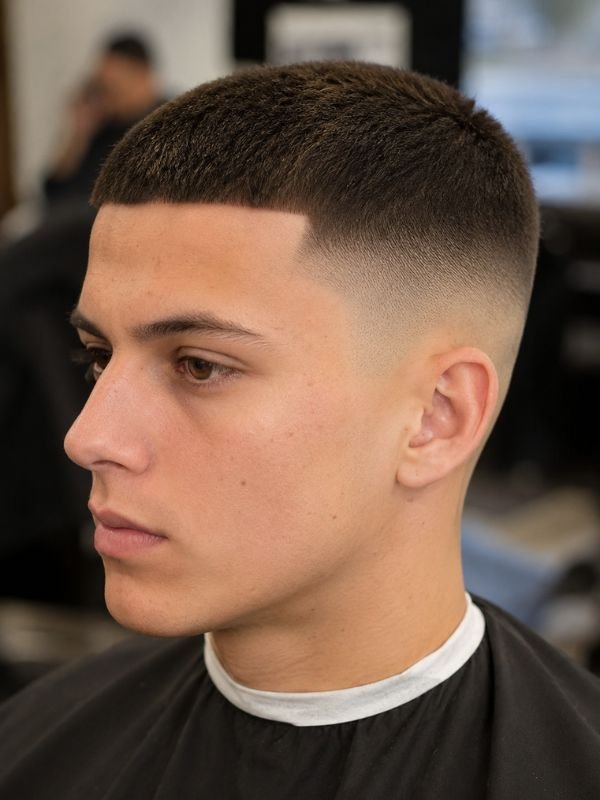
No shaved lines, no design work — just a smooth, even blend from the buzzed top down to the fade. It’s the most understated version on this list and works in nearly any setting.
Suitable Hair Type: Straight, wavy, or curly hair. Styling Tip: Keep the scalp clean and lightly moisturized for a healthy-looking finish.
Low Taper Fade Buzz Cut for Receding Hairline
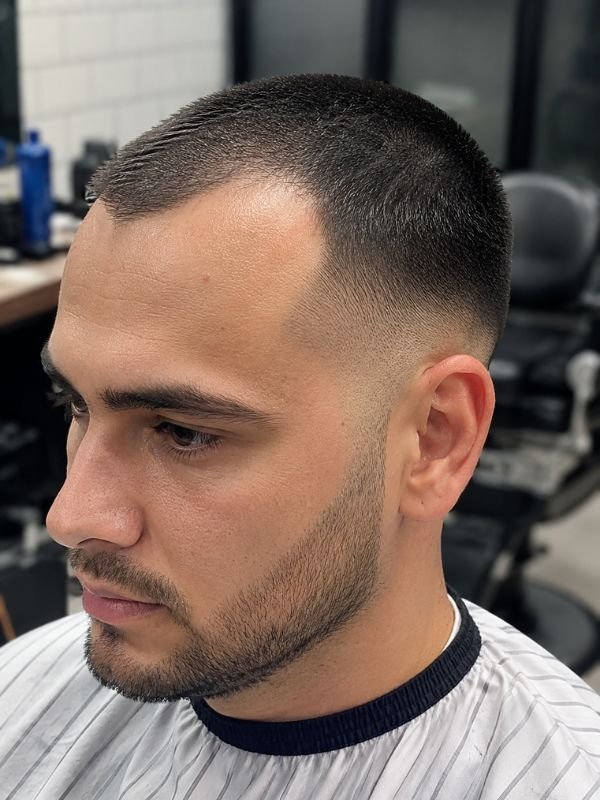
For a receding hairline, going shorter on top (a #2 or #3) rather than leaving length actually helps, since a uniform short length draws less attention to where the hairline sits. A soft, natural hairline shape — not a hard line-up — usually looks more forgiving here.
Suitable Hair Type: Any hair type experiencing early hairline recession. Styling Tip: Ask your barber to avoid a razor-sharp line at the front, since a hard edge can emphasize an uneven hairline rather than hide it.
Low Taper Faux Hawk Buzz Cut
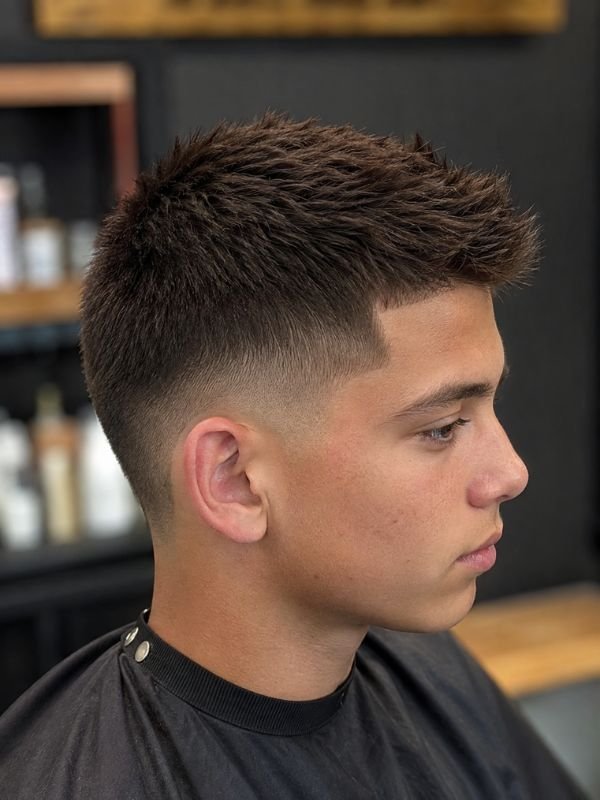
The center strip is left slightly longer than the rest of the top, creating subtle height down the middle while the low-tapered sides keep everything grounded. It’s a bolder shape than a standard buzz but still reads as tidy.
Suitable Hair Type: Straight or thick hair holds the center section best. Styling Tip: A small amount of matte paste worked upward through the center gives it definition.
Low Taper Fade Buzz Cut with Beard Fade Design
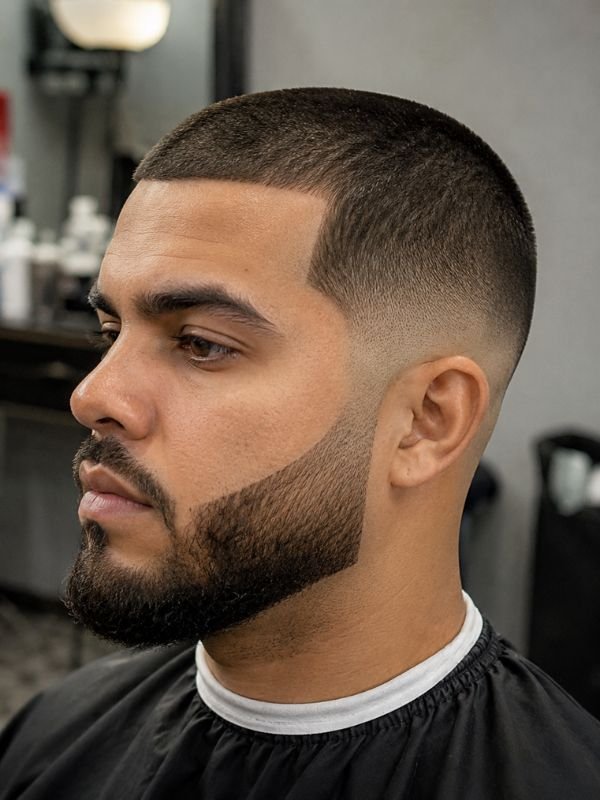
This combines a shaved line detail at the temple with a matching faded connection into the beard, so the design element and the beard blend work together as one feature. It’s a step up from a standard beard-connected cut for anyone who wants more detail.
Suitable Hair Type: Any hair type paired with beard growth along the jaw. Styling Tip: Get both the hair design and beard line refreshed together, since they grow out at different rates and can fall out of sync.
How to Ask Your Barber for a Low Taper Fade Buzz Cut
The clearest way to get the exact cut you want is to give your barber a specific clipper guard number, a starting point for the fade, and a finish preference, rather than just saying “low fade.” Vague requests leave too much room for interpretation, and this cut is requested often enough by name — as a low taper fade buzz cut for men of every hair type — that most barbers already know the general shape, but the specifics still need to come from you.
Barber Script
Try something like this in the chair:
“I’d like a buzz cut on top with a number 3 guard. On the sides and back, give me a low taper fade — start the blend just above my ear and at the bottom of my neck, not higher. Keep it soft, no lines unless I ask.”
Best Clipper Guard Numbers
Guard numbers control exactly how much length stays on the head, and the jump between sizes is bigger in person than it sounds on paper.
| Guard | Approx. Length | Look |
| #1 | 1/8 inch | Very close, scalp shows through |
| #2 | 1/4 inch | Short and sharp, classic buzz |
| #3 | 3/8 inch | Slight texture, still low-maintenance |
| #4 | 1/2 inch | Noticeable texture, light styling possible |
On Top
A #2 or #3 is the most requested range for the top of a low taper fade buzz cut, balancing a clean look with enough length to show texture.
For the Fade
The fade itself usually starts around a #1 and can be taken down to skin for more contrast, or kept slightly longer for a softer transition.
Fade Height
Tell your barber explicitly to keep the blend low — below the top of the ear. If this isn’t specified, some barbers default to a higher starting point out of habit.
Also Read This Low Taper Fade Slick Back: 30 Best Styles for Men in 2026
Hairline Shape
Decide between a natural, unshaped hairline or a crisp line-up cut with a trimmer or razor. A natural hairline looks more relaxed; a line-up looks sharper but grows out faster.
Beard Blending (Optional)
If you have facial hair, ask the barber to fade the sideburns into the beard rather than leaving a visible gap between the two.
Neckline Preference
A tapered neckline fades gradually into the skin rather than ending in a hard, squared-off line. It tends to look neater as it grows out compared to a block neckline.
Best Face Shapes
Most face shapes work with this haircut, but small adjustments to top length change how flattering the result looks — these are general starting points, not hard rules.
- Oval: Nearly every guard and style variation suits an oval face.
- Round: A slightly longer top, around a #4, adds height and reduces the appearance of width.
- Square: A short top paired with a defined line-up complements a strong jawline well.
- Diamond: A little extra length on top helps balance wider cheekbones.
- Heart: Keeping the crown from looking too wide, with a softer top texture, balances a broader forehead.
- Oblong: A shorter top, around a #2 or #3, avoids adding extra vertical length to an already long face.
Best Hair Types
Hair texture and density change how the same clipper guard ends up looking once it’s cut and dried, so this taper fade haircut can look noticeably different from one head to the next even at identical settings.
- Straight hair lies flat and creates the crispest, cleanest line between the buzzed top and the fade.
- Wavy hair adds subtle movement on top without any product needed.
- Curly hair looks fuller and often needs a slightly longer guard to account for how much curls shrink once dry.
- Coily hair benefits from staying with a taper rather than going to full skin, since a hard skin line can look disconnected against dense coils.
- Thick hair holds shorter guards well and still reads as full on top.
- Thin hair usually looks better with a touch more length, since going too short can expose more scalp than intended.
Pros and Cons
| Pros | Cons |
| Almost no daily styling time | Needs more frequent barber visits to stay sharp |
| Keeps the head cool in hot weather | Can highlight scalp bumps or scars |
| Uses far less product and shampoo | More scalp exposure means higher sunburn risk |
| Works well for thinning or receding hair | Limited flexibility for special-occasion styling |
How to Style a Low Taper Fade Buzz Cut
Even though there’s not much length involved, a few small touches keep this cut looking finished rather than just freshly clipped.
Best Styling Products
A light matte cream works well on straight hair, while a small amount of clay helps control thicker or coarser textures. Beard oil keeps sideburns soft if the fade connects into facial hair, and a scalp moisturizer prevents flaking on the more exposed skin.
Step-by-Step Styling Guide
Pat hair dry with a towel rather than rubbing it. Warm a small amount of product between your palms, then run your hands forward over the top in one smooth motion. Finish with a soft brush if you want extra direction.
How to Maintain a Low Taper Fade Buzz Cut
Most barbers recommend a touch-up every two to three weeks, since that’s roughly how long it takes for the fade line to blur into a uniform length. Waiting much longer means starting over rather than just refreshing the shape.
Between visits, wash two to three times a week with a gentle shampoo — over-washing can dry out an already-exposed scalp. A daily light moisturizer helps prevent flaking, and sunscreen is worth applying if you’re outside for extended periods, since a buzzed scalp burns easily.
If you’re comfortable with clippers, the top is fairly safe to touch up yourself between barber visits. The fade blend itself is trickier to get seamless and is usually best left to a professional.
Haircut Comparisons
Low Taper Fade Buzz Cut vs Buzz Cut
A plain buzz cut keeps the same length across the entire head with no blending at all. Adding a low taper fade introduces a smooth transition at the edges, which reads as more deliberate and current.
Low Taper Fade Buzz Cut vs Skin Fade Buzz Cut
A skin fade takes the sides all the way to bare skin, creating sharp contrast that shows up fast as it grows out. A low taper keeps a little length at its shortest point, so it stays presentable for longer between trims.
Low Taper Fade Buzz Cut vs Crew Cut
A crew cut leaves enough length on top to comb or push to one side, while a low taper fade buzz cut stays short enough that there’s nothing to style in that way. The crew cut also usually pairs with a slightly higher fade than the low taper does.
Celebrity Inspiration
A handful of well-known faces have made variations of this cut recognizable well beyond the barbershop. Athletes and actors with active schedules often gravitate toward it for the same reason regular guys do — it looks sharp with almost no upkeep required between appearances.
Short, faded styles have shown up regularly on red carpets and sidelines alike over the past few years, which has helped keep demand for the low taper fade buzz cut steady rather than trend-dependent.
Common Mistakes to Avoid
- Choosing too short a guard on the first visit. Starting with a #3 gives room to go shorter later if you want; going too short immediately is harder to undo.
- Letting it grow past five weeks. The fade line disappears into the rest of the length, defeating the purpose of the cut.
- Skipping scalp care. Dry, flaky skin is far more visible under short hair than under longer styles.
- Ignoring sun protection. A sunburned scalp is uncomfortable and can peel noticeably.
- Overusing product. A small amount goes a long way on hair this short; too much looks greasy rather than styled.
Final Thought
A low taper fade buzz cut earns its popularity by solving a genuine problem — looking deliberately put together without the daily effort that longer styles demand. With 30 variations to choose from, there’s a version that fits nearly any hair type, face shape, or lifestyle.
Whatever version you land on, giving your barber a specific guard number and a clear fade starting point makes the biggest difference between a good cut and a great one.
Frequently Asked Questions
Is a low taper fade a buzz cut?
Not exactly the same thing, but they’re closely related. A buzz cut refers to the uniform short length on top, while a low taper fade describes what happens at the sides and back — combined, they make up the low taper fade buzz cut.
What’s the difference between a low taper fade buzz cut and a mid taper fade buzz cut?
The starting point of the blend is the main difference. A low taper fade begins just above the ear, while a mid taper fade buzz cut starts higher, around the top of the ear, which creates more visible contrast against the buzzed top.
Which fade is best for a buzz cut?
It depends on how much contrast you want and how often you’re willing to get trims. A low taper fade suits people who want low-maintenance regrowth, while a skin fade suits people who prioritize sharp contrast and don’t mind more frequent touch-ups.
Can you get a low taper fade buzz cut with a receding hairline?
Yes, and it’s actually one of the more flattering options for early hairline recession. A uniform short length on top, paired with a soft rather than razor-sharp hairline, makes thinning areas far less noticeable.
Does a low taper fade buzz cut work with a beard?
Yes. The sideburns can be faded directly into the beard line, creating one continuous, connected look rather than a visible gap between the hair and facial hair.
Can you get a low taper fade buzz cut on blonde hair?
Yes, and the contrast tends to look softer than it does on darker hair, since there’s less color difference between the hair and the skin at the fade line.
Is a buzz cut haram in Islam?
A uniform buzz cut is generally considered permissible by many scholars. The main concern is qaza, or unevenly shaving parts of the head.

Hi, I’m Jake Miller a passionate barber based in Los Angeles, California, with over 3 years of hands-on experience in the craft. I specialize in modern fades, clean cuts, precision beard grooming, and classic barbering techniques, blending sharp technical skill with a relaxed, personal touch.
Over these years, I’ve had the opportunity to work with all kinds of clients, each with their own style and personality and that’s exactly what I love about this craft. For me, it’s never just about a haircut. It’s about understanding who you are and bringing that out through precision and care.
Every client who sits in my chair gets my full attention and expertise, because I believe great barbering is where confidence meets individuality. My goal is simple: to make sure you walk out looking sharp and feeling like the best version of yourself.

1 thought on “Low Taper Fade Buzz Cut: 30 Styles, Guards & Barber Guide”