
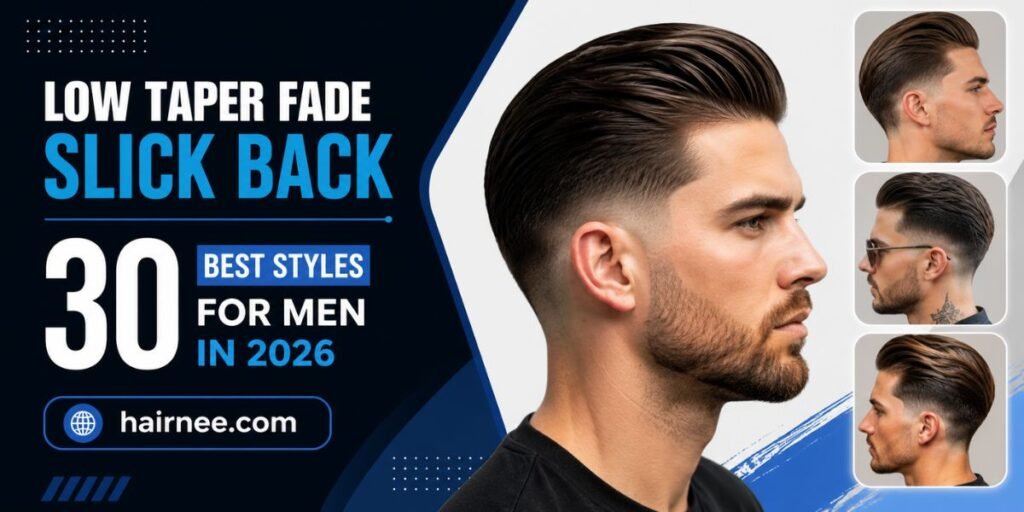
Men who want a haircut that reads sharp at the office and relaxed on the weekend keep landing on one cut: the low taper fade slick back. It pairs a soft, low fade on the sides with hair on top that’s brushed straight back, and it works on almost any face shape or hair texture. This guide breaks down 30 variations, how to talk to your barber, styling steps, and the comparisons men search for most.
Whether you’re walking into a barbershop for the first time with this request or you’re refining a style you already wear, you’ll find the details here: fade heights, guard numbers, product picks, and which face shapes pull it off best.
Quick Answer
A low taper fade slick back keeps the fade close to the ears and neckline while the top hair — usually 3 to 6 inches — is combed or blown straight back with pomade, clay, or cream. It’s low-maintenance on the sides and flexible enough for straight, wavy, or curly hair.
What Is a Low Taper Fade Hairstyles Slick Back?
A low taper fade slick back combines two separate techniques into one cut: a fade that stays low on the head, and a top that’s pushed backward instead of forward or sideways. Together they create a look that’s neat without feeling stiff.
What Is a Low Taper Fade?
A low taper fade is a fade that begins right around the ears and the nape of the neck instead of climbing up toward the temples. The clipper work stays subtle, so the transition from skin to hair happens gradually and low on the head. This makes it one of the more forgiving fades — it doesn’t demand constant touch-ups the way a high or skin fade does.
What Is a Slick Back Hairstyle?
A slick back hairstyle means the top hair is combed or brushed backward, away from the forehead, rather than left to fall forward. Men usually rely on a pomade, wax, or cream to hold the direction in place. The finish can range from a glassy, wet-look shine to a soft matte texture depending on the product.
Why This Haircut Is Trending in 2026
The low taper fade slick back is trending because it gives men a polished look without the heavy, stiff styling that older slicked-back cuts required. It suits both formal settings and casual days without needing a second haircut for either.
Barbers have also leaned into lighter, water-based products this year, which lets the style move naturally instead of sitting frozen in place. That shift, combined with a wave of barbershop content online, has kept the cut in steady rotation through 2026.
Also Read This Low Taper Fade Asian Haircuts: 30 Best Styles (2026)
Benefits of a Low Taper Fade Slick Back
This cut earns its popularity by adapting to more situations than most haircuts can. A few reasons it keeps showing up in barber chairs:
- It transitions cleanly between office, casual, and formal settings without restyling.
- The low fade sits close to the ear and jaw, which draws attention to a strong jawline.
- It works across straight, wavy, thick, and curly hair without needing a different base cut.
- You can switch between a glossy finish and a matte one just by swapping products.
- Because the fade stays low, it grows out without looking patchy or uneven.
Top 30 Best Low Taper Fade Hairstyles Slick Back
Each of these variations uses the same low taper base but changes the top length, texture, or finish. Pick the one that matches your hair type and how much styling time you’re willing to spend each morning.
Classic Low Taper Fade Slick Back
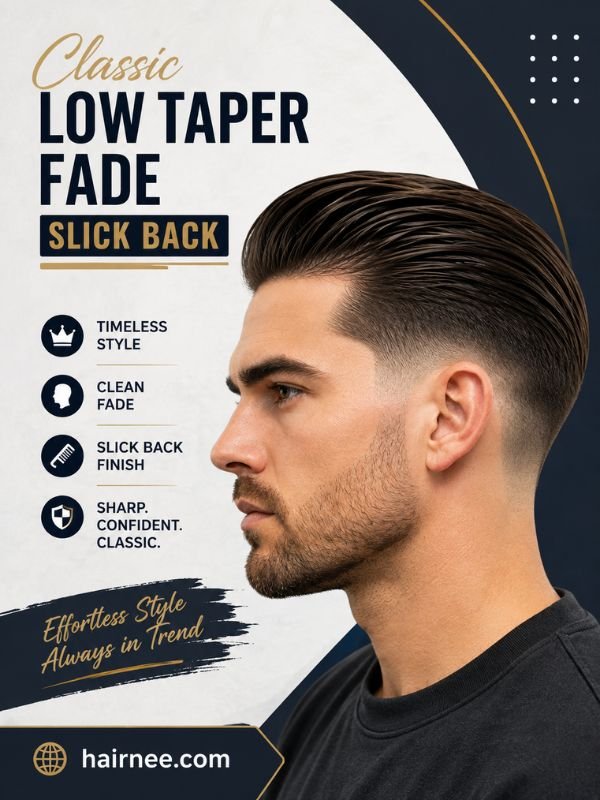
This version keeps the top around 4 inches and combs it back flat with a shine-based pomade. It’s the safest choice if you want the cut to read as timeless rather than trendy.
Styling Tip: Comb wet pomade through damp hair with a fine-tooth comb for an even finish. Suitable Hair Type: Straight or lightly wavy hair. Maintenance: Barber visit every 3 to 4 weeks.
Modern Low Taper Fade Slick Back
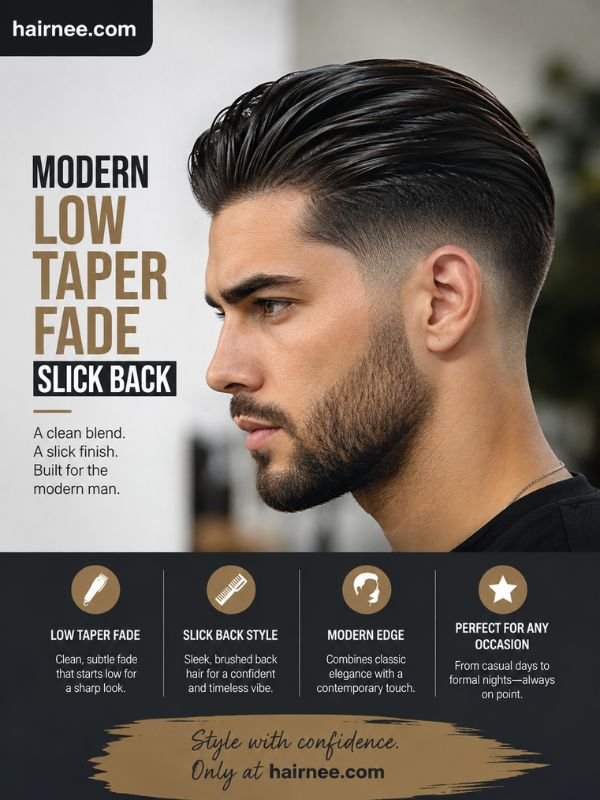
The modern take skips the heavy shine and lets the top keep some natural movement instead of lying flat. It looks less “done” while still staying controlled.
Styling Tip: Blow-dry backward with a round brush, then finish with a matte paste. Suitable Hair Type: Fine to medium straight hair. Maintenance: Trim every 3 weeks.
Textured Low Taper Fade Slick Back
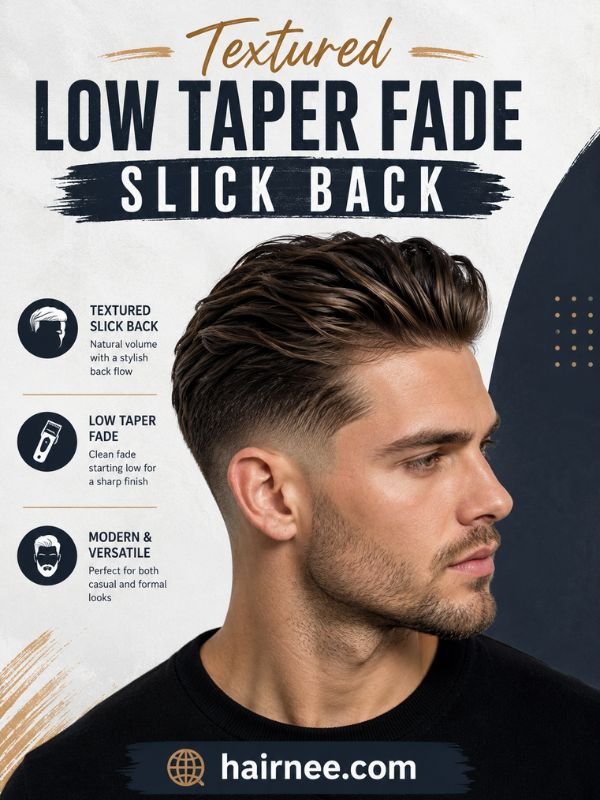
Point-cutting on top breaks up the surface so the hair shows depth once it’s pushed back instead of sitting as one flat block. The low fade keeps the sides from competing with that texture.
Styling Tip: Rub a small amount of clay between your palms and work it through dry hair. Suitable Hair Type: Medium to thick hair. Maintenance: Trim the top layers every 4 weeks.
Messy Low Taper Fade Slick Back
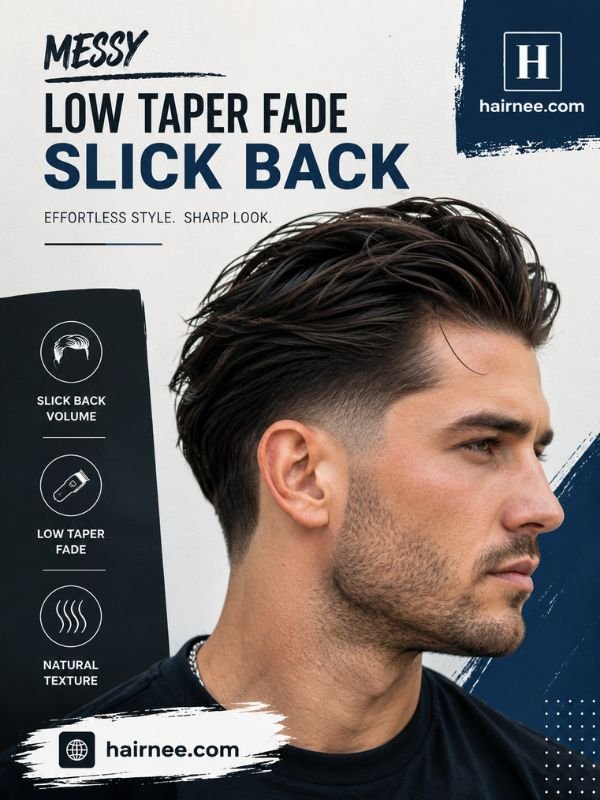
This one skips precision on purpose. The hair gets swept back loosely enough that a few strands fall out of place, which reads as casual rather than careless.
Styling Tip: Spray sea salt spray on damp hair and rough it back with your hands while blow-drying. Suitable Hair Type: Wavy or medium-density hair. Maintenance: Barber visit every 4 weeks.
Short Low Taper Fade Slick Back
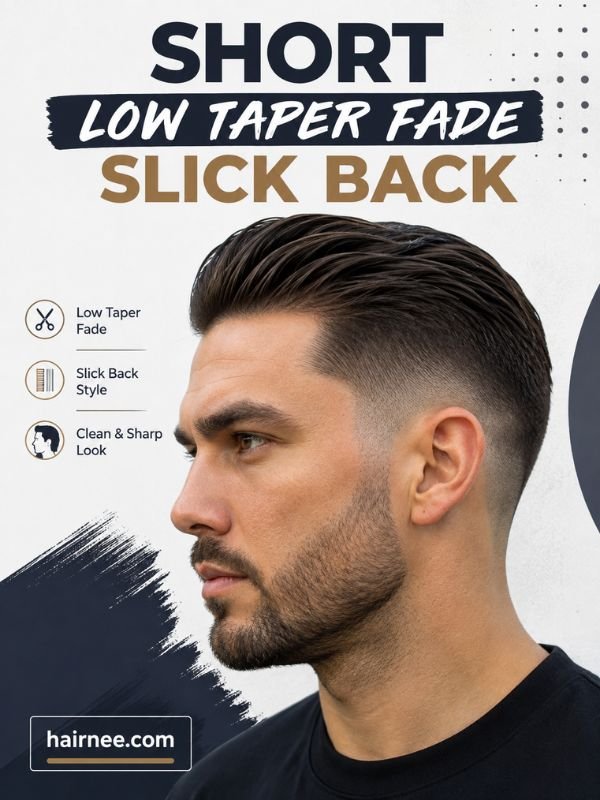
Keeping the top at 2 to 3 inches makes this the lowest-effort version on the list. There’s barely enough length to need product, which is exactly the point.
Styling Tip: Use a light pomade and comb back in two or three strokes. Suitable Hair Type: Straight or thick short hair. Maintenance: Quick morning routine, low upkeep overall.
Long Low Taper Fade Slick Back
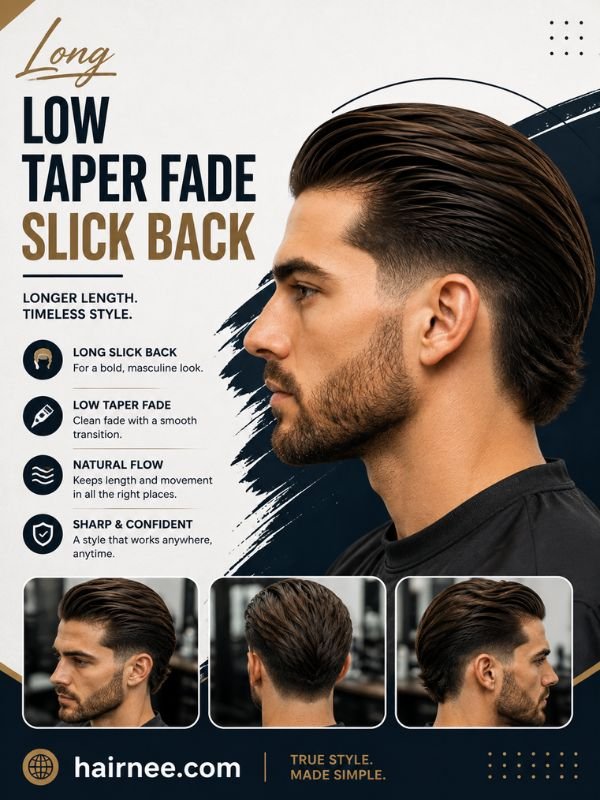
With 4 to 6 inches on top, this version has enough length to create real flow when it’s pushed back. It takes longer to dry but delivers a more dramatic result.
Styling Tip: Blow-dry with warm air first, then set the shape with a cool shot and strong-hold pomade. Suitable Hair Type: Straight or naturally flowing hair. Maintenance: High maintenance; needs regular conditioning to avoid split ends.
Slick Back with Low Taper Fade and Beard
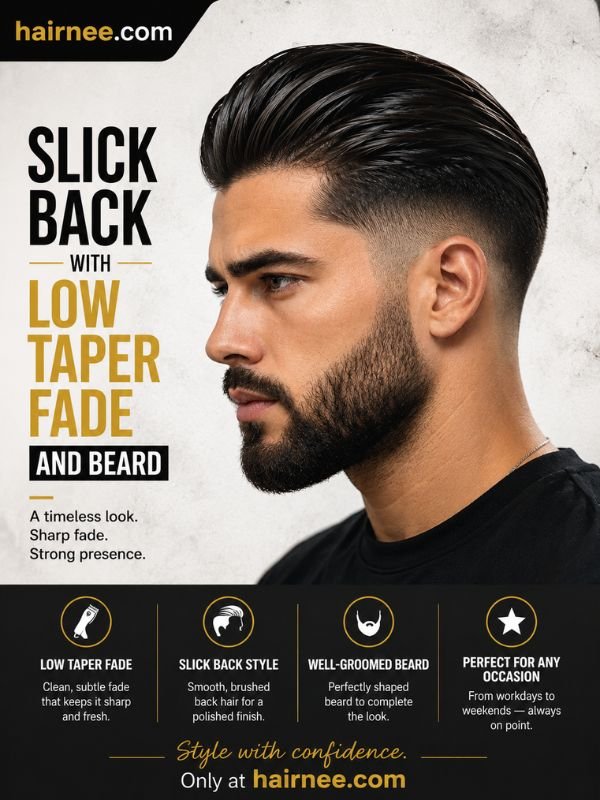
Fading the sideburns down into a beard connects the haircut to the facial hair instead of leaving a hard line between them. It’s a strong option for framing the jaw.
Styling Tip: Apply beard oil to the facial hair and a matte clay to the top for contrast in finish. Suitable Hair Type: Works with any hair type paired with medium beard growth. Maintenance: Weekly beard trims, monthly barber visits.
Low Taper Fade Slick Back for Straight Hair
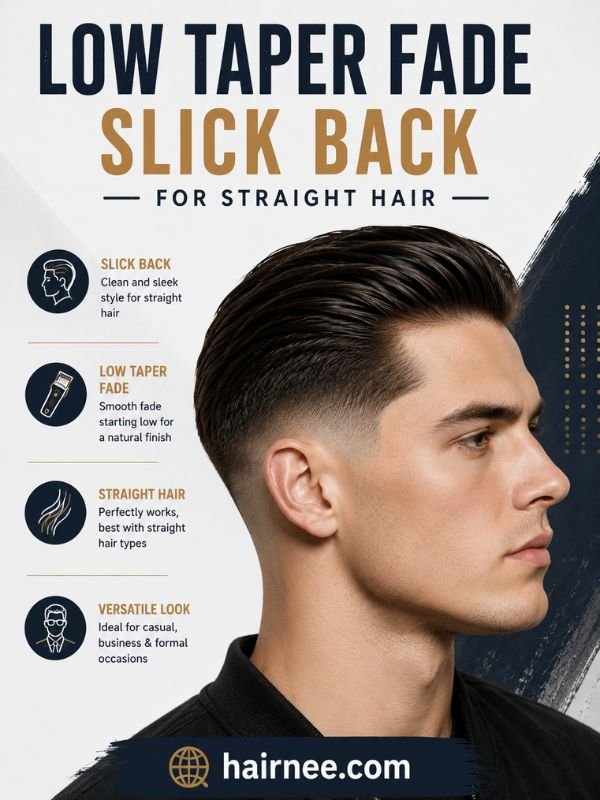
Straight hair slicks back with the least effort of any texture, though it can go flat without help. A little volume powder at the roots keeps it from sitting lifeless.
Styling Tip: Apply a light sea salt spray before blow-drying to lift the roots. Suitable Hair Type: Naturally straight hair. Maintenance: Trim every 3 weeks so it doesn’t lie limp.
Low Taper Fade Slick Back for Wavy Hair
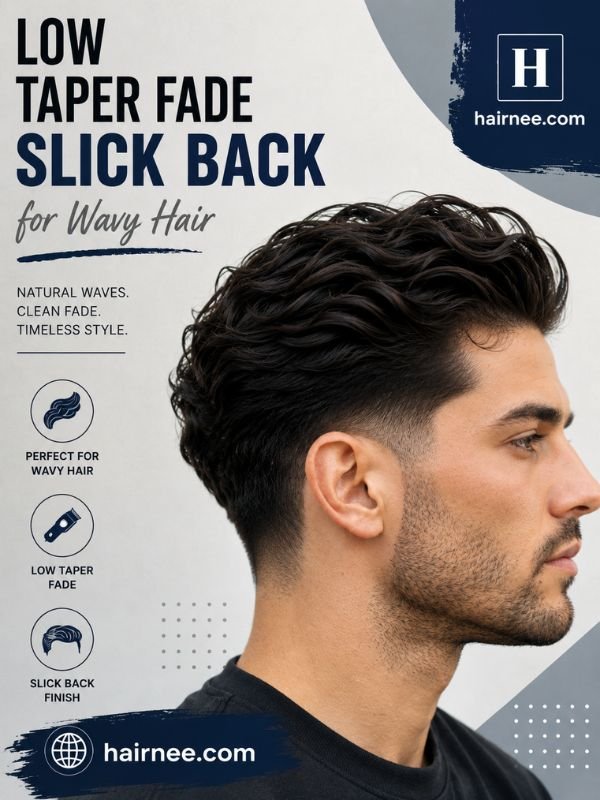
Wavy hair brings natural texture that a slick back doesn’t have to fight against. The fade removes bulk near the ears while the waves flow back over the crown.
Styling Tip: Work styling cream through wet waves and push them back with a wide-tooth comb. Suitable Hair Type: Naturally wavy hair. Maintenance: Hydrating conditioner twice a week keeps waves defined.
Low Taper Fade Slick Back for Curly Hair
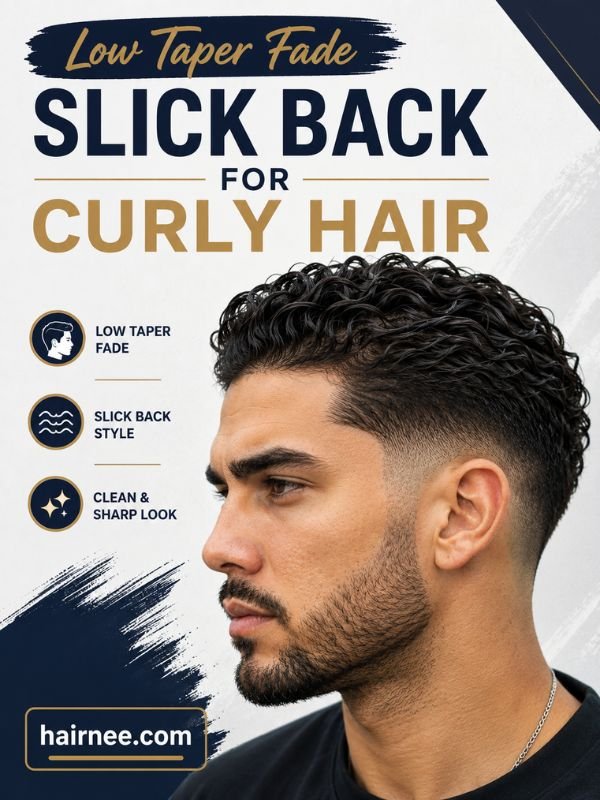
Curls can look sharp in a slick back once they’re cut with enough length to stretch backward. A moisture-heavy pomade helps hold the shape without drying out the curl pattern.
Styling Tip: Apply leave-in conditioner and pomade to wet hair before combing it back. Suitable Hair Type: Tight or loose curls. Maintenance: Regular moisture products to keep curls defined.
Thick Hair Low Taper Fade Slick Back
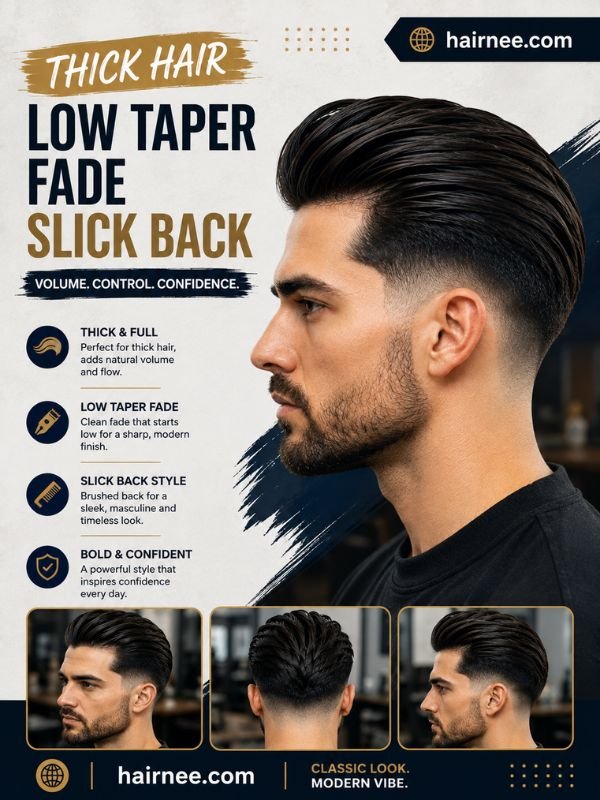
Thick hair carries a lot of bulk, and the low taper fade helps by removing weight around the edges while a barber thins the top with shears. That combination lets the hair lay back instead of pushing outward.
Styling Tip: Use a strong-hold clay and blow-dry on medium heat while pushing hair backward. Suitable Hair Type: High-density, coarse hair. Maintenance: Ask your barber to thin the top monthly.
Thin Hair Low Taper Fade Slick Back
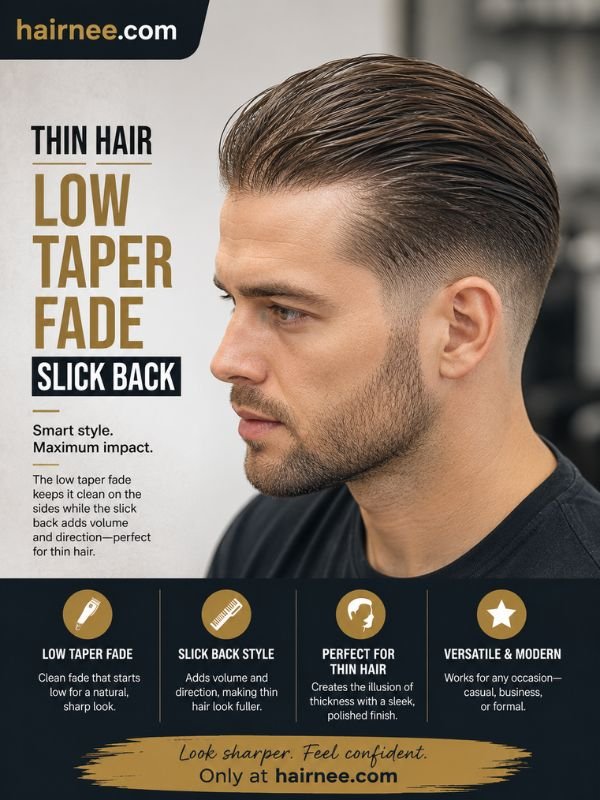
Thin hair needs a lighter touch so the scalp doesn’t show through. The low fade keeps the sides soft rather than shaved bare, which helps the whole look feel fuller.
Styling Tip: Use a thickening mousse on damp hair before blow-drying it back. Suitable Hair Type: Fine or thin hair. Maintenance: Skip heavy pomades — they weigh thin hair down.
Blonde Low Taper Fade Slick Back
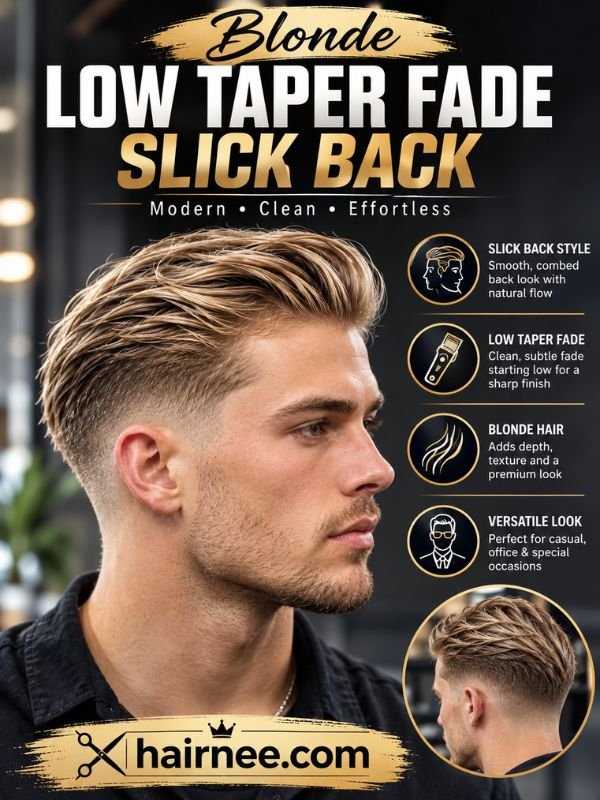
Blonde hair shows off the contrast between the faded sides and the lighter top more clearly than darker shades do. A matte cream keeps the color looking fresh instead of greasy.
Styling Tip: Use a matte cream so the blonde doesn’t look oily under light. Suitable Hair Type: Fine to medium blonde hair. Maintenance: A purple shampoo once a week keeps the color from turning brassy.
Asian Low Taper Fade Slick Back
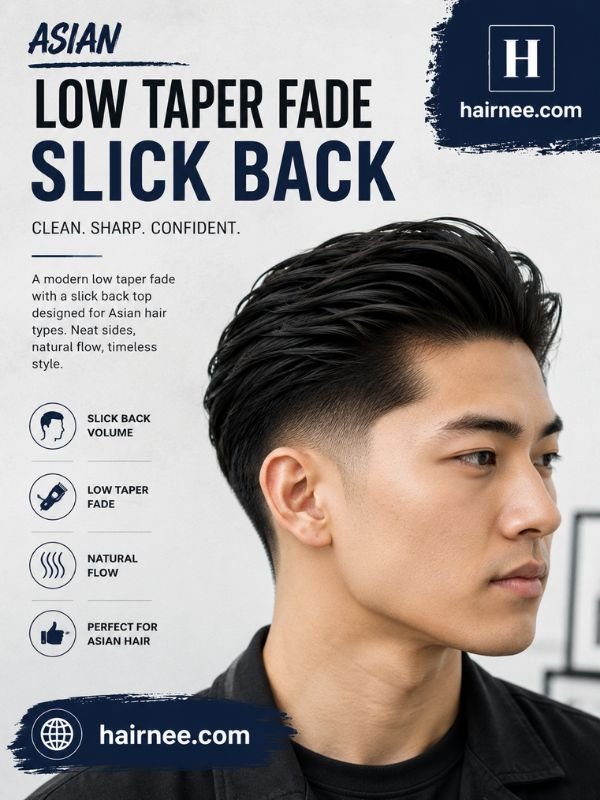
Asian hair tends to be thick, straight, and prone to growing outward, so keeping enough length on top matters more here than in most other hair types. The low taper anchors the sideburns while the top lays flat once slicked back.
Styling Tip: Apply strong-hold pomade to damp hair and blow-dry backward with a nozzle attachment. Suitable Hair Type: Coarse, straight hair. Maintenance: Trim every 3 weeks to keep the sides from bristling out.
Professional Low Taper Fade Slick Back
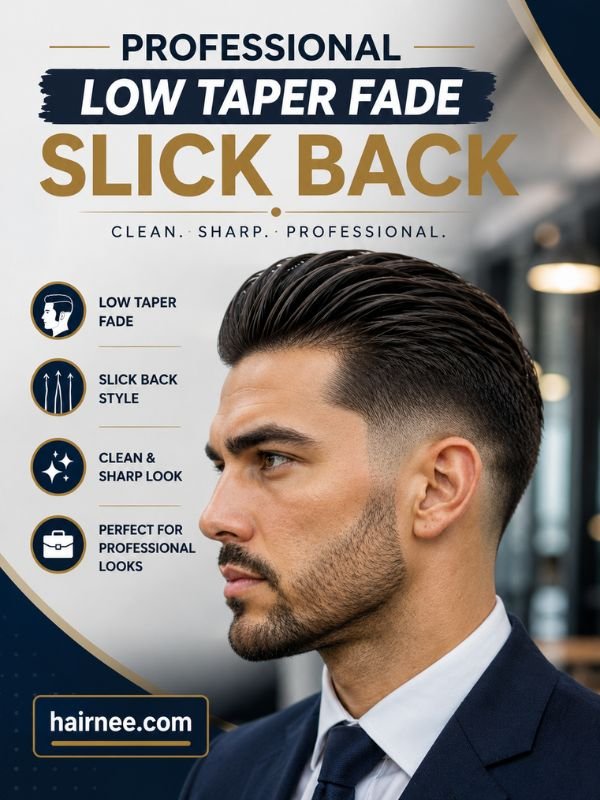
Built for office environments, this version keeps the fade subtle and the top neat without heavy volume or texture. Nothing about it draws unnecessary attention in a formal setting.
Styling Tip: Use a low-shine cream with a fine comb for precise lines. Suitable Hair Type: Straight or wavy hair. Maintenance: Barber visit every 3 weeks to keep the lines crisp.
Teen Boy Low Taper Fade Slick Back
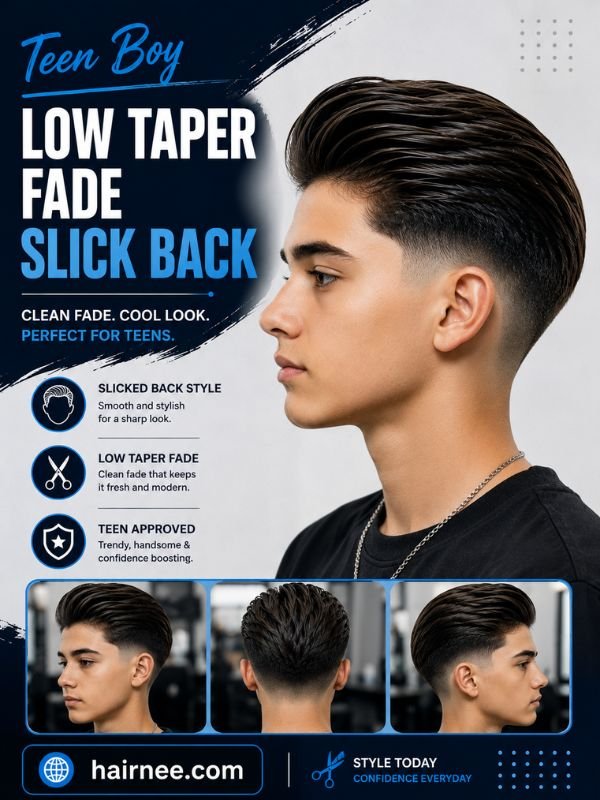
This version trades some of the formality for a look that suits school and sports. It combines a clean neck fade with a top that still feels casual and touchable.
Styling Tip: Apply a small amount of matte paste and sweep the top back with your fingers. Suitable Hair Type: Works across most young hair types. Maintenance: Very little daily prep required.
Low Taper Fade Slick Back with Hard Part
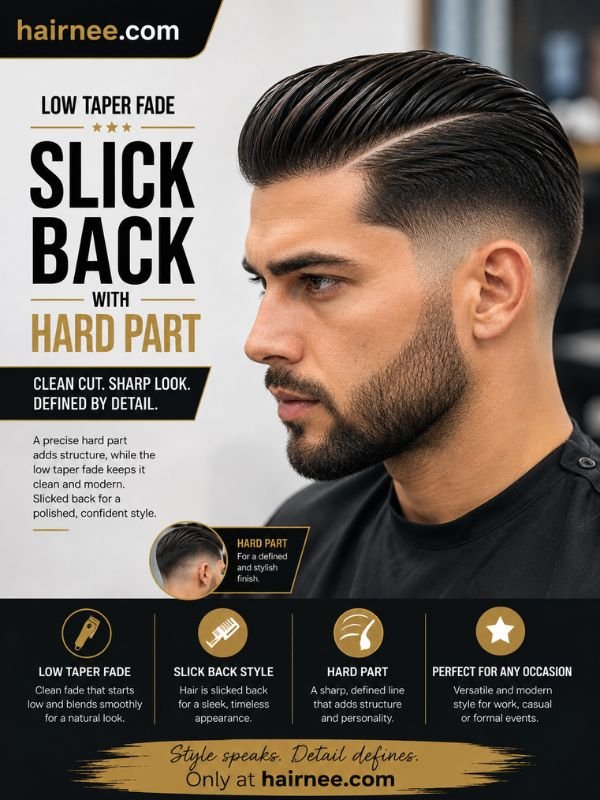
A hard part is a shaved line the barber cuts to separate the slicked top from the faded sides. It adds a graphic, deliberate detail to what would otherwise be a simple cut.
Styling Tip: Comb the hair back diagonally away from the shaved line. Suitable Hair Type: Straight or thick hair. Maintenance: Touch up every 2 weeks since hard parts grow out fast.
Low Taper Fade Slick Back with Line Up
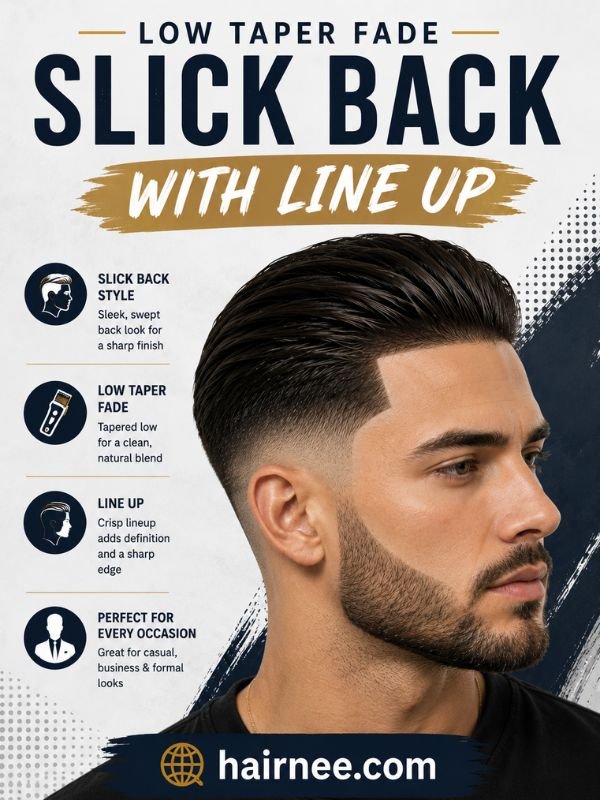
A line up sharpens the front hairline and temple corners with a razor or trimmer. Paired with the slick back, it gives the front of the face a more defined, boxy outline.
Styling Tip: Keep the top slicked tightly so the line stays visible instead of getting covered. Suitable Hair Type: Coarse or straight hair. Maintenance: Edge touch-ups every 2 weeks.
Wet Look Low Taper Fade Slick Back
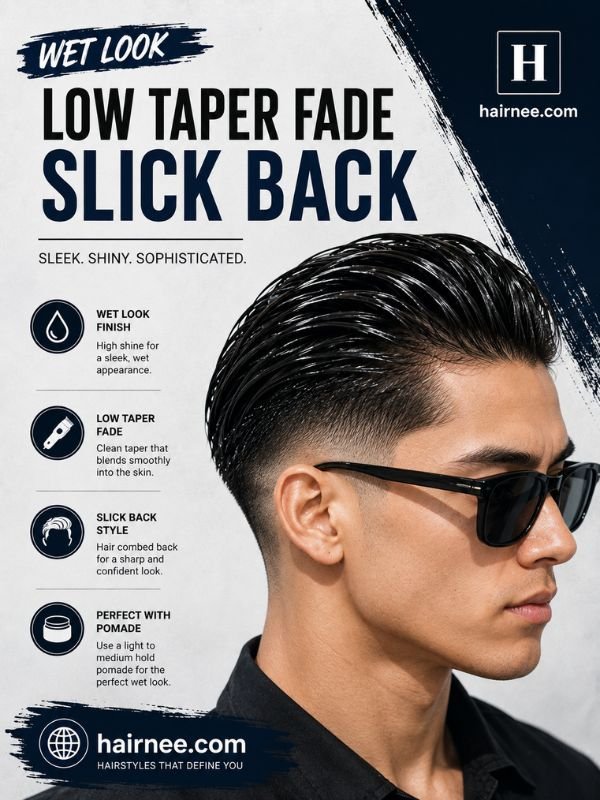
This variation leans on a vintage, high-shine finish that looks freshly styled all day. It’s a strong pick for events where a more polished appearance matters.
Styling Tip: Apply a high-shine water-based pomade directly to wet hair. Suitable Hair Type: Straight or dark hair shows the shine most clearly. Maintenance: Shampoo thoroughly to avoid product buildup over time.
Matte Finish Low Taper Fade Slick Back
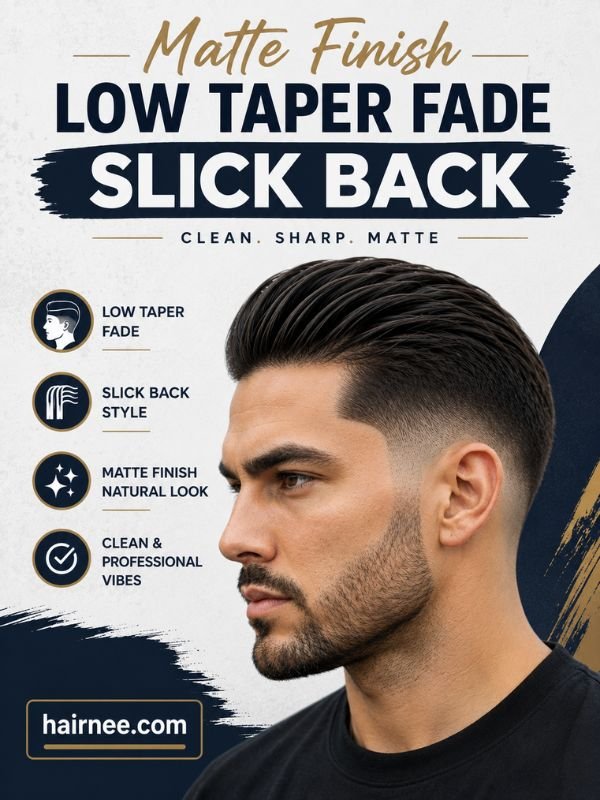
Where the wet look leans formal, the matte finish leans casual. It holds hair in place without any shine, which fits everyday wear better than a glossy pomade.
Styling Tip: Work matte clay through dry hair and rake it back with open fingers. Suitable Hair Type: Fine, medium, or oily hair. Maintenance: Easy daily wash routine.
Low Taper Fade Slick Back with Volume
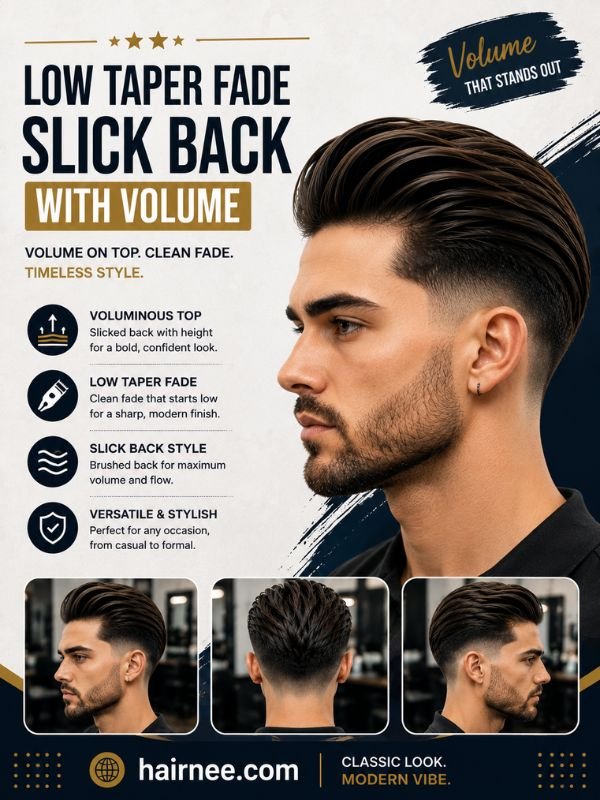
Adding height at the front hairline before sweeping it back gives this version a softer pompadour-like lift. The extra volume helps elongate shorter face shapes.
Styling Tip: Lift the roots with a round brush while blow-drying on high heat. Suitable Hair Type: Medium to thick hair. Maintenance: About 5 minutes of blow-drying each morning.
Layered Low Taper Fade Slick Back
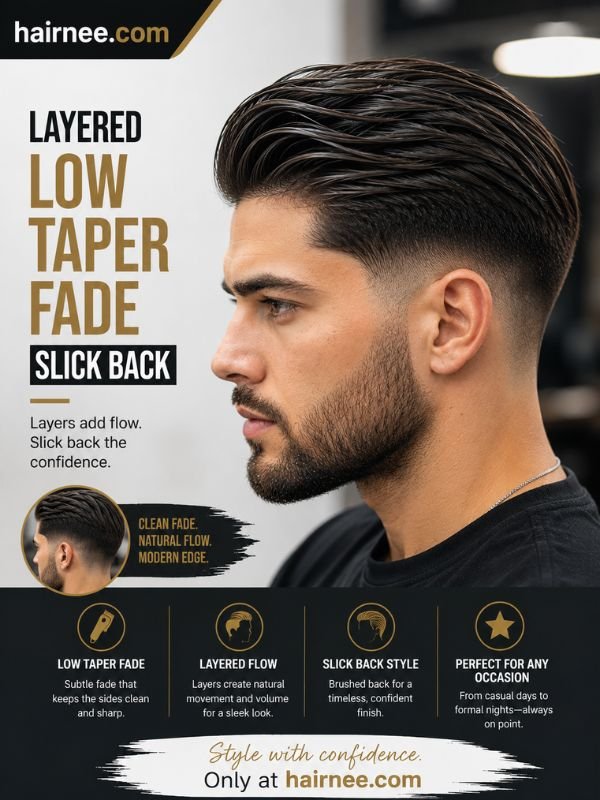
Layering removes weight from the top so it falls back in stages instead of one heavy block. It’s a good option for men whose hair feels too dense for a flat slick back.
Styling Tip: Work styling cream through the mid-lengths and ends for clean separation. Suitable Hair Type: Thick or heavy hair. Maintenance: Layered trims every 4 to 5 weeks.
Undercut Low Taper Fade Slick Back
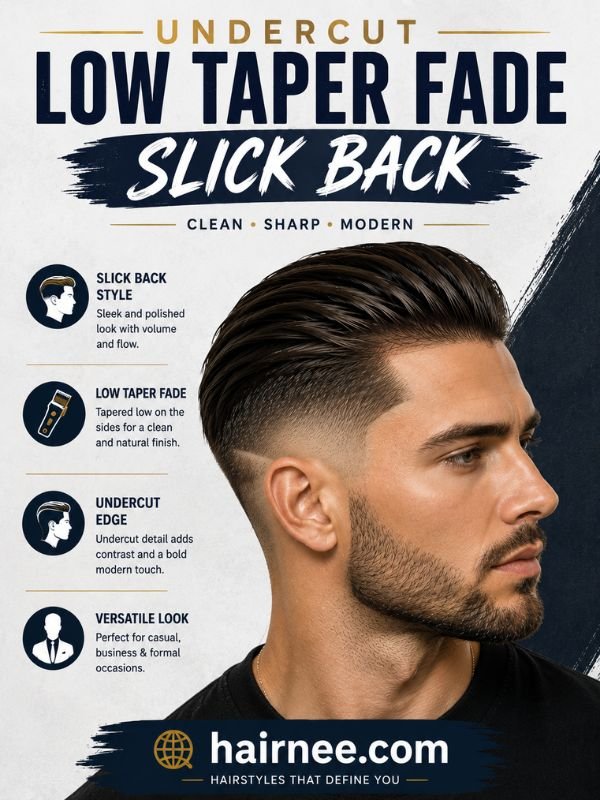
This version creates a sharper break between the long top and the shorter sides than a standard fade does, while still keeping the low taper at the bottom to soften it. It reads as bolder without losing the neat finish.
Styling Tip: Sweep all of the top hair straight back over the disconnected edge. Suitable Hair Type: Thick, straight hair. Maintenance: Trim the sides every 3 weeks.
Low Taper Fade Slick Back with Textured Top
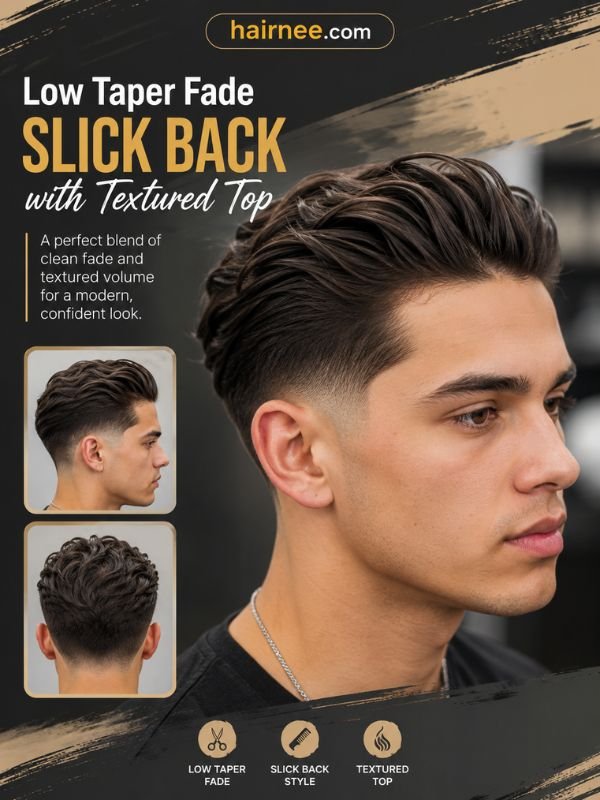
The neck stays clean while heavy point-cutting on top adds texture that breaks up the smooth lines elsewhere. It gives the cut a more youthful, active feel.
Styling Tip: Use matte paste or powder to piece out the top after combing it back. Suitable Hair Type: Fine to medium hair. Maintenance: Low upkeep, easy to finger-style.
Trending Low Taper Fade Slick Back Hairstyle
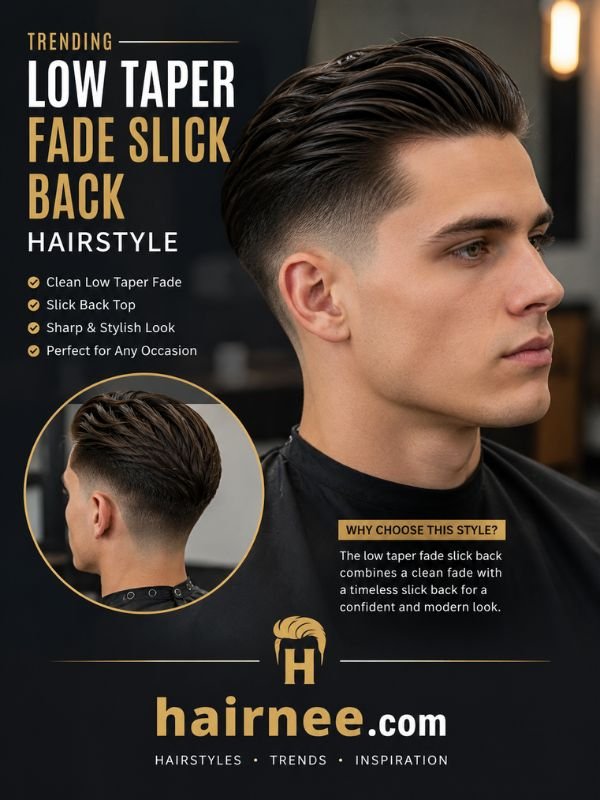
This is the version most barbers are recreating right now — natural texture, a low fade, and a soft matte shine instead of heavy gloss. It looks effortless while still holding shape through an active day.
Styling Tip: Combine sea salt spray, blow-drying, and a small amount of matte clay. Suitable Hair Type: Works across all hair types. Maintenance: Monthly barbershop visits.
Salt and Pepper Low Taper Fade Slick Back
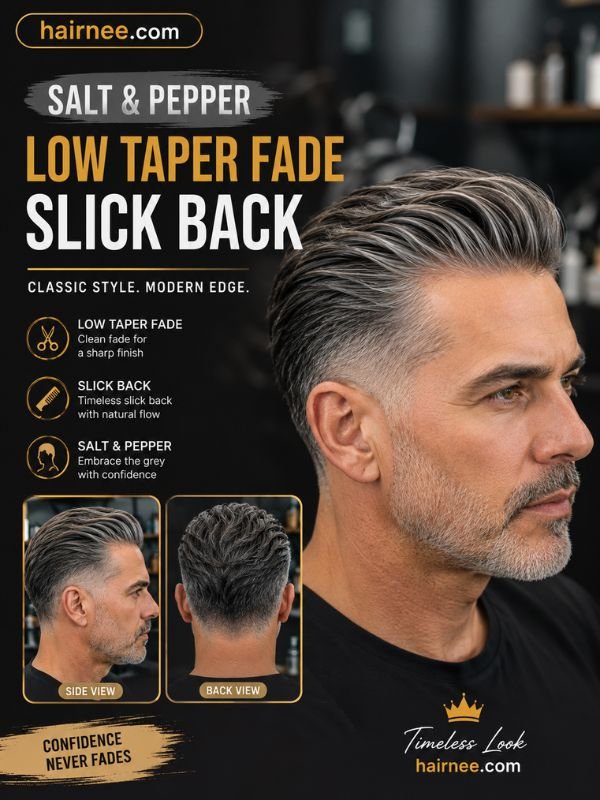
Gray and white strands mixed through the top create natural highlights once the hair is combed back, so a lot of men in their 40s and 50s reach for this cut instead of dyeing it. The low fade keeps the salt-and-pepper transition soft near the ears instead of drawing a hard line between gray and dark hair.
Styling Tip: Use a light, non-greasy pomade so the gray strands catch light instead of looking flat. Suitable Hair Type: Naturally graying straight or wavy hair. Maintenance: Barber visit every 3 to 4 weeks to keep the fade even as new gray comes in.
Receding Hairline Low Taper Fade Slick Back
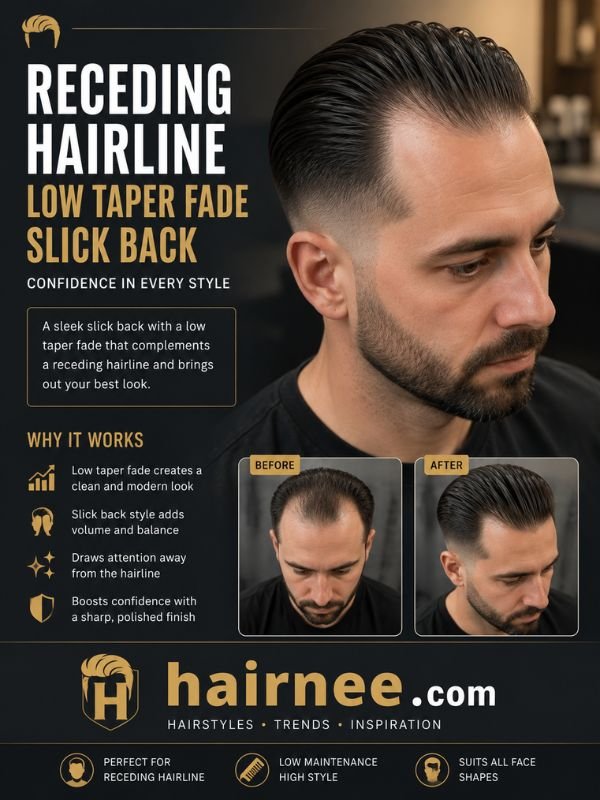
Pushing the top hair straight back instead of forward draws attention away from a receding hairline rather than emphasizing it. The low fade also softens the sides, so the eye reads the whole head as balanced instead of focusing on the hairline.
Styling Tip: Ask your barber to soften the hairline edge instead of squaring it off, then use a matte product to avoid extra shine near the front. Suitable Hair Type: Thinning or receding hair at the temples. Maintenance: Trim every 4 weeks so the hairline stays soft as it grows.
Two-Block Low Taper Fade Slick Back
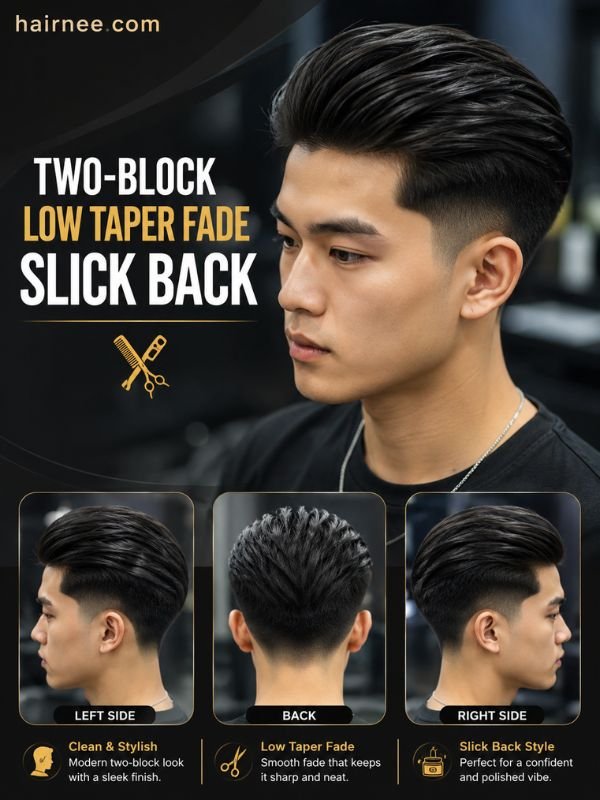
Borrowed from Korean barbering, this version keeps a longer, boxier block of hair on top while the sides drop into a short, low taper underneath. Combing the top back instead of leaving it loose gives the two-block shape a sharper, more grown-up finish.
Styling Tip: Blow-dry the top upward first for volume, then comb it backward with a strong-hold wax. Suitable Hair Type: Medium to thick straight hair. Maintenance: Trim the sides every 3 weeks while letting the top grow longer between cuts.
Wedding Guest Low Taper Fade Slick Back
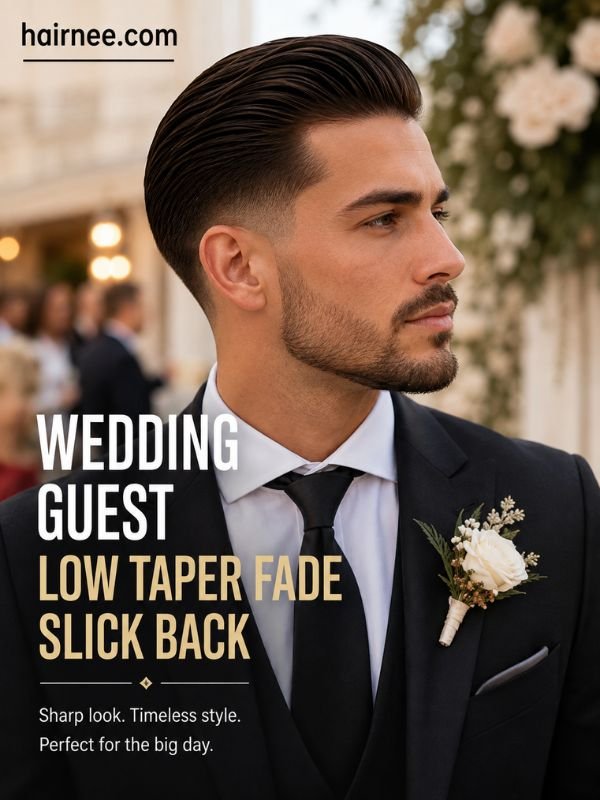
A high-shine finish and a crisp fade make this version look event-ready without needing a fresh haircut the morning of. It photographs cleanly under flash and holds its shape through a full day of standing, dancing, and handshakes.
Styling Tip: Set the style the night before with a strong-hold pomade, then touch up with a comb in the morning instead of restyling from scratch. Suitable Hair Type: Straight or lightly wavy hair. Maintenance: Get a trim 3 to 5 days before the event so the fade still looks fresh on the day.
Cowlick Control Low Taper Fade Slick Back
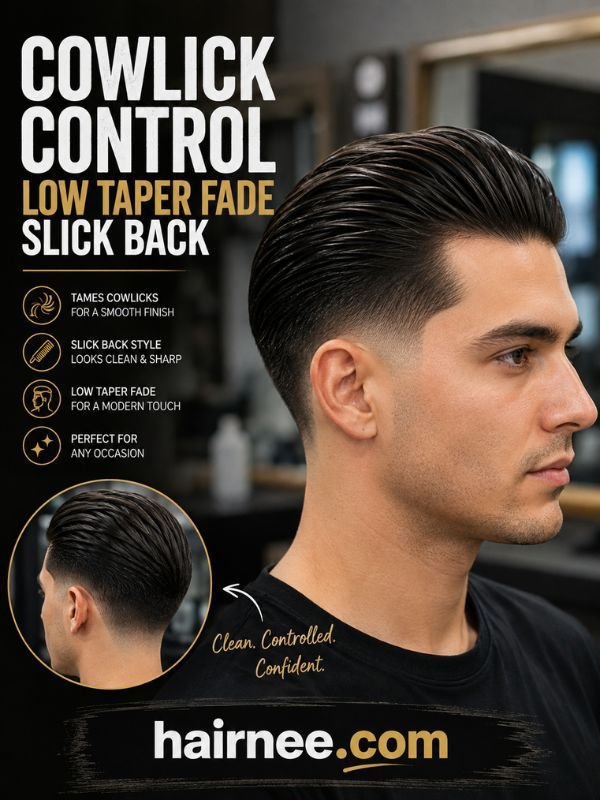
A cowlick at the crown or hairline can push hair in the wrong direction, but combing everything backward in one consistent motion works with the growth pattern instead of against it. The low fade keeps the sides from fighting the cowlick for attention.
Styling Tip: Blow-dry directly against the cowlick’s direction while it’s damp, then lock it down with a firm-hold pomade. Suitable Hair Type: Any texture with a stubborn cowlick at the crown or front hairline. Maintenance: Reapply product midday if humidity or sweat loosens the hold.
Also Read This Low Taper Fade Asian Haircuts: 30 Best Styles (2026)
How to Ask Your Barber for a Low Taper Fade Slick Back
The clearest way to get this cut right is to describe the fade height and top length separately, since “low taper fade slick back” alone can mean different things to different barbers. Bringing a reference photo removes most of that guesswork.
What to Tell Your Barber
Tell your barber you want the fade to start low, near the sideburns and neckline, with enough length left on top to comb backward. A specific phrase that works well: “Keep the fade low and leave the top long enough to slick back.” Showing a photo alongside that request makes the outcome far more predictable.
Best Clipper Guard Numbers
| Guard Number | Result |
| #0 or #1 | Skin-close fade at the very bottom of the taper |
| #2 or #3 | Softer, darker fade that keeps more length |
| #4 or higher | Barely-there fade, best for a subtle transition |
Recommended Fade Height
The fade should begin right at the bottom of the earlobe and around the nape of the neck. If it creeps up above the temple line, it stops being a low taper and turns into a mid or high fade instead.
Top Length Recommendations
Aim for at least 3 to 5 inches on top. Anything shorter tends to stick up rather than lie back smoothly once you comb or blow-dry it.
How to Request a Natural Slick Back
Ask your barber to point-cut the ends on top instead of cutting them blunt. That removes weight so the hair flows backward on its own, without needing a stiff hairspray to force it into place.
Should You Add a Beard or Line Up?
A beard pairs well with this cut if you ask your barber to taper the sideburns directly into it, so there’s no hard gap between hair and facial hair. A clean line up along the front temple corners adds a sharper finishing touch if you want one.
Best Face Shapes
Most face shapes can wear a low taper fade slick back, but the amount of volume and length you choose should shift depending on your bone structure.
| Face Shape | What Works Best |
| Oval | Almost any variation works well |
| Round | Add height on top to elongate the face |
| Square | A sharp fade emphasizes the jawline |
| Diamond | Keep slightly more length on the upper sides |
| Heart | Avoid heavy volume so the forehead doesn’t look wider |
| Oblong | Keep the top flatter to avoid lengthening the face further |
Best Hair Types
The right products change more than the cut itself does when it comes to how well this style holds up through the day.
| Hair Type | Best Approach |
| Straight | Needs volume spray to avoid looking limp |
| Wavy | Natural texture needs minimal product |
| Curly | Moisturizing cream controls frizz |
| Thick | Interior thinning helps it lay flat |
| Thin | Matte products plus blow-drying add fullness |
| Medium | Works with almost any pomade or clay |
Pros and Cons
| Pros | Cons |
| Clean, modern look for most settings | Requires daily combing or styling |
| Works with straight, wavy, and curly hair | Longer top hair takes more time to dry |
| Suits corporate and casual environments | You’ll need to keep styling products on hand |
| Grows out cleanly since the fade stays low | Barber trims every 3 to 4 weeks to stay sharp |
How to Style a Low Taper Fade Slick Back
Getting a clean result comes down to prepping the hair correctly before any product goes in, then locking the shape with the right finish.
Best Styling Products
| Product | Best For |
| Pomade | Classic shine, firm hold, washes out easily if water-based |
| Matte Clay | Modern, no-shine finish with a touchable texture |
| Hair Wax | Medium hold with flexible movement |
| Styling Cream | Light hold, works well on curly or wavy hair |
| Sea Salt Spray | Adds grip and root volume before blow-drying |
Step-by-Step Styling Guide
- Start with clean, towel-dried hair so product absorbs evenly.
- Apply a pre-styler like sea salt spray or a lightweight cream from roots to ends.
- Blow-dry the hair backward using a vent brush on medium heat.
- Work a dime-sized amount of pomade or clay through the hair with your hands.
- Finish with a comb for a tighter look, or your fingers for something looser.
How to Maintain a Low Taper Fade Slick Back
Keeping this cut sharp mostly comes down to consistent trims and a hair-care routine that avoids product buildup. Visit your barber every 3 to 4 weeks so the fade doesn’t grow out unevenly.
Wash your hair 2 to 3 times a week with a hydrating shampoo, and use a clarifying shampoo once a week if you’re using pomade daily. A quick spray of water each morning helps reset the style before you reapply product.
Low Taper Fade Slick Back vs Pompadour
| Feature | Low Taper Fade Slick Back | Pompadour |
| Top Shape | Swept flat or low backward | High rolled volume at the front |
| Height | Low to medium | Tall, dramatic |
| Vibe | Modern and understated | Retro, statement-making |
| Styling Time | 3 to 5 minutes | 10 to 15 minutes |
Low Taper Fade Slick Back vs Comb Over
| Feature | Low Taper Fade Slick Back | Comb Over |
| Direction | Straight back | Sideways across a part |
| Part Line | Usually none | Clearly defined |
| Symmetry | Centered | Asymmetrical |
| Best For | Most face shapes | Round or heart-shaped faces |
Low Taper Fade Slick Back vs Quiff
| Feature | Low Taper Fade Slick Back | Quiff |
| Front Hair | Brushed flat back | Lifted up and forward first |
| Texture | Smooth | Airy and voluminous |
| Hold Needed | Medium to strong | Flexible, medium hold |
| Formality | More professional | More playful |
Celebrity Inspiration
A handful of well-known men have worn variations of this cut on red carpets and in film roles, which has helped keep it in demand at barbershops. David Beckham has worn slicked-back styles with clean faded sides for years, while Brad Pitt showed off a slicked undercut in several film roles. Chris Hemsworth often wears a looser, more textured version with soft tapered sideburns, and Henry Cavill demonstrates how naturally thick, wavy hair looks once it’s slicked back cleanly.
Common Mistakes to Avoid
A few habits are responsible for most low taper fade slick back haircuts looking worse than they should:
- Using too much pomade, which weighs hair down and looks greasy.
- Skipping regular trims and letting the sideburns grow out unevenly.
- Trying to slick back hair that’s shorter than 3 inches, which just sticks up.
- Blow-drying daily without a heat protectant, which damages the hair over time.
- Choosing a heavy, shiny gel on fine hair, which makes the scalp visible.
Final Thoughts
The low taper fade slick back earns its place as one of the more dependable men’s haircuts in 2026 because it adjusts to almost any setting without needing a full restyle. Style it shiny for a formal event or matte for an ordinary weekday, and it still reads as intentional either way.
If you’re after a haircut that grows out gracefully and flatters most face shapes, this is one of the safer, more versatile choices you can bring to your next barber appointment.
Frequently Asked Questions
What is a low taper slick back with a middle part?
It’s the same low taper fade slick back, except the top hair is parted down the center before being brushed backward on both sides. It works best on straight or wavy hair with at least 4 inches of length on top.
How is a mid taper fade slick back different from a low taper?
A mid taper fade starts higher, around the temple area, instead of staying close to the ears and neckline. That makes the sides look shorter overall while the slicked-back top stays the same.
Can you do a low taper fade slick back mullet?
Yes — the sides and front stay faded and slicked back as usual, while the back is left longer for a mullet-style contrast. It’s a bolder combination that works best with thicker hair that can hold shape at the back.
Is a side part possible with a low taper fade slick back?
Yes, a defined side part can be added before combing the rest of the top backward. It gives the style a slightly more formal, structured look than a center-brushed slick back.
How long should my hair be on top for a slick back?
Most barbers recommend at least 3 to 5 inches so the hair lies back smoothly instead of sticking up. Shorter lengths can still work, but they need a firmer-hold product to stay in place.
What’s the best product for a low taper fade slick back?
Pomade gives the most reliable hold with a classic shine, while matte clay works better if you want a no-shine, modern finish. Which one suits you best usually comes down to your hair type and how formal you need the look to be.
How often do I need a trim to keep this haircut sharp?
Plan on visiting your barber every 3 to 4 weeks to keep the fade clean. Because the fade sits low, it grows out more gracefully than a high or skin fade would between visits.
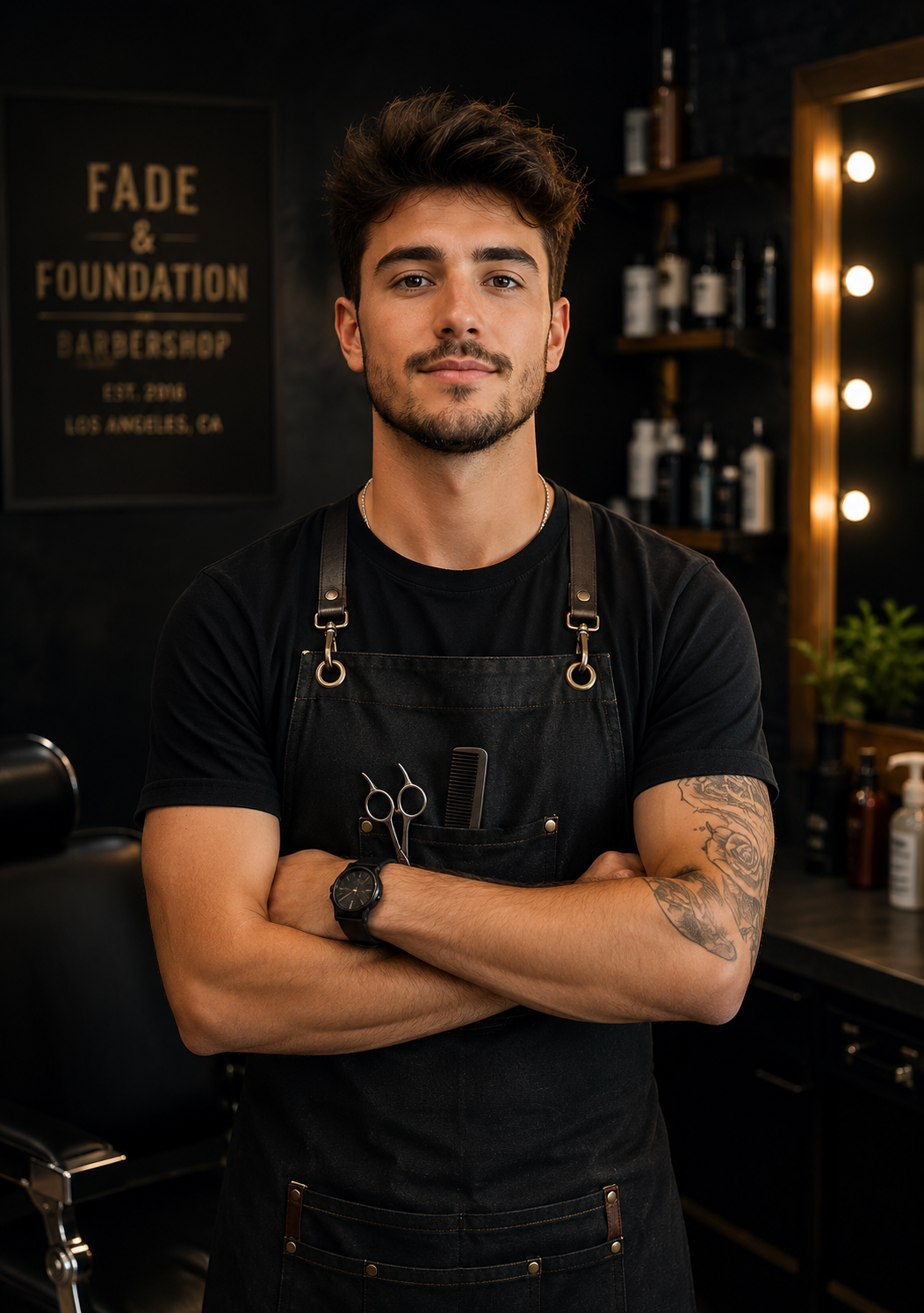
Hi, I’m Jake Miller a passionate barber based in Los Angeles, California, with over 3 years of hands-on experience in the craft. I specialize in modern fades, clean cuts, precision beard grooming, and classic barbering techniques, blending sharp technical skill with a relaxed, personal touch.
Over these years, I’ve had the opportunity to work with all kinds of clients, each with their own style and personality and that’s exactly what I love about this craft. For me, it’s never just about a haircut. It’s about understanding who you are and bringing that out through precision and care.
Every client who sits in my chair gets my full attention and expertise, because I believe great barbering is where confidence meets individuality. My goal is simple: to make sure you walk out looking sharp and feeling like the best version of yourself.

2 thoughts on “Low Taper Fade Slick Back: 30 Best Styles for Men in 2026”