

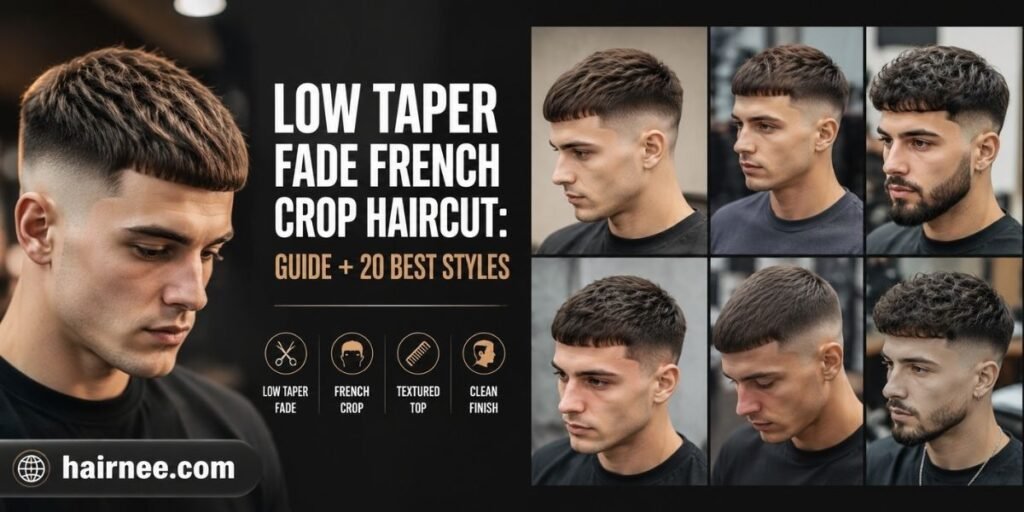
A low taper fade french crop haircut pairs a short, textured top with a fringe that sits forward, then blends into a fade that starts low near the ears. It’s one of the easiest cuts to keep sharp without spending much time on it every morning. Guys pick it for work, school, and everything in between because it looks put-together without trying too hard.
This guide breaks down guard numbers, face shapes, real barber technique, and 20 style variations you can bring to your next appointment. You’ll also find a cost breakdown, a growing-out timeline, and answers to the questions people actually search for.
What Is a Low Taper Fade French Crop Haircut?
It’s a men’s cut that combines a cropped, textured top with a fade that tapers down low around the ears and neckline instead of climbing high up the sides. The top stays short enough to hold a small forward fringe, and the sides stay soft rather than sharply skinned.
Because the fade sits low, there’s less contrast between the top and sides than you’d get with a mid or high fade. That softer transition is why this cut feels more classic than trendy, even though barbers still update it every season with new fringe and texture choices.
Why Is the Low Taper Fade French Crop So Popular?
People keep asking for it because it works everywhere, from the office to the gym to a weekend hangout, without needing a second haircut for a different setting. A low fade also grows out slower than a high one, so you’re not stuck booking a barber every two weeks just to stay presentable.
It flatters most hair types, too. Straight hair holds the fringe flat and clean, wavy hair gives it texture for free, and curlier hair adds volume on top that balances the tighter sides. That range is rare for a single haircut name.
Who Should Get a Low Taper Fade French Crop Haircut?
This cut suits students and office workers who need something low-effort but still sharp for meetings or class. It also works well for guys with round or square faces, since the fringe adds length and softens the jawline.
Athletes and anyone who’s active tend to like it because the low fade holds up under helmets and sweat better than higher, more exposed fades. If your daily routine doesn’t leave time for styling, this is one of the more forgiving options out there.
Guard Numbers & Length Guide (Quick-Reference Table)
Most barbers won’t hand you exact numbers unless you ask, so here’s a starting point to bring into your next appointment. These are typical ranges. Your barber will adjust based on your hair density and how fast your hair grows.
| Zone | Clipper Guard | Approx. Length |
| Nape/neckline | 0.5–1 | Very close, near skin |
| Sides (ear level) | 2–3 | 6–10mm |
| Blend zone (mid-side) | 3–4 | 10–13mm |
| Crown/top | Scissor over comb | 1.5–3 inches |
| Fringe | Point-cut by hand | 1–2 inches |
Ask for the fade to “start low, around the ear line.” That phrase alone tells most barbers exactly where you want the transition to begin.
Low Taper vs Fade: What “Low” Actually Means
A taper and a fade aren’t quite the same thing, even though people use the words interchangeably. A taper gradually shortens the hair without ever exposing skin, while a fade blends down to skin or near-skin at some point.
“Low” simply describes where that blend starts. A low taper fade begins its transition just above the ears, a mid fade starts around the temple, and a high fade starts well above that, closer to the crown. The lower the starting point, the softer and more subtle the overall look.
Best Face Shapes for a Low Taper Fade French Crop
This cut isn’t limited to one face shape, but a few small adjustments make it work better for you specifically. These are starting points, not hard rules. A good barber will still shape things to your features.
- Round faces: ask for extra length on the fringe to add vertical height and break up width.
- Square faces: a softer, slightly textured fringe balances a strong jawline instead of sharpening it further.
- Long faces: keep the top shorter and skip a heavy forward fringe, which can add unwanted length.
- Oval and heart faces: almost any version works, since this shape is already balanced.
Neckline & Back Styling Options
The back of a low taper fade french crop usually gets less attention than the front, but it changes the whole shape of the cut. A rounded neckline follows your natural hairline and looks softer, more low-maintenance, and grows out with fewer awkward stages.
A squared-off neckline gives a sharper, more defined finish and is popular with guys who like a crisp line-up all the way around. It needs more frequent trims to stay looking fresh, since the hard edge grows out faster than a rounded one.
Also Read This Low Taper Fade Buzz Cut: 30 Styles, Guards & Barber Guide
How Barbers Actually Cut It
Most barbers start at the neckline with a low guard, then work upward, blending guard sizes as they move toward the ear and temple. The blend zone gets extra attention with a shorter clipper-over-comb pass to avoid any visible lines between sections.
On top, scissor-over-comb or texturizing shears shape the crown into a workable length, then the fringe gets point-cut by hand rather than cut straight across. That hand-cutting is what gives the fringe its soft, slightly broken edge instead of a blunt one.
20 Best Low Taper Fade French Crop Haircuts
Here are 20 real variations of the cut, each suited to a different hair type or styling preference.
Classic Low Taper Fade French Crop Haircut
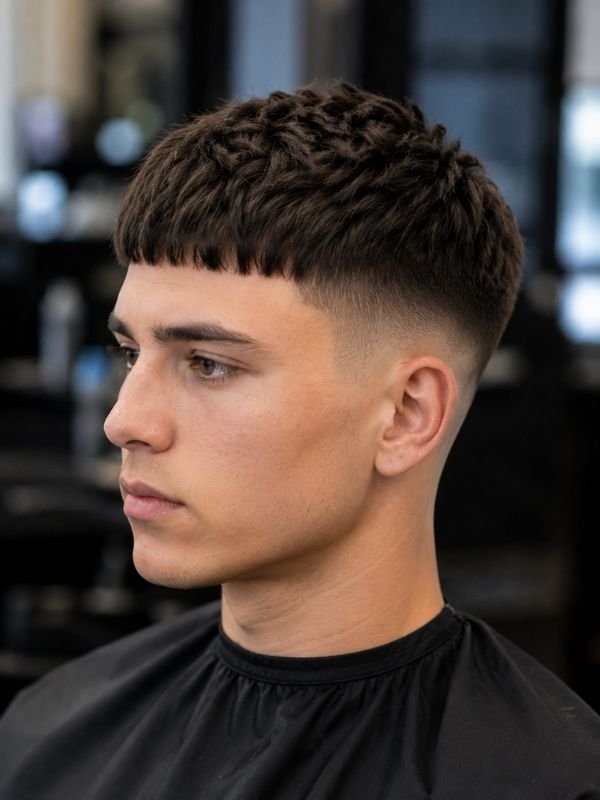
The sides fade low and smooth, and the top stays short with a straight, simple fringe. It’s the safest option if you want something clean for work or a formal setting.
Best for: straight or slightly wavy hair. Styling tip: a small amount of matte cream, brushed forward.
Low Taper Fade Textured French Crop
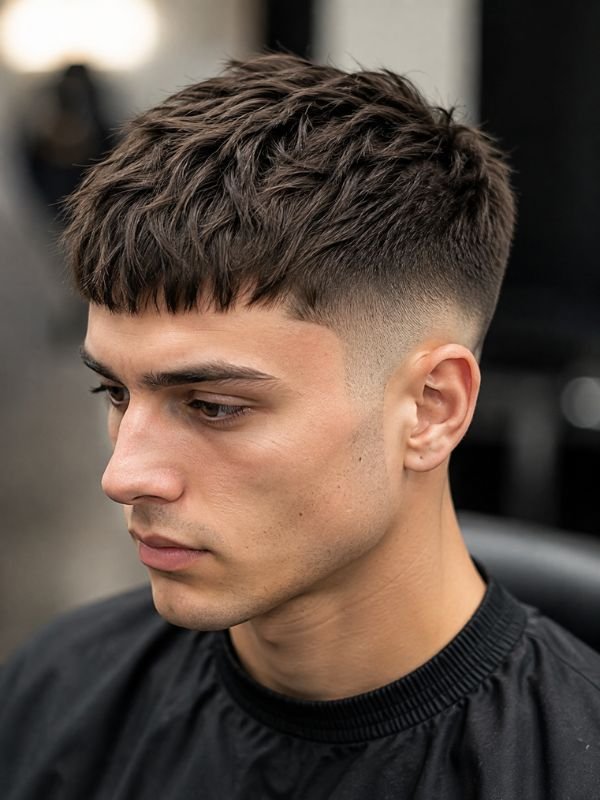
Point-cutting on top breaks up the length so the hair sits with natural movement instead of lying flat. It suits guys who want texture without going fully messy.
Best for: thick or medium-density hair. Styling tip: work matte clay through damp hair with your fingers.
Low Taper Fade French Crop with Fringe
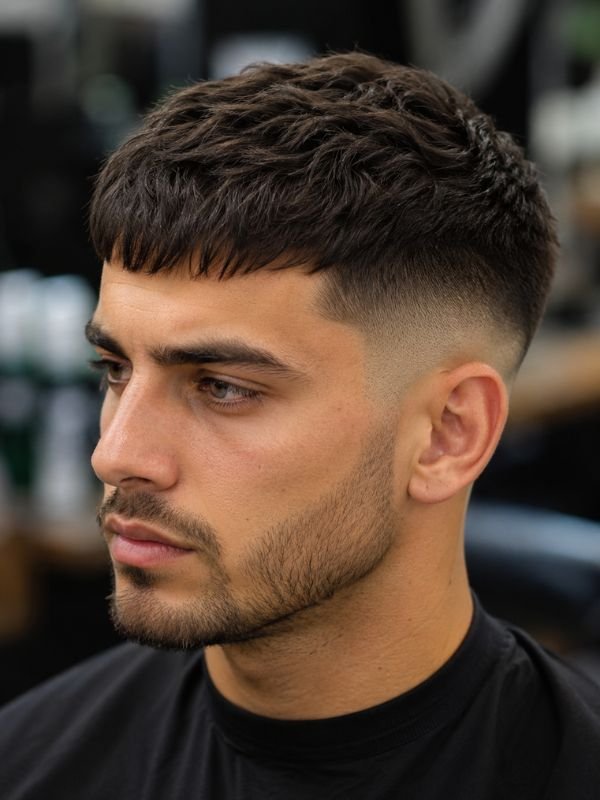
The fringe takes center stage here, sitting a little longer and falling softly across the forehead. It’s popular with younger guys who want a more youthful shape.
Best for: any hair type. Styling tip: keep the fringe slightly damp when styling so it holds its shape longer.
Messy Low Taper Fade French Crop
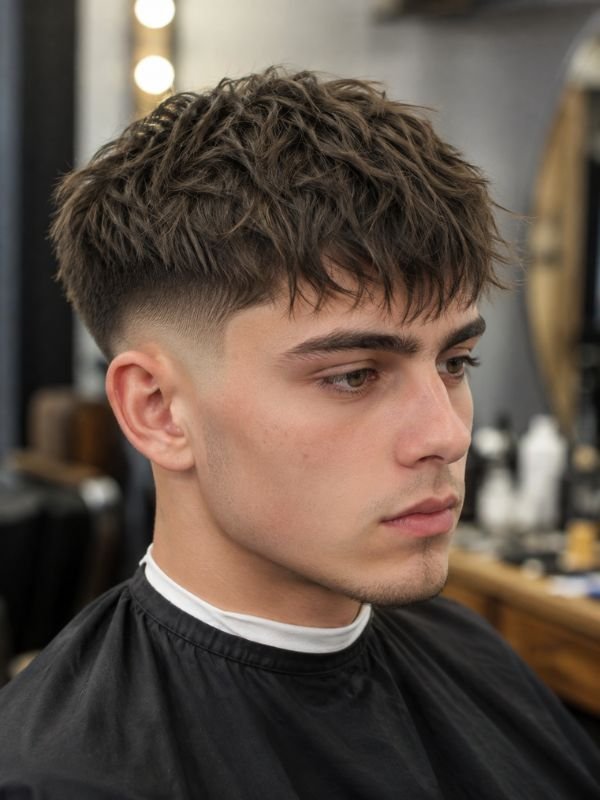
Instead of combing everything into place, the top gets tousled by hand for a lived-in look. The low fade underneath keeps it from looking unkempt.
Best for: wavy or curly hair. Styling tip: light wax, worked in with fingers, not a comb.
Low Taper Fade French Crop with Beard
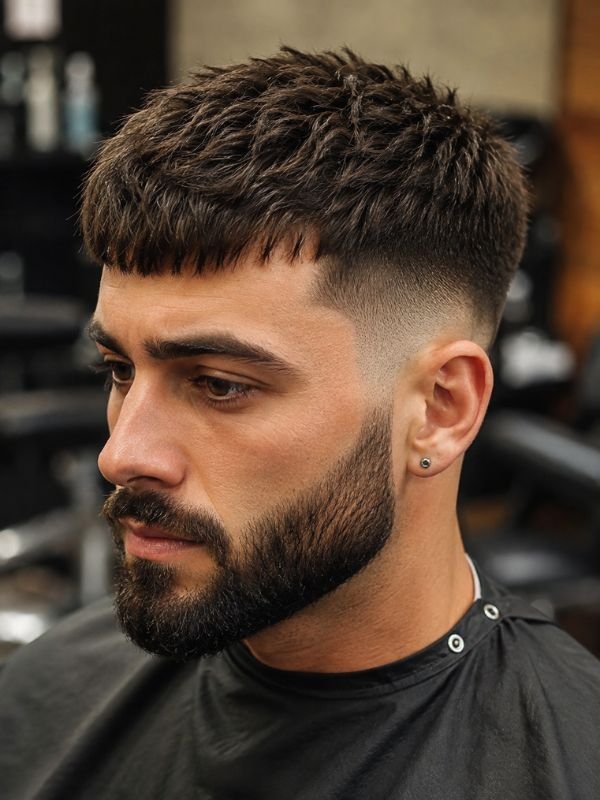
Pairing the cut with a groomed beard creates a fuller, more mature look overall. The low fade blends into the beard line instead of creating a hard stop.
Best for: any hair type with beard growth. Styling tip: line up the beard the same week as your haircut.
Curly Low Taper Fade French Crop
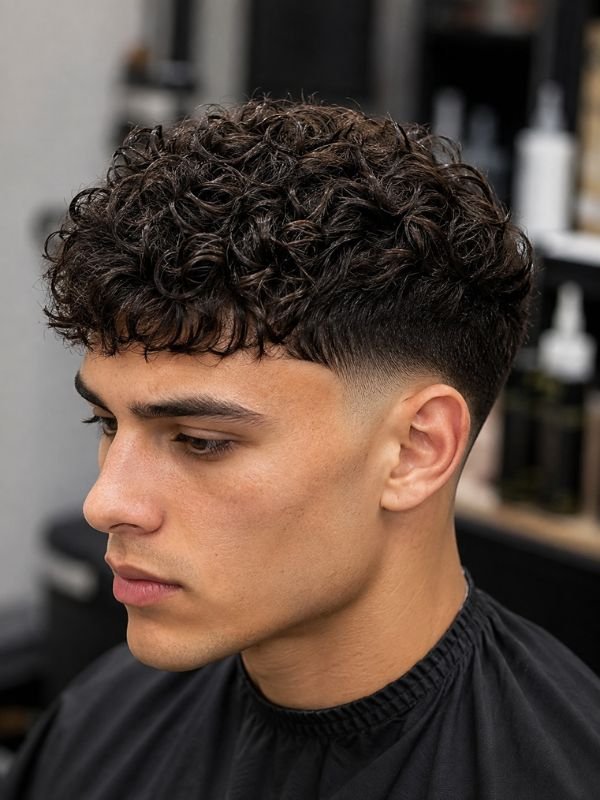
Curls stay natural on top instead of being flattened, which gives the whole cut extra volume without extra effort. The tapered sides keep things from looking too wild.
Best for: curly or coily hair. Styling tip: apply curl cream on wet hair, then let it air-dry.
Low Taper Fade French Crop with Line Up
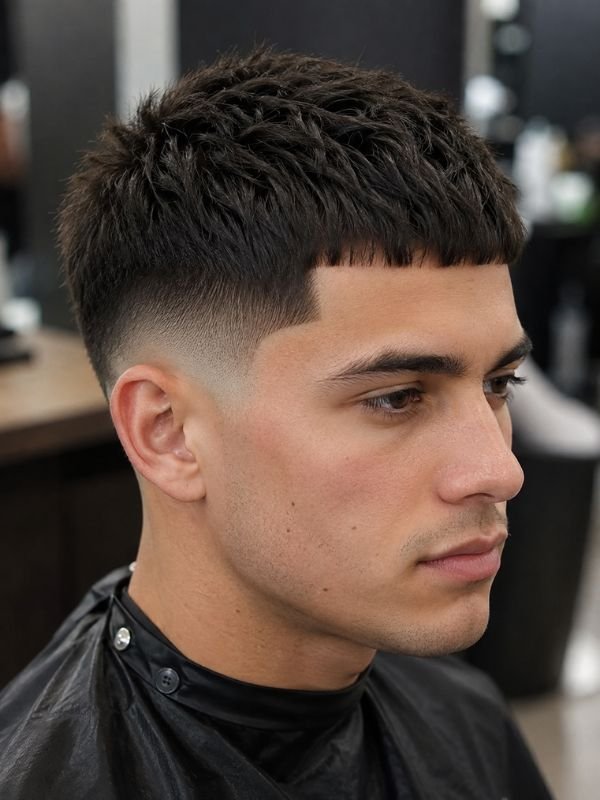
A crisp line-up along the hairline sharpens the whole cut, especially at the temples. It contrasts nicely against the softer, low fade underneath.
Best for: any hair type. Styling tip: get the line-up refreshed every two weeks, even between full haircuts.
Short Low Taper Fade French Crop
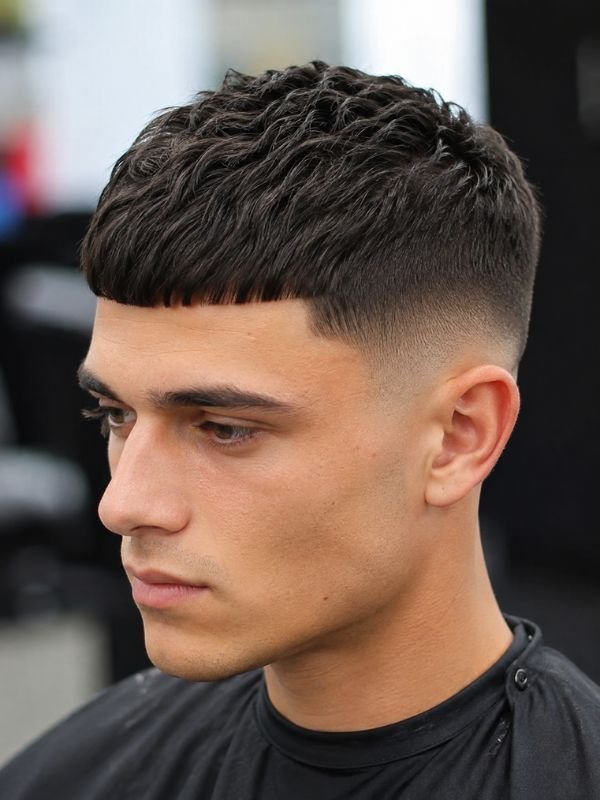
Everything gets kept tight and close, which means almost no daily styling. This is the version to ask for if mornings are rushed.
Best for: straight or fine hair. Styling tip: a light cream is enough. Heavy product isn’t needed at this length.
Low Taper Fade French Crop for Thick Hair
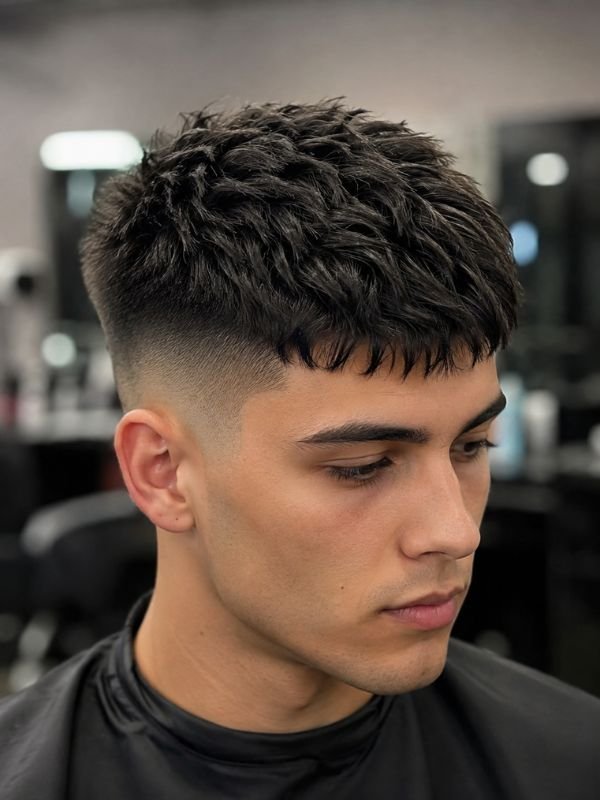
Thinning shears remove bulk on top so thick hair doesn’t sit heavy or triangular. The low fade balances the weight that’s left.
Best for: thick, dense hair. Styling tip: ask specifically for thinning shears, not just a regular trim.
Wavy Low Taper Fade French Crop
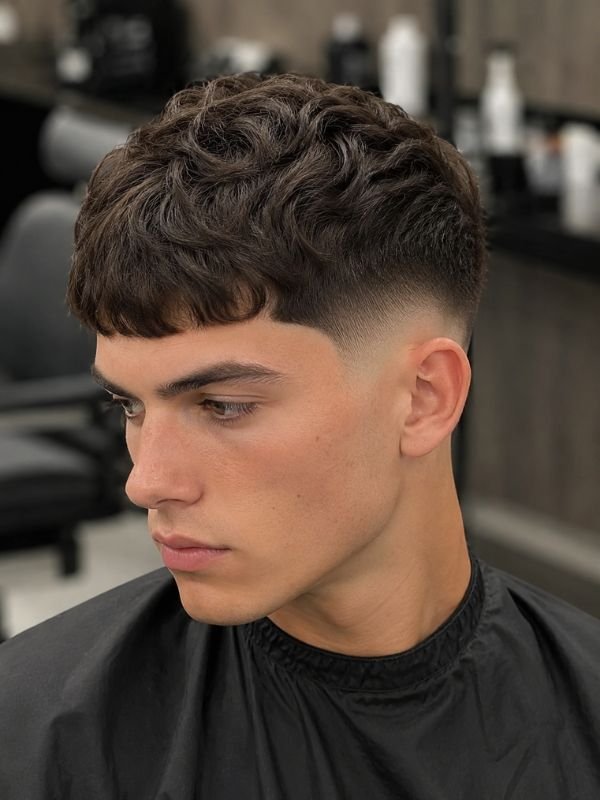
Natural waves do most of the styling work here, adding texture without product. The fringe falls forward with a bit of movement instead of sitting flat.
Best for: wavy hair. Styling tip: a light sea salt spray on damp hair enhances the wave pattern.
Low Taper Fade French Crop with Hard Part
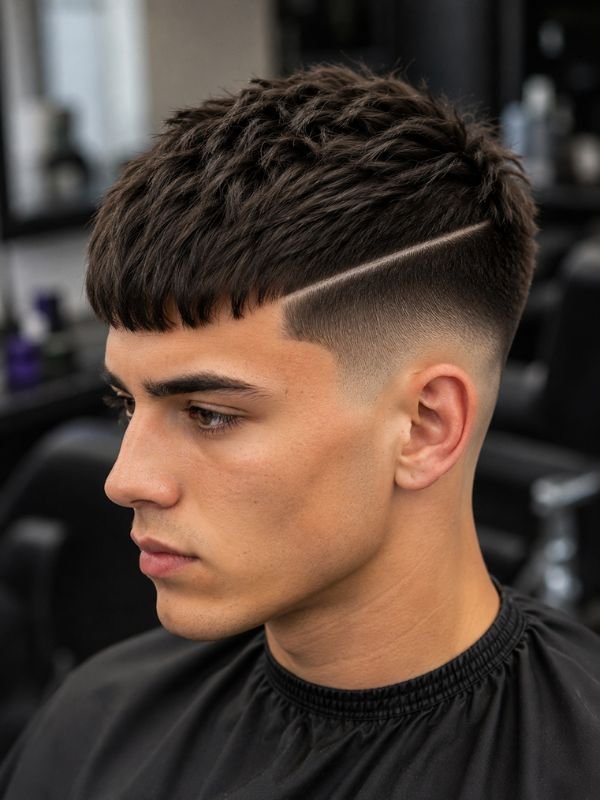
A shaved line separates the fringe from the side section, adding a bold, deliberate detail. It stands out more than most variations on this list.
Best for: straight or wavy hair. Styling tip: ask your barber to refresh the part at every visit, since it grows out fast.
Modern Low Taper Fade French Crop
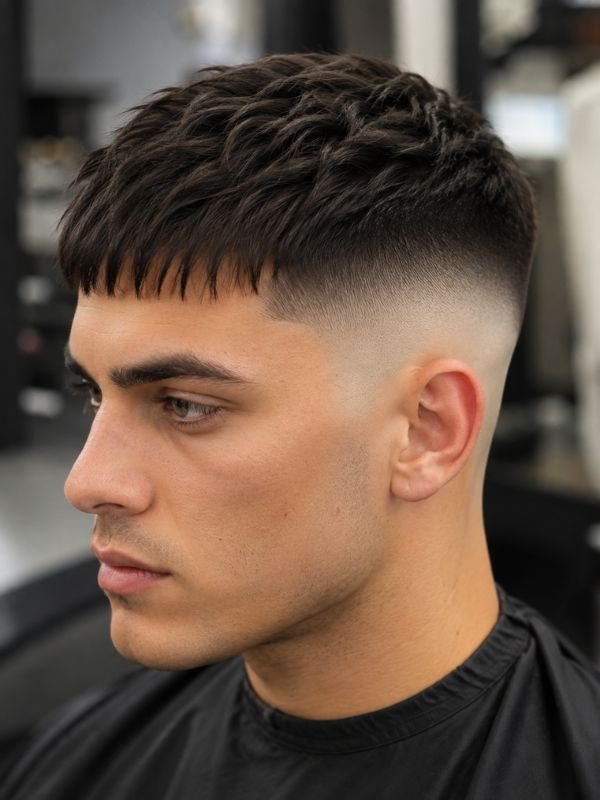
This version leans into a slightly longer, more textured fringe and cleaner blending than the traditional crop. It’s the one most barbers show when asked for something “current.”
Best for: most hair types. Styling tip: texture powder adds volume without stiffness.
Low Taper Fade French Crop with Skin Fade Finish
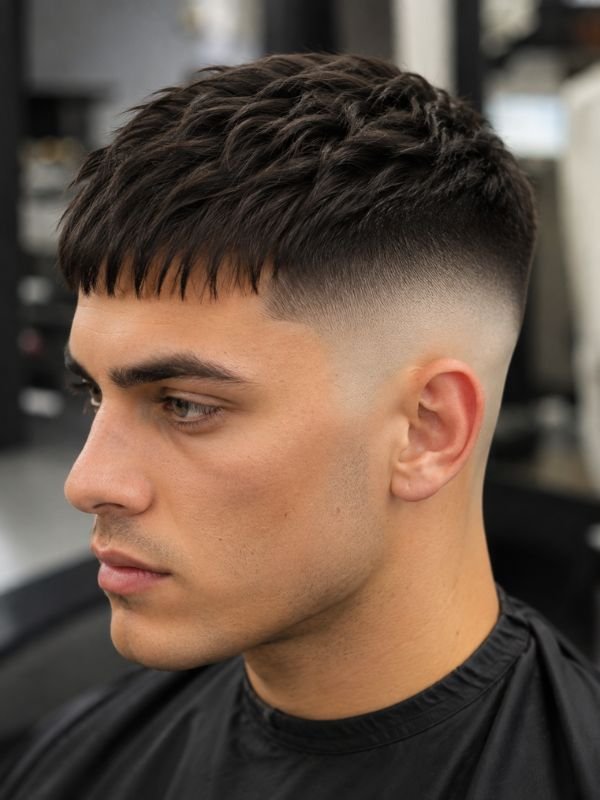
The taper stays low and gradual through most of the side, but tightens to skin right near the neckline. It’s a subtle way to add sharpness without going for a full high fade.
Best for: straight or thick hair. Styling tip: book trims every two to three weeks to keep the skin section clean.
Low Taper Fade French Crop for Curly Hair
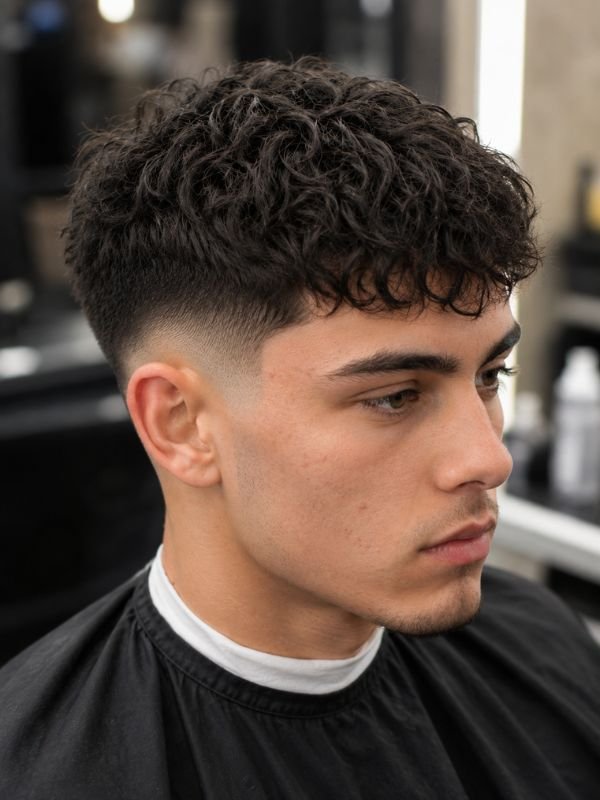
Barbers usually leave slightly more length on top here than on a straight-hair version, so the curl pattern has room to show. The sides stay tapered for balance.
Best for: curly or coily hair. Styling tip: a leave-in conditioner keeps curls hydrated between washes.
Low Taper Fade French Crop with Textured Fringe
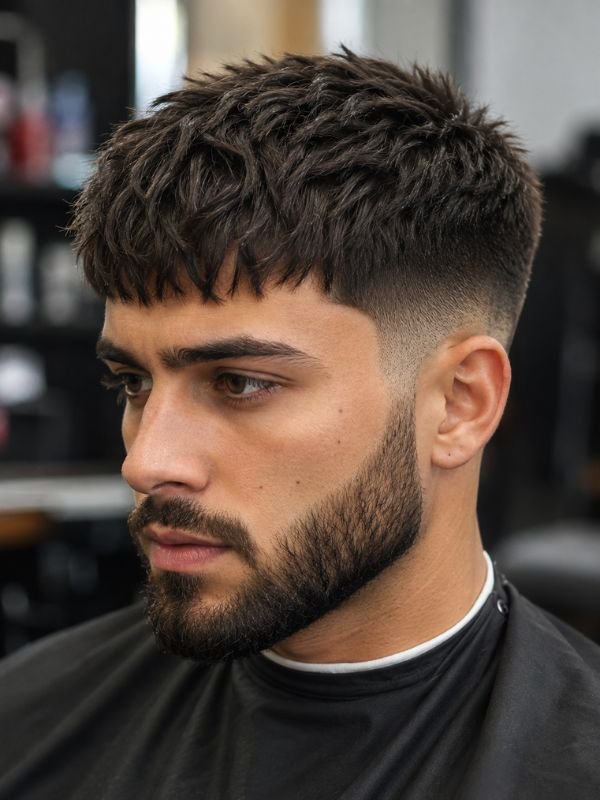
Point-cutting on the fringe itself creates a choppy, broken edge instead of a straight line. It reads as intentional rather than undone.
Best for: straight, wavy, or thick hair. Styling tip: style with fingers while the hair is slightly damp for the most texture.
Low Taper Fade French Crop for Receding Hairline
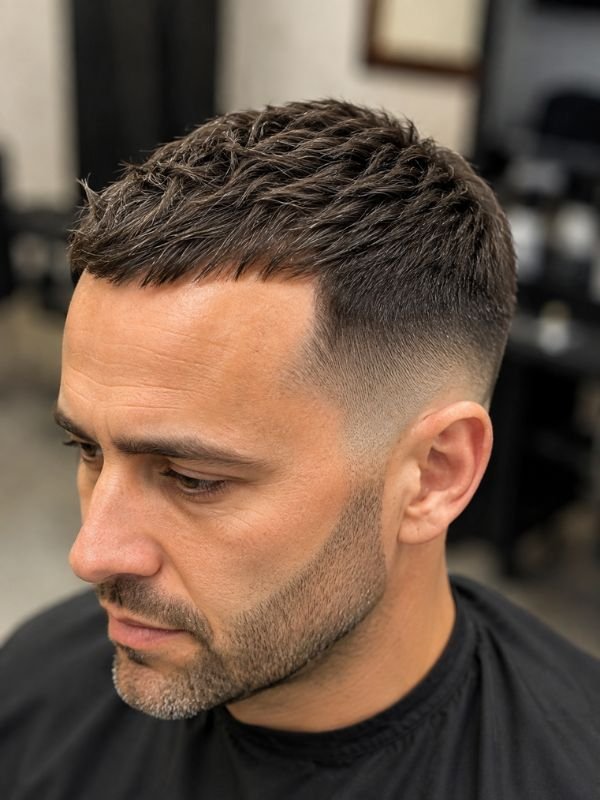
Keeping a bit more length at the front draws attention forward and softens a receding hairline. The low fade at the sides keeps the rest of the cut looking balanced rather than drawing extra attention to the top.
Best for: any hair type with a receding hairline. Styling tip: avoid slicking the fringe straight back, which can expose more scalp than needed.
Low Taper Mullet French Crop
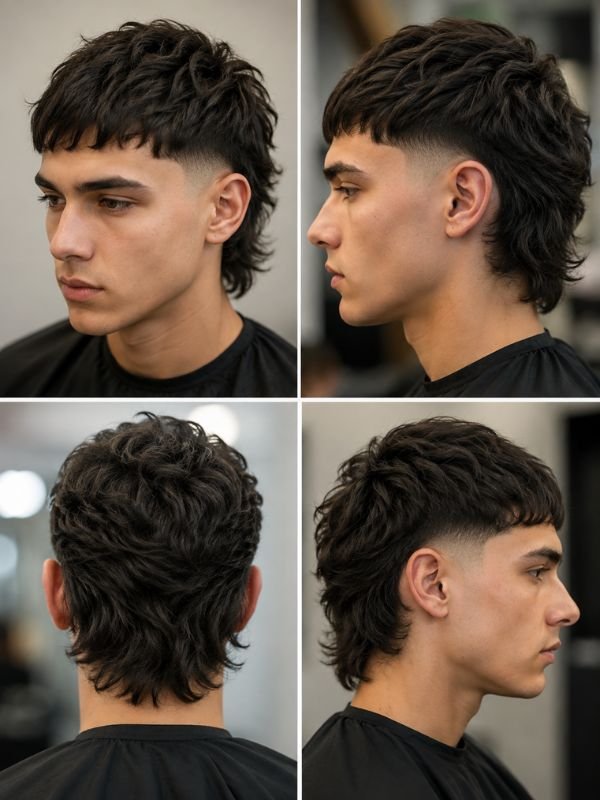
The front keeps the cropped, textured shape while the back is left longer for a modern mullet finish. It’s a bolder pick for guys who want something less traditional.
Best for: straight or wavy hair, medium to long overall length. Styling tip: get the back trimmed on its own schedule since it grows differently than the front.
Low Taper Fade French Crop with Design
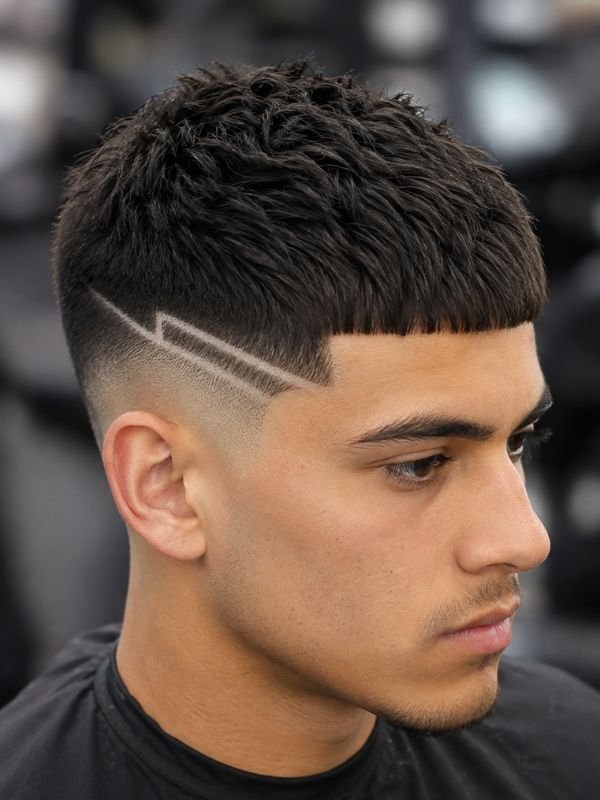
A simple shaved line or small pattern on the side adds a personal touch without changing the overall shape. It works best as a subtle detail rather than something elaborate.
Best for: straight or thick hair. Styling tip: ask for the design to be refreshed every other haircut to keep the lines sharp.
Low Taper Fade French Crop for Round Face
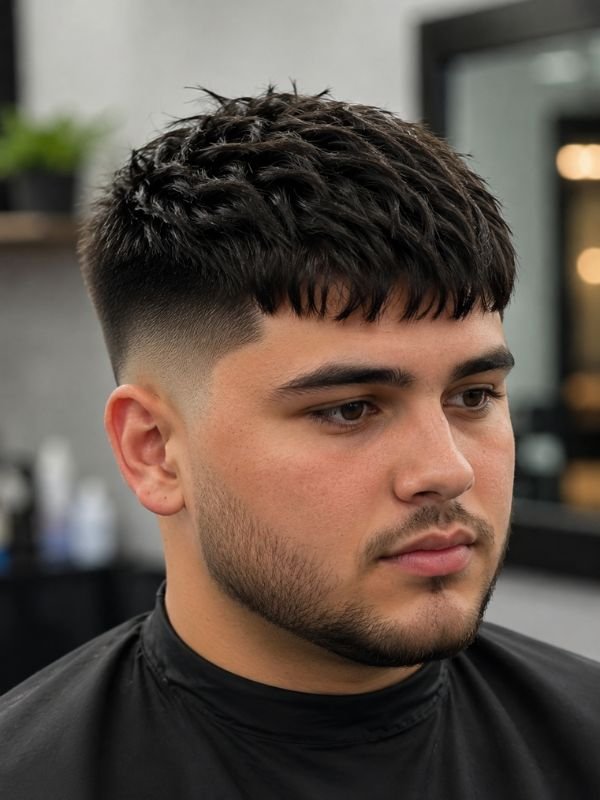
The fringe gets left longer and slightly angled to add vertical length, which helps balance a rounder face shape. The low fade keeps the sides from adding extra width.
Best for: any hair type, round face shape. Styling tip: avoid a completely straight-across fringe, which can emphasize width instead of reducing it.
Low Taper Fade French Crop Blowout
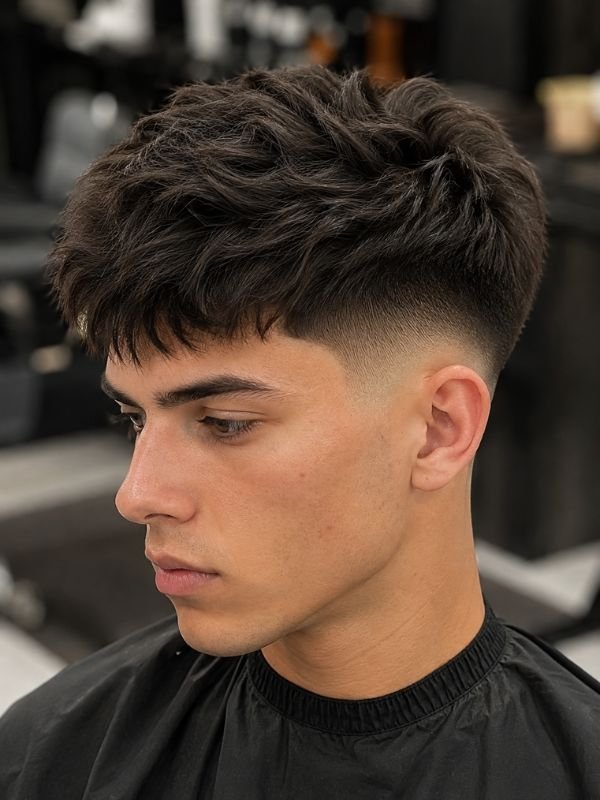
The top gets blown out for extra height and volume, while the low fade keeps the base clean and controlled. It’s a dressier take on the cut, good for nights out or events.
Best for: straight or wavy hair with some length on top. Styling tip: blow-dry with a round brush, lifting at the root, then set with light-hold spray.
Low Taper Fade French Crop vs Caesar Cut vs Ivy League
If you’re not sure this is the right cut for you, here’s how it stacks up against two similar short styles.
| Feature | Low Taper Fade French Crop | Caesar Cut | Ivy League |
| Top length | Short, textured, with fringe | Very short, even length | Slightly longer than Caesar |
| Fringe | Forward, textured or blunt | Short, straight across | Minimal, side-swept |
| Sides | Low taper fade | Usually low fade or taper | Taper, no fade required |
| Styling effort | Low to moderate | Very low | Low |
| Best for | Guys who want texture and a defined fringe | Lowest-maintenance option | Classic, conservative look |
The French crop wins if you want a bit more personality up top. The Caesar cut is the better call if you want to spend less than a minute styling. The Ivy League sits in between, offering a more traditional shape without a hard fade line.
How to Ask Your Barber for a Low Taper Fade French Crop
Bring a reference photo if you can. It removes most of the guesswork for a barber you haven’t used before. Beyond that, a simple script works: “Low taper fade starting near the ears, short textured top, and a fringe I can push forward.”
Mention your hair type up front, since that changes how much length the barber leaves on top. If you want a specific guard number or a squared neckline instead of rounded, say so before they start clipping.
How to Maintain a Low Taper Fade French Crop
Get a trim every three to four weeks to keep the fade and fringe from growing out unevenly. Because the fade starts low, you can usually stretch this a little longer than you could with a high or skin fade.
Wash two to three times a week rather than daily, since over-washing dries out the scalp and makes styling harder. Use a small amount of product each morning. Piling it on tends to flatten the fringe instead of holding it up.
How Much Does It Cost?
Prices vary a lot by location and barbershop tier, but most guys pay somewhere between $25 and $60 for this cut at a standard barbershop. High-end grooming lounges or barbers with a strong social media following can charge $70 or more for the same basic shape.
If your barber also handles beard lining or a design detail, expect an extra $5 to $15 on top of the base price. Tipping 15-20% is standard practice at most shops in the US.
Growing It Out: What to Expect Week by Week
Weeks 1-2: the cut looks its sharpest, with a clean fade line and a fringe that holds its shape easily. Weeks 3-4: the fade starts to soften and the fringe gets a little longer, giving you more styling flexibility.
Weeks 5-6: the fade line blurs noticeably and the top starts looking more like a longer crop than a crisp cut. Past six weeks, you’re really wearing a different haircut, and most guys book a trim before it gets there.
DIY at Home vs Professional Barber
Cutting your own fade at home is possible with the right clippers and guard set, but getting a clean, even blend without visible lines takes real practice. It’s a reasonable option for basic maintenance between barber visits, not for the first cut itself.
A professional barber is worth it for the initial shape, the fringe point-cutting, and any line-up work, since small mistakes there are hard to fix yourself. Many guys land on a mix of both: barber for the full cut, home clippers for quick neckline touch-ups in between.
Best Hair Products
The right product depends more on your hair type than on the haircut itself, since the top is what actually needs styling.
| Product | Best For | What It Does |
| Matte clay | Straight, thick hair | Holds shape without shine |
| Light wax | Wavy or messy styles | Adds flexible, piecey texture |
| Texture powder | Fine or straight hair | Builds volume without weight |
| Curl cream | Curly or coily hair | Defines curls, reduces frizz |
| Sea salt spray | Wavy hair | Enhances natural texture |
A coin-sized amount is usually enough for short hair. More product just weighs the fringe down.
Common Mistakes to Avoid
Waiting too long between trims is the most common one, since it lets the fade grow out unevenly and lose its shape. Using too much product is a close second. It makes the top look greasy rather than textured.
Skipping a clear length request is another mistake worth avoiding. If you don’t specify a guard number or approximate length, you’re leaving a lot up to guesswork, and results can vary a lot between barbers.
Also Read This Low Taper Fade Buzz Cut: 30 Styles, Guards & Barber Guide
Why This Haircut Is Trending
Low-maintenance cuts have become the default preference for a lot of men, and this style delivers that without giving up shape or personality. It also photographs well, which matters more than it used to given how much style inspiration now comes from social media rather than magazines.
Barbers report it as one of the more requested taper fade haircuts heading into 2026, partly because it works across so many hair types and doesn’t require a big commitment if you decide to switch it up later.
Frequently Asked Questions
What fade suits a French crop?
A low taper fade suits a French crop best, since it keeps the sides soft and lets the textured top and fringe stay the focus. Mid and high fades work too, but they create more contrast and a bolder overall look.
Is a low fade a taper?
Not exactly. A fade blends down to skin at some point, while a taper never fully exposes skin. A “low taper fade” is really a low fade with a soft, taper-style blend rather than a sharp line.
What is a Gen Z haircut?
There’s no single official definition, but the term usually refers to textured, low-maintenance cuts with a visible fringe, like the low taper fade French crop, mullets, and curtain styles. These favor natural texture over heavily styled, product-dependent looks.
How often should you get a low taper fade French crop trimmed?
Every three to four weeks keeps the shape sharp without needing constant barbershop visits. Because the fade starts low, it grows out more slowly than higher fades, so you have a bit of flexibility here.
Does a low taper fade French crop work with thin hair?
Yes, though your barber may keep slightly more length on top to avoid making thin hair look sparse. Texture powder also helps add the appearance of volume without extra product weight.
How much does a low taper fade French crop haircut cost?
Most barbershops charge between $25 and $60, depending on location and the barber’s experience level. Premium grooming lounges or in-demand barbers can charge more for the same basic cut.
Summary
The low taper fade french crop works because it doesn’t ask much of you day to day while still looking deliberate. Whether you go classic, textured, curly, or add a beard or hard part, the shape flexes to fit your hair type and your routine.
Bring a reference photo, ask for specific guard numbers if you know them, and stick to regular trims. That combination is really all it takes to keep this cut looking sharp for weeks at a time.
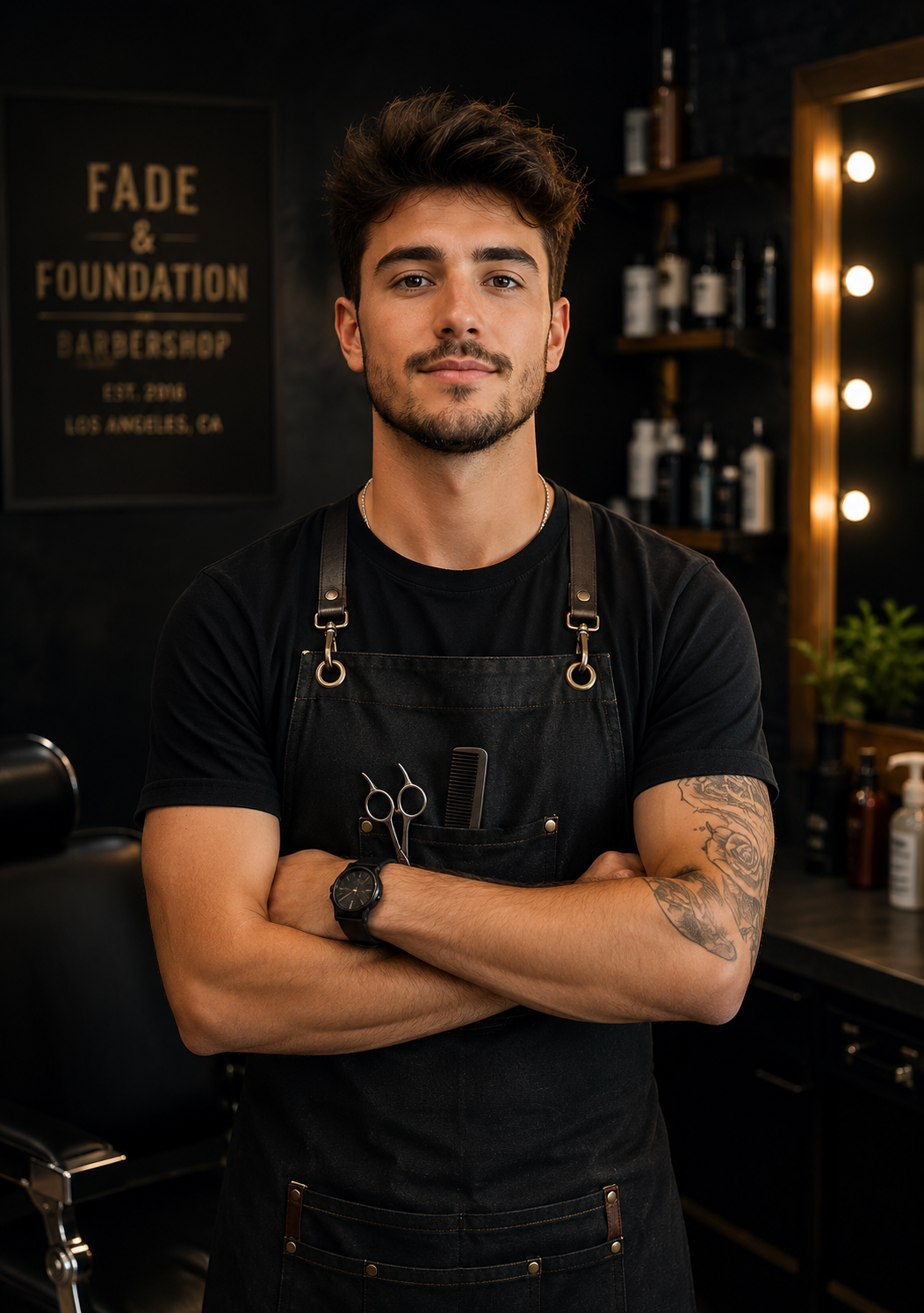
Hi, I’m Jake Miller a passionate barber based in Los Angeles, California, with over 3 years of hands-on experience in the craft. I specialize in modern fades, clean cuts, precision beard grooming, and classic barbering techniques, blending sharp technical skill with a relaxed, personal touch.
Over these years, I’ve had the opportunity to work with all kinds of clients, each with their own style and personality and that’s exactly what I love about this craft. For me, it’s never just about a haircut. It’s about understanding who you are and bringing that out through precision and care.
Every client who sits in my chair gets my full attention and expertise, because I believe great barbering is where confidence meets individuality. My goal is simple: to make sure you walk out looking sharp and feeling like the best version of yourself.

1 thought on “Low Taper Fade French Crop Haircut: Guide + 20 Best Styles”