
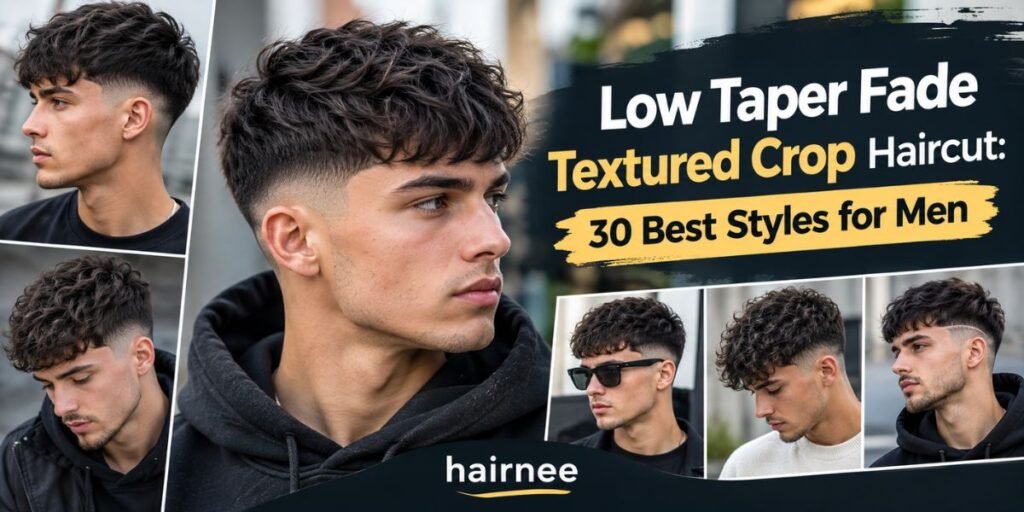
A low taper fade textured crop haircut pairs a soft, low blend on the sides with a choppy, piece-y top that adds real movement instead of sitting flat. It’s one of the most requested cuts in barbershops right now because it looks sharp on day one and still holds its shape two weeks later.
This guide walks through 30 variations of the cut, how to talk to your barber about it, which face shapes and hair types it suits best, and exactly how to style and maintain it once you’re home.
What Is a Low Taper Fade Textured Crop Haircut?
It’s a men’s haircut that combines a low taper fade on the sides and neckline with a textured, point-cut top. The blend stays close to the ears and nape rather than climbing high, while the top is cut short to medium and shaped for movement.
Why Is This Haircut One of the Biggest Trends in 2026?
Men are stepping away from harsh, high-contrast skin fades toward something softer and easier to live with. The low taper fade textured crop haircut delivers a groomed look without demanding a strict routine, which is exactly what’s driving barbershop requests this year.
Who Should Choose This Hairstyle?
Students, young professionals, and anyone who wants a low-maintenance cut that grows out gracefully fits this style well. It also works for men with fine or thinning hair, since the textured top adds visible volume without extra product.
What Readers Will Learn in This Guide
You’ll see 30 variations of the low taper fade textured crop haircut, plus guard numbers, face-shape guidance, and hair-type recommendations. You’ll also get a styling routine, a maintenance schedule, and answers to the questions people ask most before booking the cut.
What Is a Low Taper Fade Textured Crop Haircut?
A low taper fade textured crop haircut blends two separate barbering techniques: a gentle fade on the sides and back, and choppy, textured layering on top. Together they create a cut that reads clean without ever looking stiff.
What Is a Low Taper Fade?
A low taper fade starts its blend close to the sideburns and the base of the neck rather than climbing toward the temples. It keeps more length and weight on the sides than a mid or high fade, so the contrast between long and short hair stays soft.
Because the transition sits low, the neckline and the area behind the ears matter more than they do with higher fades. A barber should taper the nape gently rather than cutting a hard, disconnected line there, so the back of the haircut grows out as cleanly as the front.
What Is a Textured Crop Haircut?
A textured crop is a short-to-medium top cut with point-cutting or razor work instead of a single blunt line. This removes bulk from inside the hair and creates natural separation rather than a flat, helmet-like shape.
Most textured crops carry a forward-falling fringe that sits somewhere between mid-forehead and just above the brow. The technique adapts to straight, wavy, curly, and coily hair, which is part of why it pairs so well with a low taper fade.
Why Is This Haircut Trending in 2026?
Men’s grooming has shifted toward natural, low-effort finishes over heavily styled, high-contrast looks. The low taper fade textured crop haircut checks that box because it photographs well for work while still feeling relaxed on weekends.
Barbers report it as one of the most frequently requested combinations of 2026, partly driven by short-form video tutorials that make the cut easy to describe and easy to recognize. It also pairs naturally with beards, line-ups, and other grooming trends currently popular.
Also Read This Low Taper Fade French Crop Haircut: Guide + 20 Best Styles
Benefits of a Low Taper Fade Textured Crop Haircut
- Adds visible volume to fine or flat hair without extra product
- Takes under five minutes to style most mornings
- Softer, more forgiving grow-out than mid or high fades
- Works across straight, wavy, curly, and thick hair textures
- Suits school, office, and casual settings without adjustment
- Frames the face while keeping the neckline neat
Top 30 Best Low Taper Fade Textured Crop Haircut Styles
Classic Low Taper Fade Textured Crop Haircut
The classic version keeps the top around two inches with even point-cut layers and a low guard fade at the sides. It’s the safest, most barber-friendly option for first-timers who want a dependable everyday look.
Best for: straight or slightly wavy, medium-density hair. Maintenance: every 3–4 weeks.
Modern Low Taper Fade Textured Crop Haircut
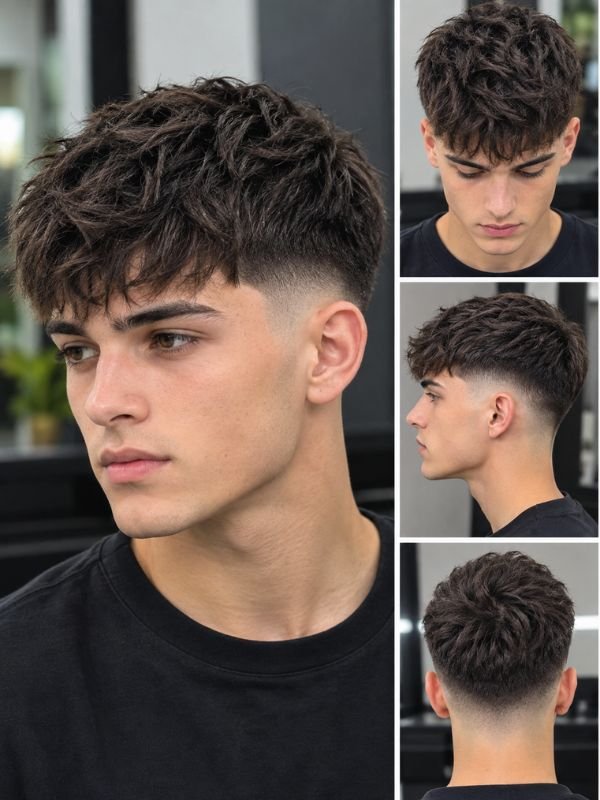
This version pushes the top slightly longer and adds heavier point-cutting for more visible separation, while the fade stays subtle underneath. It suits men who want something current without going too bold.
Best for: thick or coarse hair. Maintenance: every 3 weeks.
Messy Low Taper Fade Textured Crop Haircut
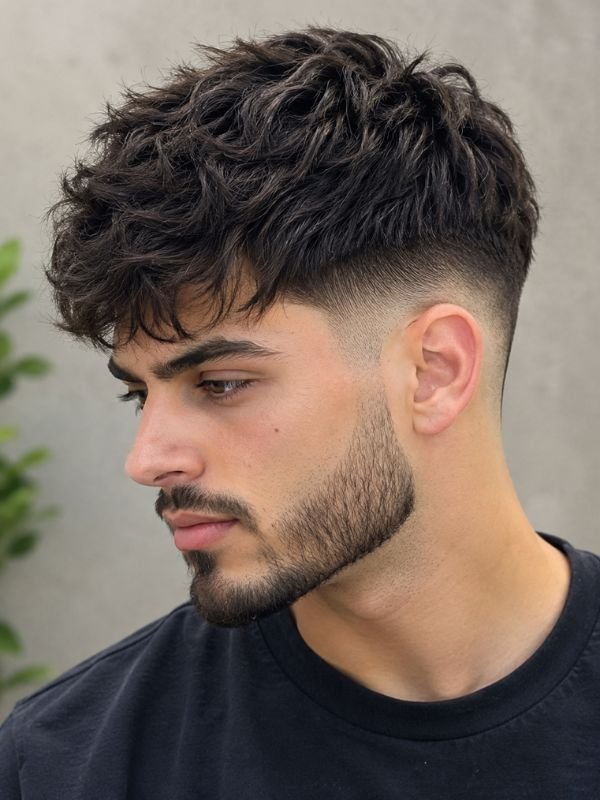
Heavy texturizing shears create a deliberately undone top that’s finger-styled rather than combed. The clean, low fade underneath keeps the messiness from reading as unkempt.
Best for: wavy or naturally unruly hair. Maintenance: every 4 weeks.
French Crop Low Taper Fade
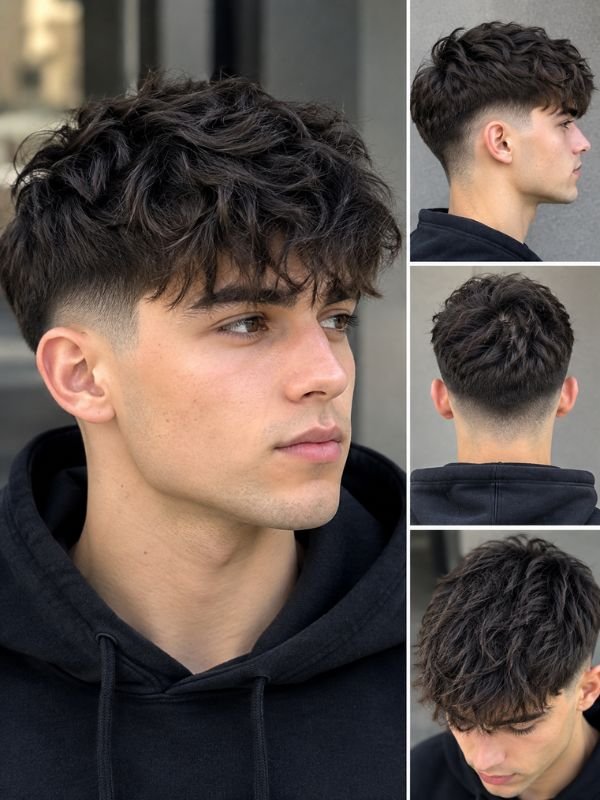
A blunt, straight-across fringe sits just above the brow, paired with a smoother, flatter top than most crop variations. It’s a tighter, more structured look for men who like a European barbering feel.
Best for: fine-to-medium straight hair. Maintenance: fringe trims every 2 weeks.
Textured Fringe Low Taper Fade
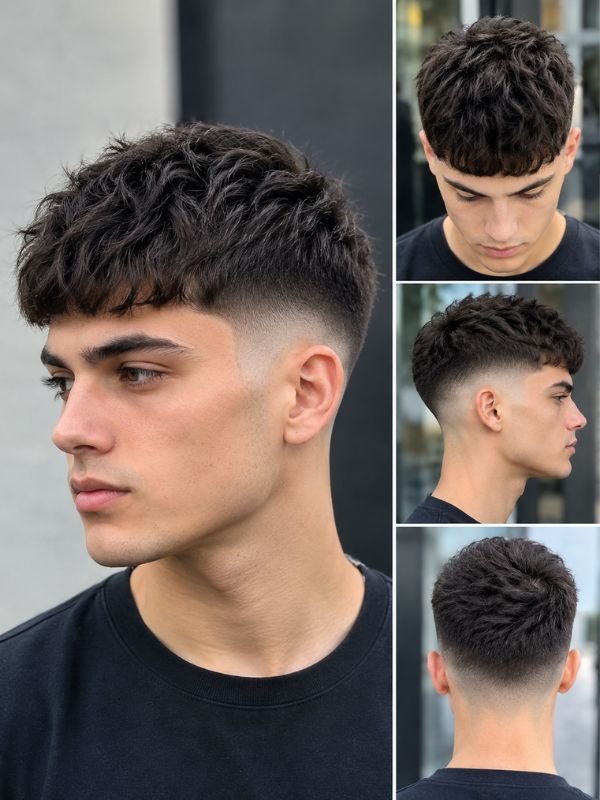
This variation puts the spotlight on the fringe itself, letting it fall forward in soft, separated pieces while the rest of the top stays short. The low fade keeps the base of the haircut understated so the fringe does the visual work.
Best for: straight or fine hair. Maintenance: fringe trim monthly.
Low Taper Fade Textured Crop Haircut Short
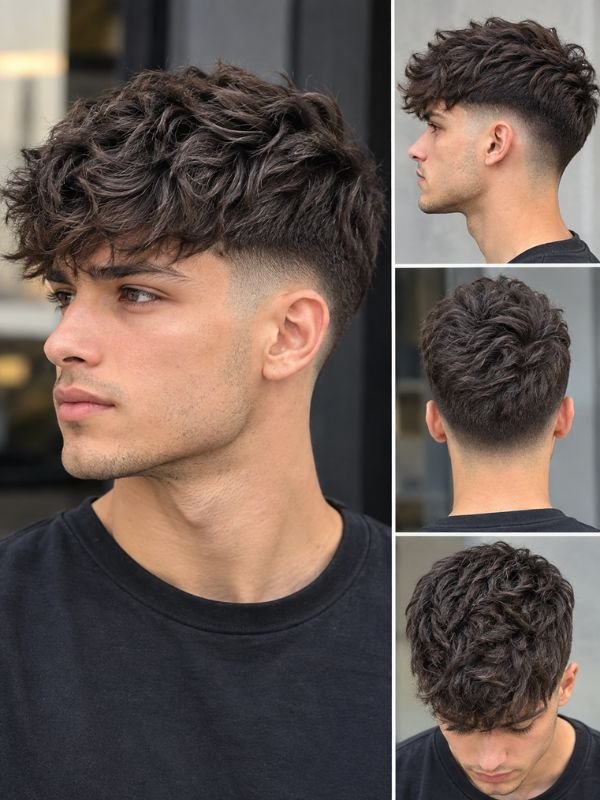
Top length drops to around one to one-and-a-half inches, keeping the choppy texture without much daily upkeep. It suits hot climates and active routines that don’t allow much styling time.
Best for: all hair types. Maintenance: every 3 weeks.
Long Textured Crop with Low Taper Fade
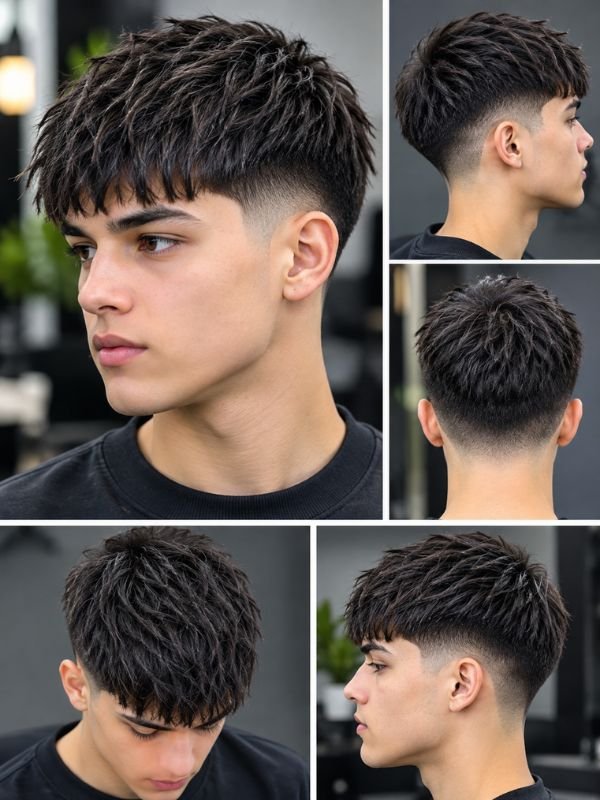
Three to four inches on top gives enough length for a swept fringe or a slightly tousled finish. Internal texturizing keeps the extra length from feeling heavy or bushy against the low-faded sides.
Best for: medium-to-thick wavy or straight hair. Maintenance: every 3–4 weeks.
Low Taper Fade Textured Crop Haircut Curly
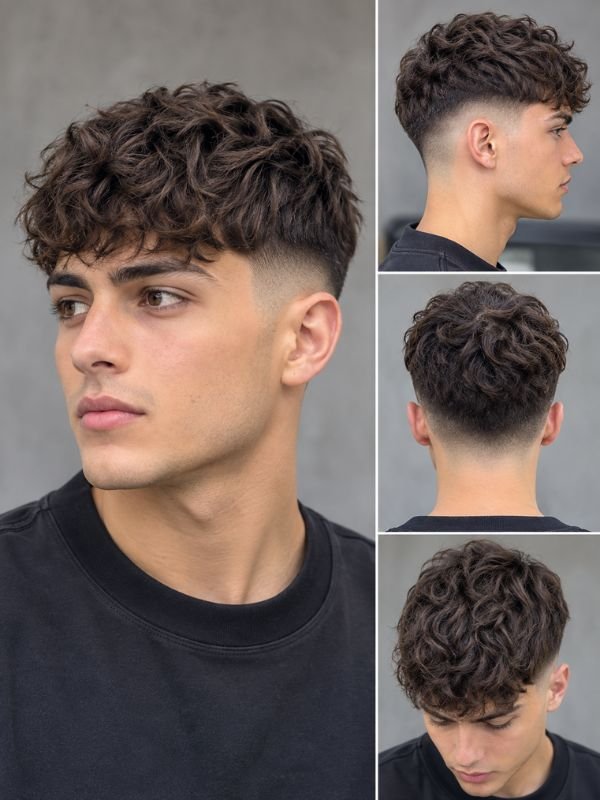
The barber shapes the perimeter and thins bulk without fighting the curl pattern, letting natural ringlets define the top. The low taper keeps the sides tidy so curls don’t flare outward near the ears.
Best for: type 3A–3C curls. Maintenance: hydrate weekly, trim monthly.
Low Taper Fade Textured Crop Haircut Straight Hair
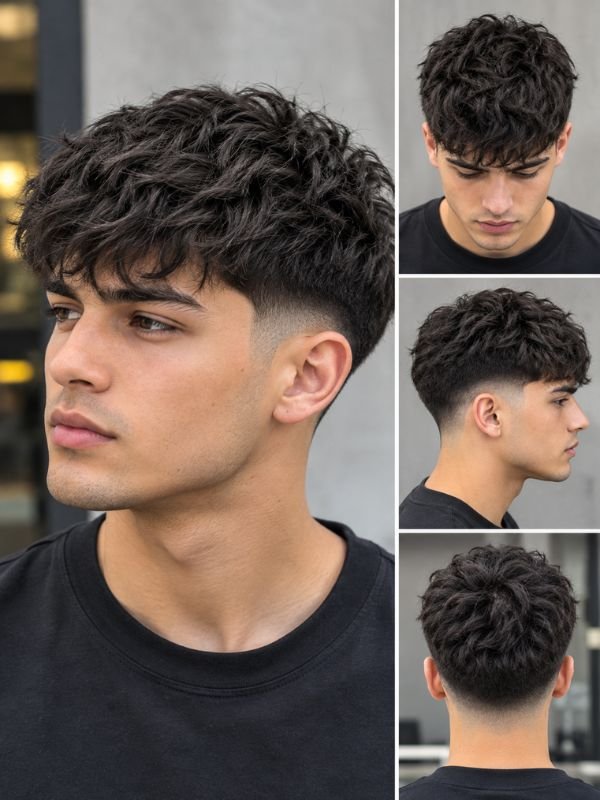
Straight strands show every point-cut edge clearly, so this version leans crisp and graphic rather than soft. A small amount of matte clay is usually all that’s needed to hold the shape through the day.
Best for: fine or thick bone-straight hair. Maintenance: every 3 weeks.
Low Taper Fade Textured Crop Haircut Wavy
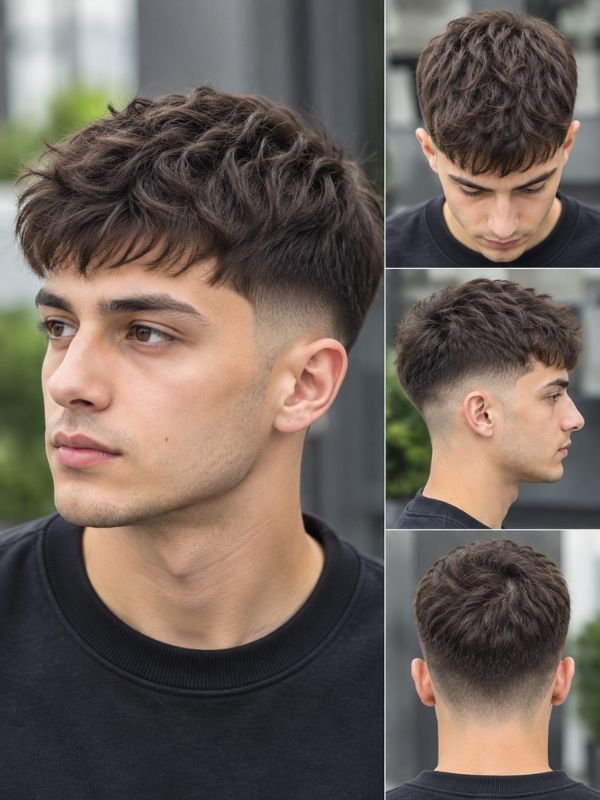
Natural S-shaped waves add movement on their own, so styling stays minimal here. The barber crops the top to follow the wave pattern rather than cutting against it.
Best for: naturally wavy hair. Maintenance: every 4 weeks.
Thick Hair Textured Crop with Low Taper Fade
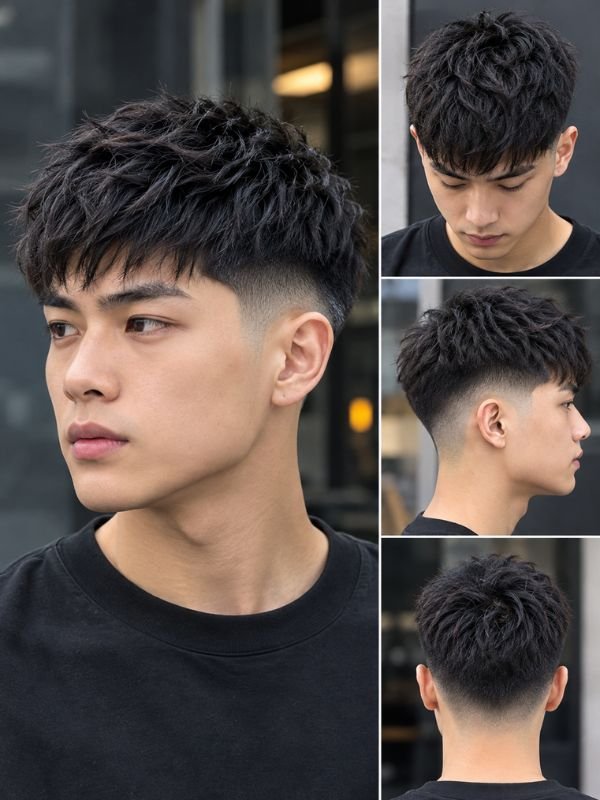
Heavy channel-cutting removes internal bulk so the top stays light instead of poofy. The low taper keeps the sides slim, which balances out the extra volume up top.
Best for: coarse or high-density hair. Maintenance: internal thinning every 3 weeks.
Low Taper Fade Textured Crop Haircut Thin Hair
Short, forward-falling layers build the illusion of density at the crown, and the low fade adds contrast that makes the top look fuller by comparison. Lightweight powder works better here than heavy paste.
Best for: fine or low-density hair. Maintenance: every 2 weeks on the sides.
Asian Low Taper Fade Textured Crop
Coarse, straight-growing hair benefits from heavier top texturizing to break up bulk near the crown. The low taper reduces the poke-out effect that can happen near the ears with denser hair.
Best for: coarse, straight Asian hair textures. Maintenance: bi-weekly taper touch-ups.
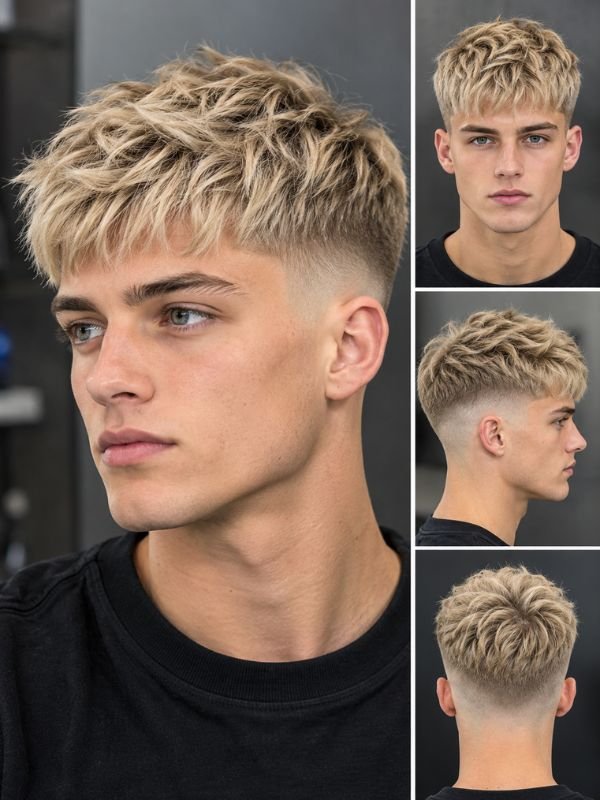
Blonde Low Taper Fade Textured Crop
Lightened hair makes every layer and separation more visible, so precise point-cutting matters more here than on darker hair. The payoff is a top that reads dimensional under most lighting.
Best for: blonde, bleached, or highlighted hair. Maintenance: purple shampoo weekly.
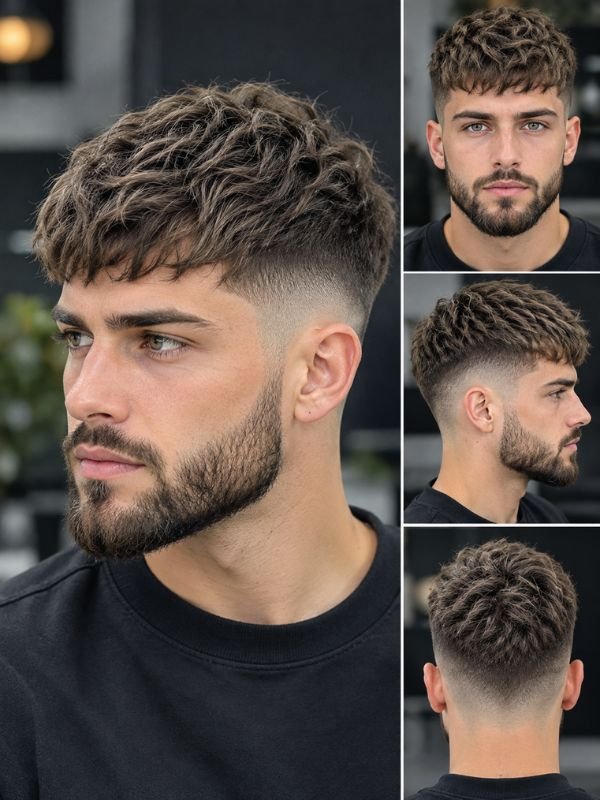
Low Taper Fade Textured Crop with Beard
The fade blends directly into a groomed beard line near the ears, creating one continuous, framed look. Keeping beard length roughly proportional to the crop’s top length gives the most balanced finish.
Best for: short-to-medium beards, most hair types. Maintenance: line up weekly.
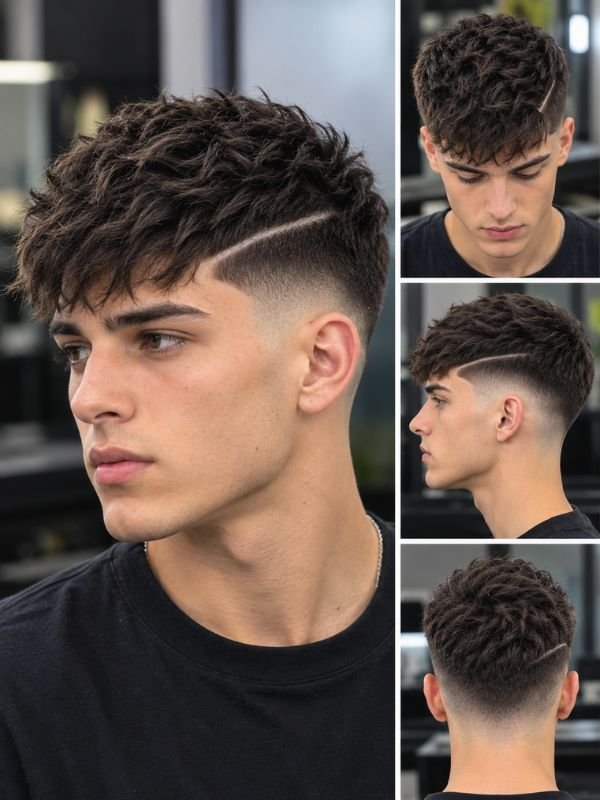
Low Taper Fade Textured Crop with Line Up
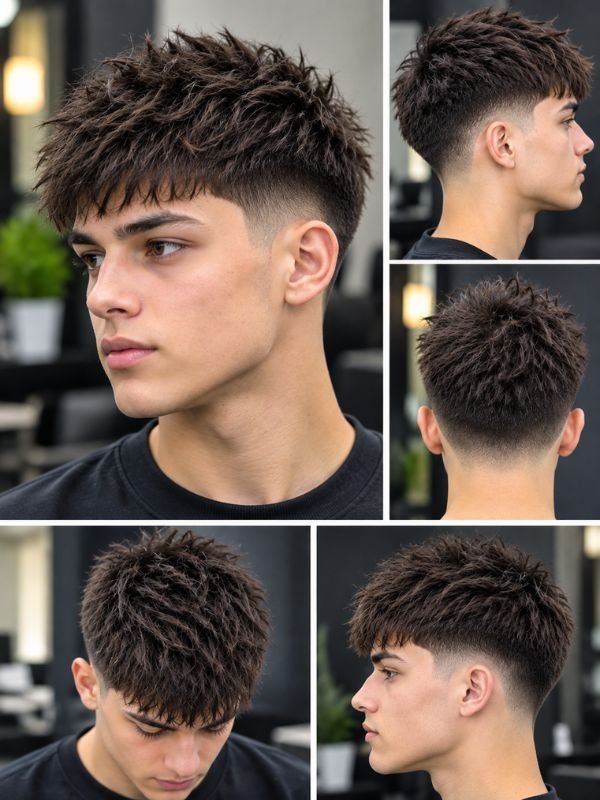
A crisp, razor-cut line along the front hairline and temples adds a sharp edge against the softer, messy top. It’s popular with men who want a polished edge for professional settings.
Best for: thick, straight, or coily hair. Maintenance: touch-ups every 10–14 days.
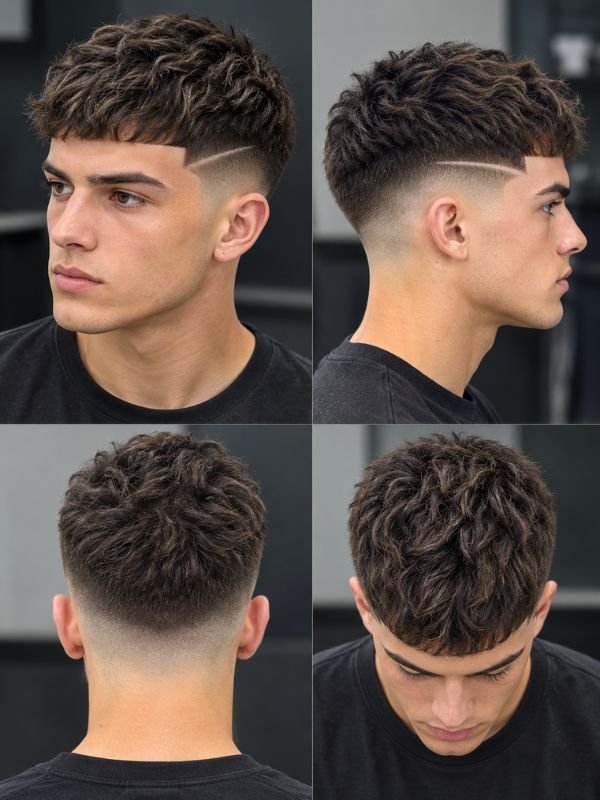
Low Taper Fade Textured Crop with Hard Part
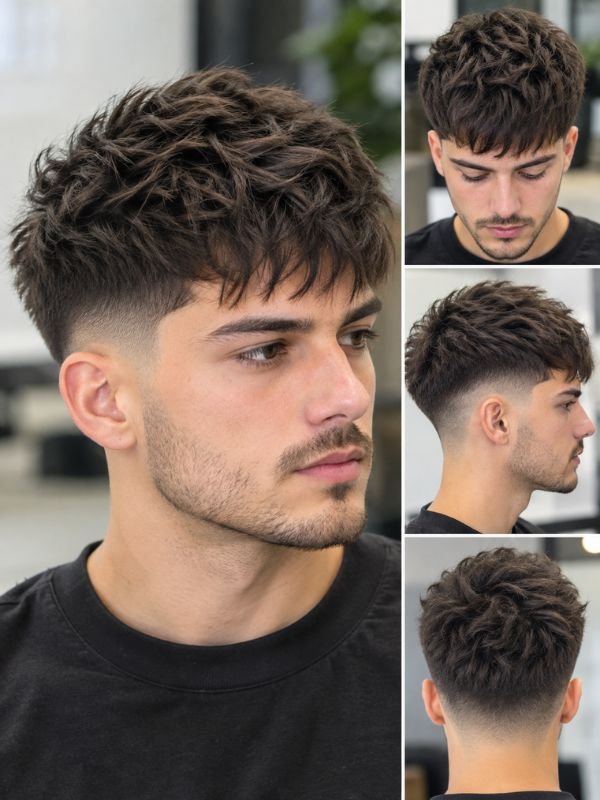
A thin shaved line separates the top section from the fade, adding a graphic detail that stays crisp between visits. It reads best on straight or firm wavy hair where the line holds its shape.
Best for: straight or wavy hair. Maintenance: part touch-up every 2 weeks.
Spiky Textured Crop with Low Taper Fade
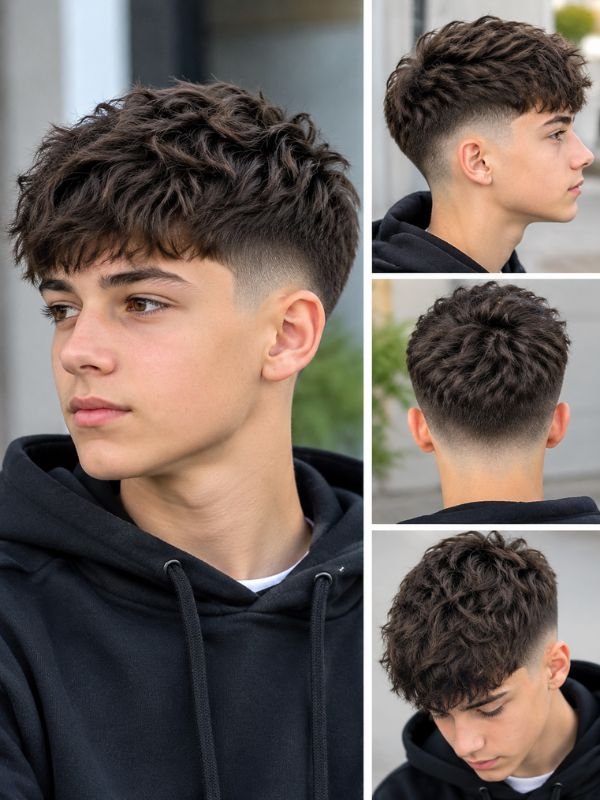
The top is styled upward with a firm-hold paste or wax, creating defined spikes that contrast against the smooth low fade. This works best on hair with enough natural stiffness to hold the shape through the day.
Best for: coarse or stiff straight hair. Maintenance: every 3 weeks.
Layered Low Taper Fade Textured Crop
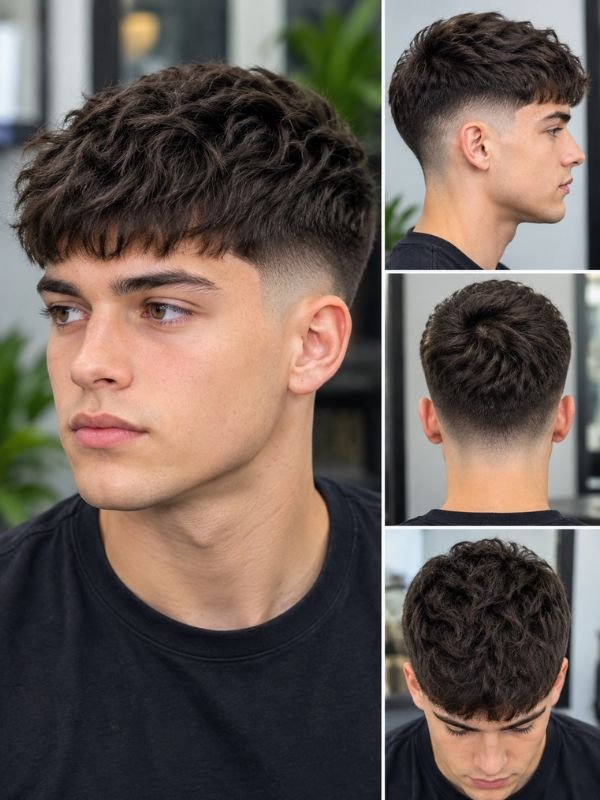
Multiple lengths run from crown to forehead in soft steps, adding depth that a single-length crop doesn’t offer. The low taper keeps the sides short so visual weight stays on the layered top.
Best for: medium-density straight or wavy hair. Maintenance: monthly.
Low Taper Fade Textured Crop Haircut for Teen Boys
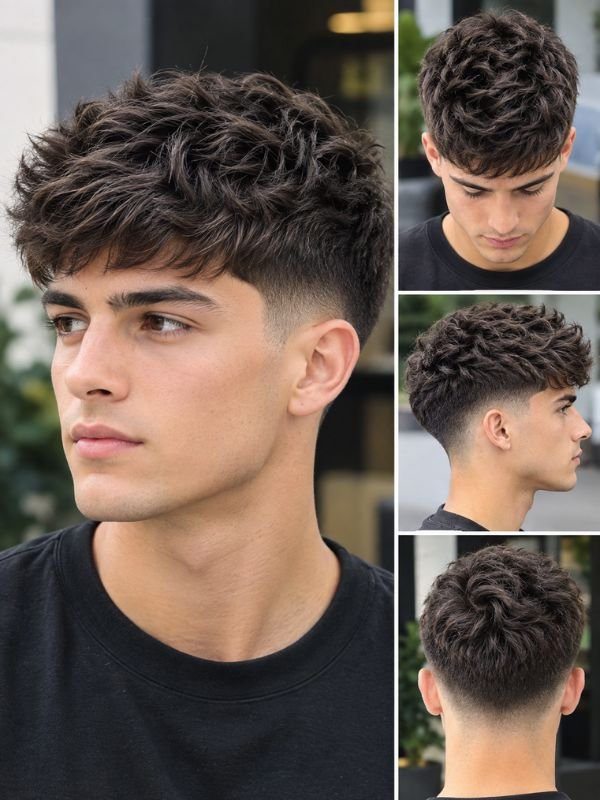
A slightly softer version with conservative fade height and a manageable top length that doesn’t demand daily styling. It stays neat enough for school dress codes while still feeling current.
Best for: all youthful hair types. Maintenance: every 3–4 weeks.
Professional Low Taper Fade Textured Crop Haircut
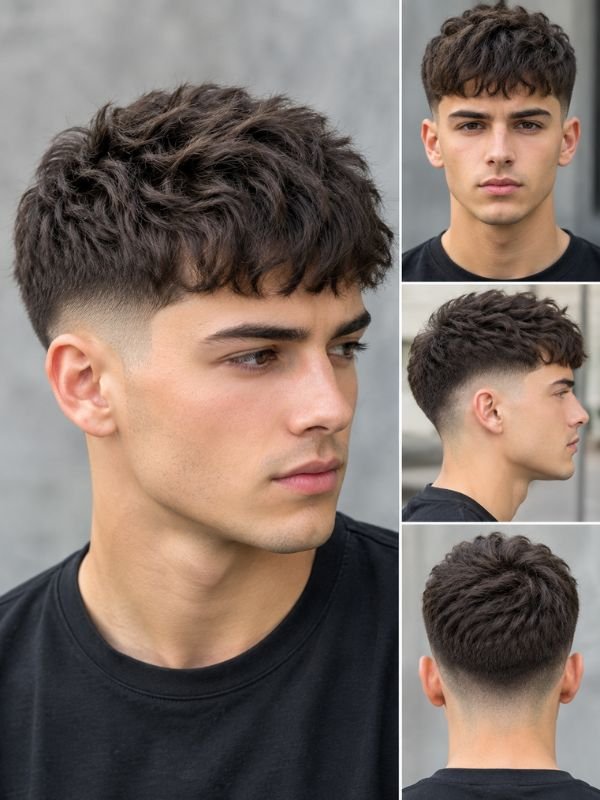
Top texturizing is kept subtle, with the fringe combed neatly forward instead of left piece-y. Full side coverage near the temples keeps the overall look office-appropriate.
Best for: straight or wavy hair. Maintenance: every 3 weeks.
Low Taper Fade Textured Crop with Volume
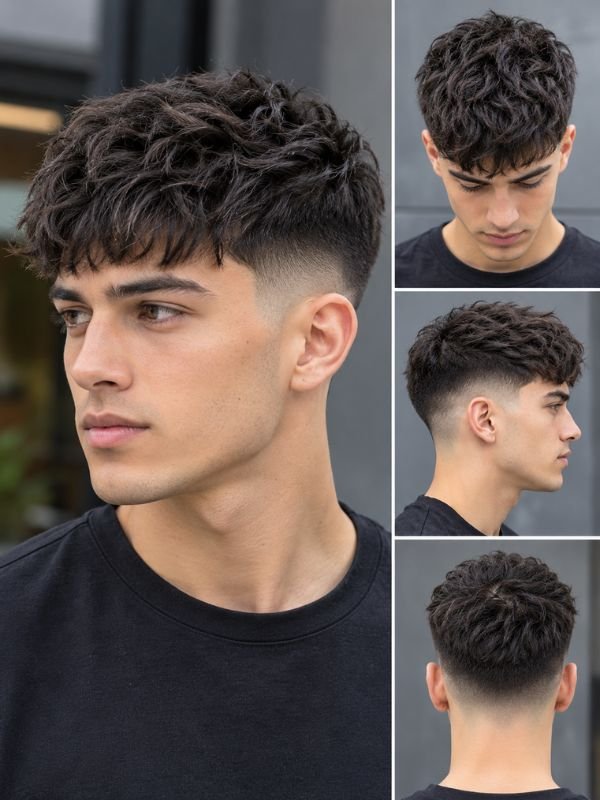
Top length reaches close to three inches and is blow-dried upward from the roots for noticeable height. The low, tight sides stop the extra volume from making the head look oversized.
Best for: thick or naturally voluminous hair. Maintenance: every 3 weeks.
Low Taper Fade Textured Crop with Natural Texture
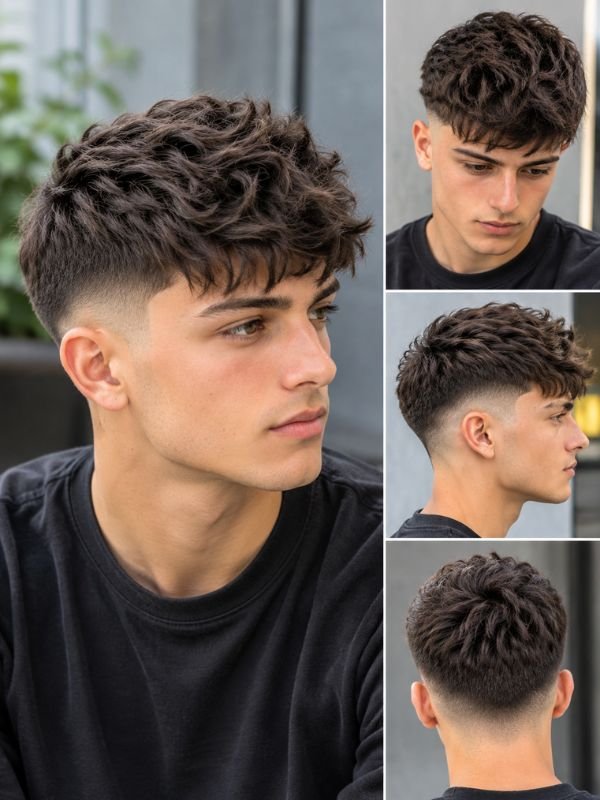
Rather than forcing a shape, the barber follows the hair’s own growth pattern and fall, keeping product use minimal. It’s an organic finish that works especially well on wavy or cowlick-prone hair.
Best for: wavy, curly, or cowlick-prone hair. Maintenance: every 4–5 weeks.
Clean Low Taper Fade Textured Crop Haircut
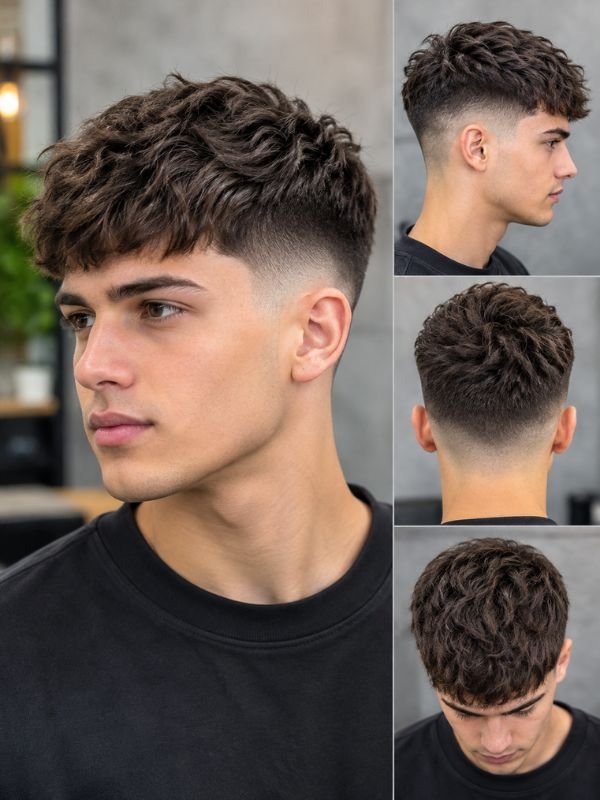
Sharp razor edges around the ears and temples pair with a tidy, controlled top rather than a deliberately messy one. It suits men who want the benefits of texture without a messy, undone look.
Best for: fine or straight hair. Maintenance: line-up touch-ups every 2 weeks.
Trending Low Taper Fade Textured Crop Haircut
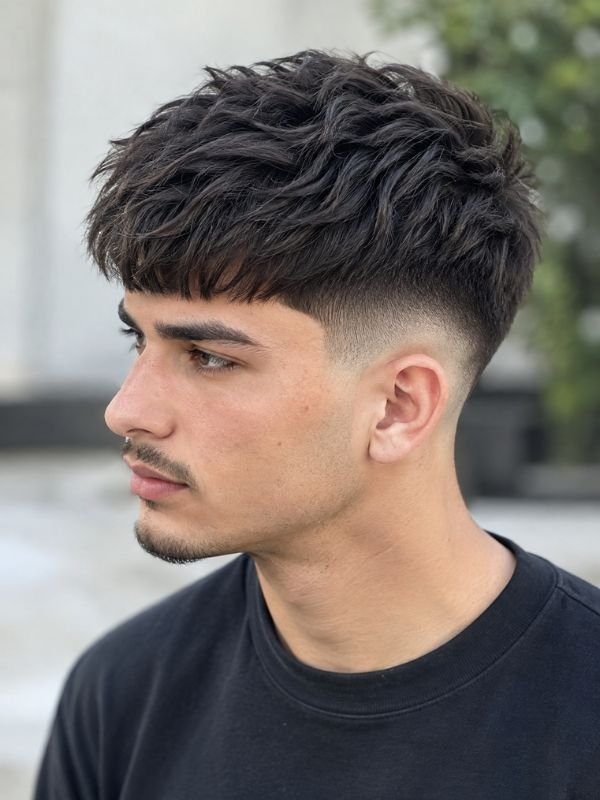
This version pairs an ultra-low, subtle fade with heavy, forward-swept fringe layers and pronounced channel-cutting on top. It’s the version most often requested from social media reference photos right now.
Best for: medium-to-thick hair. Maintenance: every 2–3 weeks.
Low Taper Fade Textured Crop Mid Fade Contrast
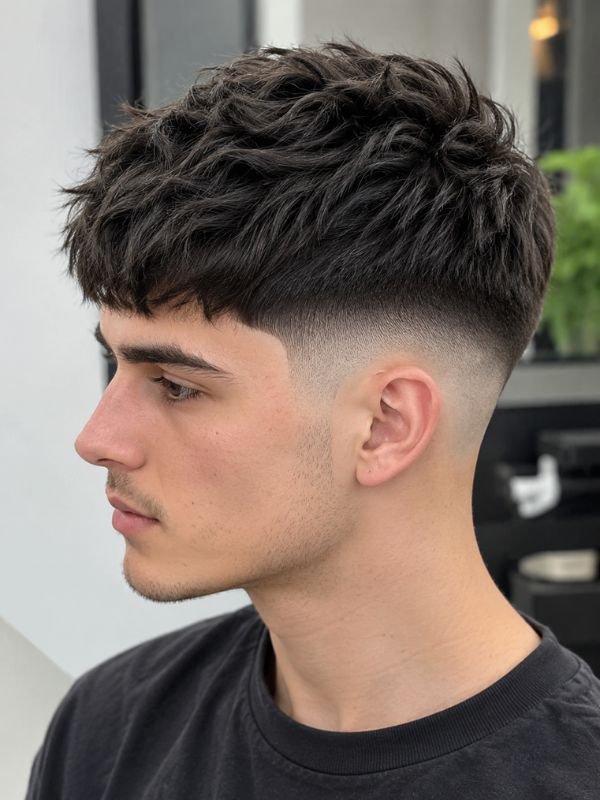
Raising the blend slightly higher than a true low fade adds a touch more contrast while keeping the crop’s choppy top intact. It sits between the subtlety of a low fade and the boldness of a high one.
Best for: thick or medium-density hair. Maintenance: every 3 weeks.
Textured French Crop with Low Taper Fade
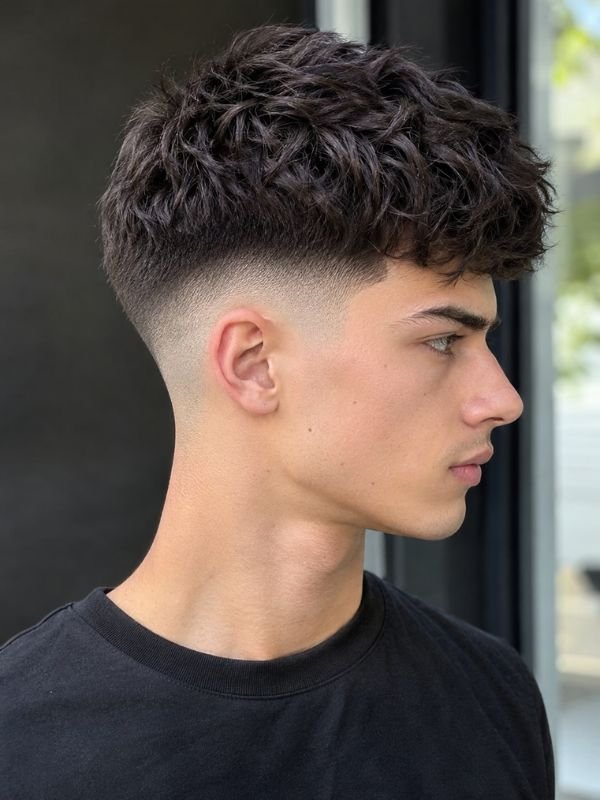
A fuller, slightly less choppy take on the French crop, with a softer fringe and a smoother transition into the fade than the classic version. It reads a little more relaxed while keeping the structured French shape.
Best for: straight or lightly wavy hair. Maintenance: every 3–4 weeks.
Textured Crop with High Taper Fade
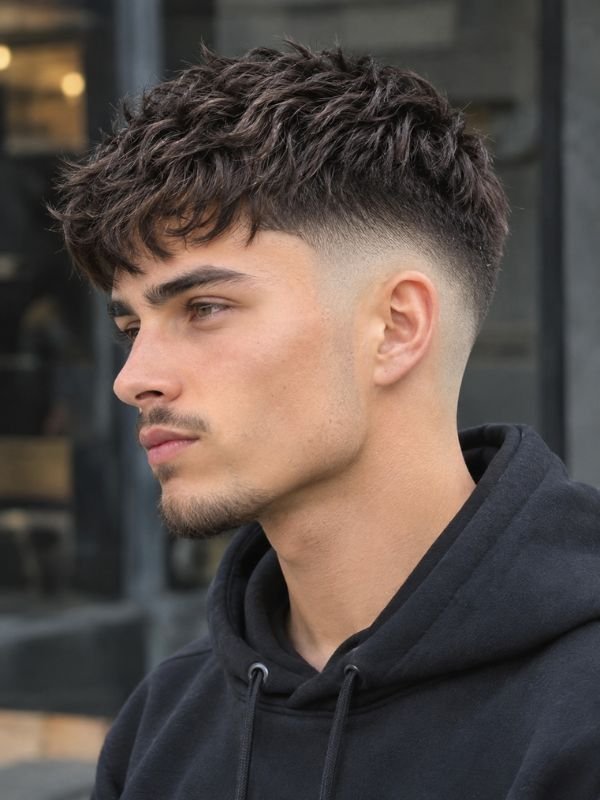
Raising the fade toward the temple creates sharper contrast against the textured top than a true low taper allows. It suits men who like the crop’s movement but want a bolder side profile.
Best for: thick or coarse hair. Maintenance: every 2–3 weeks.
Messy French Crop with Low Taper Fade
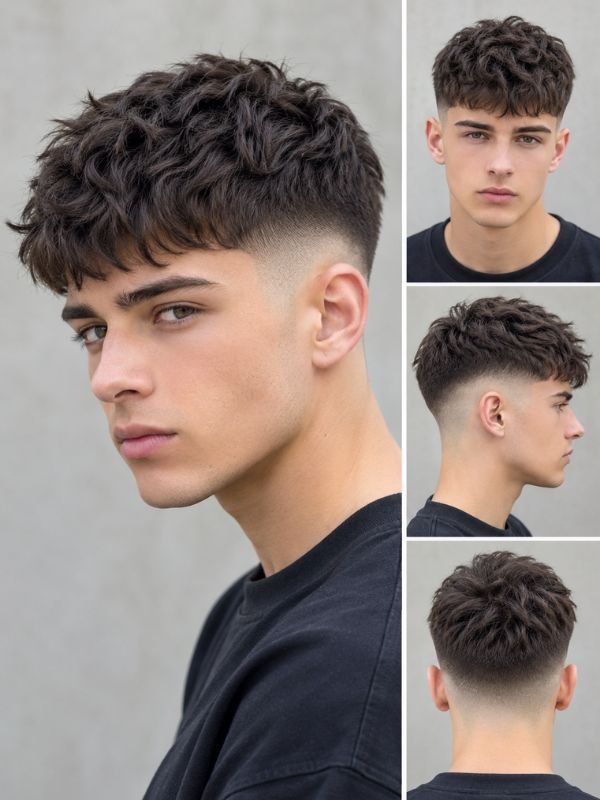
This combines the French crop’s short, straight fringe with heavier texturizing shears for a rougher, more casual finish. The low fade keeps the sides neat while the top stays deliberately undone.
Best for: thick or wavy hair. Maintenance: every 3–4 weeks.
Disconnected Textured Crop with Low Taper Fade
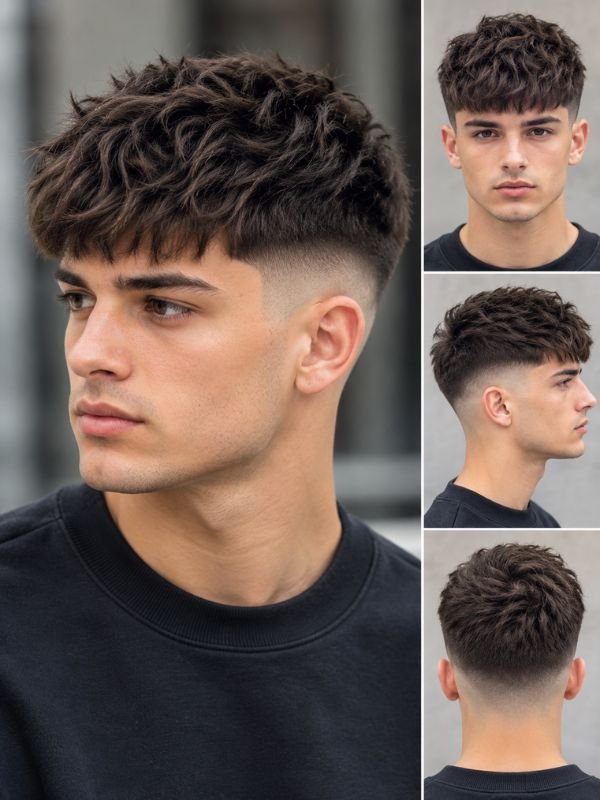
A stronger visual break between the longer top and the low-faded sides creates bolder contrast than a blended crop. Extra texture on top helps balance the sharper transition underneath.
Best for: thick hair, fashion-forward styling. Maintenance: every 3–4 weeks.
Quick Style Comparison Table
| Style | Best Hair Type | Top Length | Maintenance |
| Classic | Straight/wavy | ~2 in | 3–4 weeks |
| Modern | Thick/coarse | 2–2.5 in | 3 weeks |
| Messy | Wavy/unruly | 2–3 in | 4 weeks |
| French Crop | Fine-medium straight | 1.5–2 in | 2 weeks (fringe) |
| Curly | 3A–3C curls | 2–3 in | Monthly |
| Straight Hair | Fine/thick straight | 1.5–2.5 in | 3 weeks |
| Wavy | Naturally wavy | 2–2.5 in | 4 weeks |
| Thick Hair | Coarse/dense | 2 in | 3 weeks |
| Thin Hair | Fine/low-density | 1.5–2 in | 2 weeks (sides) |
| Blonde | Lightened/bleached | 2 in | 3 weeks |
| Teen Boys | All types | 1.5–2 in | 3–4 weeks |
| Professional | Straight/wavy | 1.5–2 in | 3 weeks |
How to Ask Your Barber for a Low Taper Fade Textured Crop Haircut
Say clearly: “Low taper fade on the sides and neckline, textured crop on top with point-cutting, and keep the fringe [short/medium/long].” Naming the fade height matters most, since low, mid, and high fades are genuinely different haircuts.
Bring two or three reference photos from different angles, and mention your natural hair texture so the barber can adjust the cutting technique. A photo alone doesn’t tell them how your hair actually falls once it’s dry.
Recommended Clipper Guard Numbers by Area
| Area | Guard Number |
| Nape / lowest edge | #0.5–#1, fading to skin |
| Around the ears | #1–#1.5 |
| Upper sides / blend point | #2–#3 |
| Top | Scissor or point-cut, 1.5–3 inches |
Back and Neckline Guide
The neckline should taper gradually rather than end in a hard, disconnected line, since a low fade relies on a soft transition at the nape. Ask your barber to blend the back the same way as the sides so regrowth doesn’t create a visible step within two to three weeks.
Who Is a Low Taper Fade Textured Crop Best For?
A low taper fade textured crop haircut works across most hair types because the textured top adapts to natural movement instead of fighting it. Straight hair holds crisp layer lines, wavy and curly hair add texture on their own, and thick or thin hair both benefit from the point-cutting technique in different ways.
Best Face Shapes of Low Taper Fade Textured Crop Haircut
| Face Shape | Framing Advice |
| Oval | Suits nearly every variation without adjustment |
| Round | Add height on top, keep sides tight to elongate |
| Square | A soft, messy fringe balances a strong jawline |
| Diamond | Fuller fringe coverage balances wider cheekbones |
| Heart | Forward fringe softens a narrower chin |
| Oblong | Keep top height moderate, extend fringe length |
Face shape should guide small adjustments rather than rule the haircut out entirely. A skilled barber can shift fringe length and crown height to flatter most proportions.
Best Hair Types
- Straight: needs deep point-cutting to create texture that wouldn’t otherwise exist
- Wavy: ideal match; creates natural movement with minimal product
- Curly: low sides control bulk while letting curls show on top
- Thick: benefits from internal thinning to avoid a heavy top
- Thin: forward layering builds the appearance of density
- Coily: works best with slightly more top length to show shrinkage and shape
Hair Texture vs. Hair Density: Why the Difference Matters
Hair texture describes the shape of each strand, such as straight, wavy, curly, or coily, while density describes how many strands you have per square inch. A barber needs both pieces of information, because fine, dense hair is cut differently than fine, sparse hair even though both are labeled “fine.”
Getting this mixed up is a common reason a textured crop doesn’t turn out as expected. Telling your barber your hair is “thin” when you actually mean “low-density but coarse in texture” can lead to the wrong layering approach.
Also Read This Low Taper Fade French Crop Haircut: Guide + 20 Best Styles
Who Should Think Twice About This Haircut
Very tightly coiled hair sometimes needs more length on top than this cut typically allows to show real curl definition, so ask your barber about a longer variation first. Men who want a genuinely zero-effort morning routine may find even light styling more upkeep than they want, in which case a straightforward buzz cut fits better.
Pros and Cons
| Pros | Cons |
| Low daily styling effort | Needs a barber skilled in texturizing |
| Works across most hair types | Regrowth on top needs trims every 3–5 weeks |
| Softer, more forgiving fade | Not as bold as a high skin fade |
| Suits formal and casual settings | Thin hair needs extra layering to avoid flatness |
| Grows out gracefully | Curly types may need added product for frizz control |
How to Style a Low Taper Fade Textured Crop Haircut
Start with damp, towel-dried hair, work a small amount of product through with your fingertips, and push the fringe forward before letting it air-dry or finishing with a low-heat blow dryer. The whole routine takes under five minutes once you know your product amount.
Best Styling Products
- Matte clay: strong hold with zero shine, best for thick or coarse hair
- Texture powder: instant root lift without weighing hair down
- Sea salt spray: enhances natural waves with light grip
- Molding paste: flexible hold with a natural, separated finish
- Curl cream: keeps curly variations defined without heaviness
Step-by-Step Styling Guide
- Towel-dry hair until damp, not dripping.
- Apply a dime-sized amount of product suited to your hair type.
- Work it through with fingertips, never a comb, to preserve separation.
- Push the fringe forward or upward depending on the variation.
- Blow-dry on low heat while lifting the roots for extra volume.
- Finish with a light texturizing spray if you want the hold to last longer.
How to Maintain a Low Taper Fade Textured Crop Haircut
Book a trim every three to five weeks depending on how quickly your fade grows out, and wash two to three times a week to avoid stripping the natural oils that help texture hold. Avoid heavy, glossy products, since they flatten the layered top instead of enhancing it.
How to Ask Your Barber for a Low Taper Fade Textured Crop
You can say: “I’d like a low taper fade on the sides and neck, with a textured crop on top. Keep some length in the front for a natural fringe, and cut the top with point-cutting so it stays choppy, not flat.” Mention your hair type so the barber can adjust technique rather than just length.
Low Taper Fade Textured Crop vs French Crop
| Feature | Low Taper Fade Textured Crop | French Crop |
| Top finish | Choppy, piece-y, dynamic | Flat, smooth, forward-combed |
| Fringe | Textured, jagged edges | Blunt, straight-cut line |
| Sides | Soft low taper | Often a higher, sharper fade |
| Maintenance | Moderate, flexible grow-out | Higher upkeep on the blunt line |
Low Taper Fade Textured Crop vs Buzz Cut
| Feature | Low Taper Fade Textured Crop | Buzz Cut |
| Top length | 1.5–3 inches | Uniform, under half an inch |
| Daily styling | 2–5 minutes | None |
| Versatility | High, many variations | Low, length is the only variable |
| Face framing | Softens sharp features | Emphasizes bone structure directly |
Low Taper Fade Textured Crop vs Edgar Haircut
| Feature | Low Taper Fade Textured Crop | Edgar Haircut |
| Fringe | Soft, broken, textured ends | Sharp, thick, blunt horizontal line |
| Side fade | Low, gradual blend | Often a higher, harder contrast |
| Overall vibe | Natural and relaxed | Bold and graphic |
Celebrity Inspiration
Several public figures in music and film have been seen wearing variations close to the low taper fade textured crop this year, which has pushed reference photos of the style further into mainstream requests. Barbers report clients bringing in these looks most often for the messy and layered variations, since they translate easily across different hair textures.
Common Mistakes to Avoid
- Asking for “a fade” without specifying low, mid, or high, which can produce the wrong contrast entirely
- Using too much product, which flattens texture instead of defining it
- Waiting past five weeks between trims, letting the fade lose its clean line
- Skipping reference photos and hair-type context during the consultation
- Choosing a barber unfamiliar with point-cutting, since a plain scissor trim won’t create the same layered result
- Forcing straight styling techniques onto curly or coily hair instead of working with the natural pattern
Final Thought About Low Taper Fade Textured Crop Haircut
The low taper fade textured crop haircut earns its popularity honestly: it’s clean enough for the office, relaxed enough for weekends, and forgiving enough to skip a wash day without looking undone. Bring clear reference photos, describe your hair type accurately, and this cut will look sharp from week one through week five.
Frequently Asked Questions
What is a low taper fade textured crop haircut?
It’s a men’s haircut combining a low, gradual fade on the sides and neckline with a choppy, point-cut top that adds natural texture and movement.
What guard number should I ask for?
Ask for a #0.5 to #1 guard at the nape and ears, blending up to a #2–#3 through the upper sides, with the top handled by scissors or point-cutting.
Is this haircut good for curly hair?
Yes, curly hair works well since the low sides control bulk while the top length shows off natural curl definition without flattening it.
How often should I get a trim?
Most men need a trim every three to five weeks, depending on how quickly the fade grows out compared to the top length.
Does this haircut suit thin or fine hair?
Yes, short forward layering on top creates the appearance of thicker, fuller hair, and the low fade adds contrast that makes the top look denser by comparison.
Which face shapes suit a low taper fade textured crop best?
Oval faces suit nearly every version, while round, square, diamond, and heart-shaped faces can wear it well with small adjustments to fringe length and top height.
Is the low taper fade textured crop haircut still trending in 2026?
Yes, it remains one of the most requested men’s cuts in 2026 because it balances a clean, professional fade with a low-maintenance, textured top.
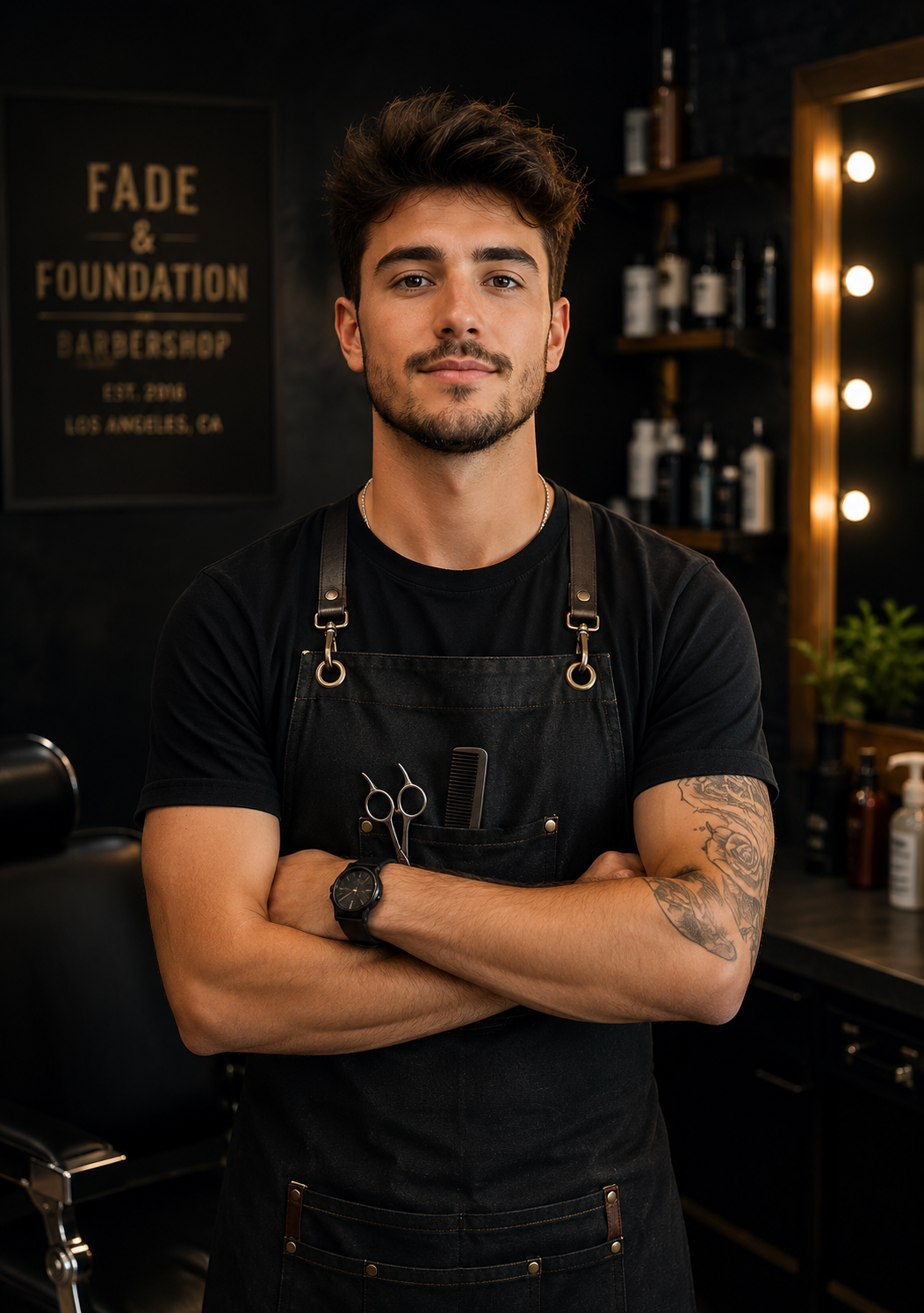
Hi, I’m Jake Miller a passionate barber based in Los Angeles, California, with over 3 years of hands-on experience in the craft. I specialize in modern fades, clean cuts, precision beard grooming, and classic barbering techniques, blending sharp technical skill with a relaxed, personal touch.
Over these years, I’ve had the opportunity to work with all kinds of clients, each with their own style and personality and that’s exactly what I love about this craft. For me, it’s never just about a haircut. It’s about understanding who you are and bringing that out through precision and care.
Every client who sits in my chair gets my full attention and expertise, because I believe great barbering is where confidence meets individuality. My goal is simple: to make sure you walk out looking sharp and feeling like the best version of yourself.

1 thought on “Low Taper Fade Textured Crop Haircut: 30 Best Styles for Men”