

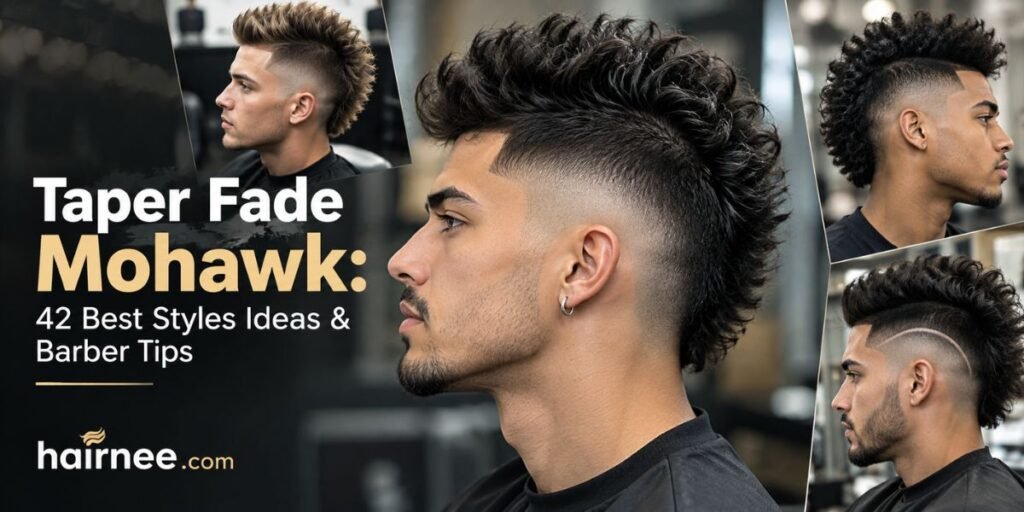
A taper fade mohawk blends a longer center strip of hair with sides that gradually shorten instead of being shaved bare. It’s the modern, wearable version of the classic mohawk — sharp enough to stand out, soft enough for the office.
This guide covers 42 taper fade mohawk variations, how the cut works across different hair types and face shapes, and exactly what to tell your barber so you walk out with the right result the first time.
Key Points
- A taper fade mohawk keeps hair on the sides and blends it upward instead of shaving to skin
- Low, mid, and high tapers change how bold the contrast looks
- Curly, straight, wavy, thick, and thin hair each need slightly different cutting and styling
- 42 style variations covered, from short and professional to spiked and colored
- Includes exact barber scripts and a home-styling routine
What Is a Taper Fade Mohawk?
A taper fade mohawk is a mohawk haircut where the sides gradually shorten through a taper instead of being shaved down to skin.
The center strip runs from the front hairline to the back of the head and stays noticeably longer than everything around it. A barber blends the hair down in stages using clipper guards so the transition looks graduated rather than abrupt, which means the cut grows out more evenly and reads softer than a fully shaved mohawk — part of why it works in offices and everyday settings where a traditional mohawk might feel too extreme.
Mohawk With a Taper Fade vs. Traditional Mohawk
A taper fade mohawk keeps hair on the sides; a traditional mohawk shaves the sides down to bare skin.
| Traditional Mohawk | Taper Fade Mohawk | |
| Sides | Shaved to skin | Gradually shortened, some hair left |
| Contrast | Very high, abrupt line | Smooth, graduated blend |
| Grow-out | Looks patchy within days | Grows out cleanly for weeks |
| Setting | Best for bold, casual looks | Works in casual and professional settings |
The traditional version leans harder into the punk-rock roots of the style, while the taper fade version trades some of that shock value for a cut that’s easier to live with day to day.
Taper Fade vs. Fade
A taper and a fade are different techniques — a taper trims hair shorter without going near skin, while a fade blends hair down to skin or near-skin.
Barbers sometimes use the two words loosely, which is where confusion starts. A pure taper keeps a visible layer of hair everywhere, even at its shortest point, while a fade is defined by that final transition into bare or near-bare skin — a “taper fade” combines both, with the upper section tapered and the lower section fading out completely. That’s why it helps to say exactly where you want the fade to end rather than just asking for “a taper” or “a fade,” since the terms mean different things depending on the shop.
Why the Taper Fade Mohawk Is So Popular
The taper fade mohawk is popular because it offers the mohawk’s bold silhouette without the extreme upkeep of a fully shaved version.
It works across a wide range of hair textures and ages, from tight curls to straight hair, and it can be dialed up for a night out or down for a workday just by changing how the top is styled — a flexibility most statement haircuts don’t have. Barbers also point to how well it grows out: a shaved mohawk needs constant upkeep to avoid looking messy, but a tapered version can go a few extra weeks without losing its shape, which makes it more realistic for people with busy schedules.
Best Taper Fade Mohawk Haircut Ideas
These are the sixteen most-requested versions of the taper fade mohawk, ranging from low-key to statement-making.
Short Mohawk Fade
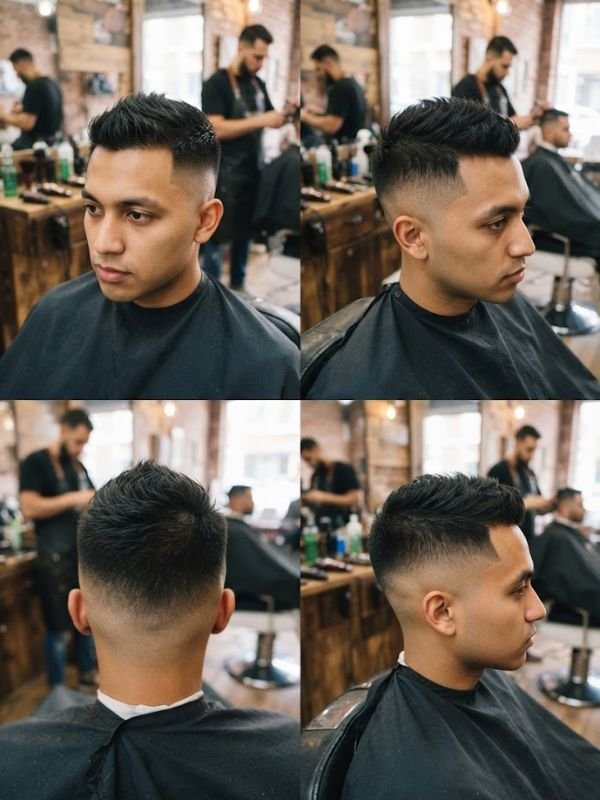
A short mohawk fade keeps the top cropped close, usually under two inches, for a low-effort daily style.
It reads more like a textured crop than a dramatic mohawk, which makes it a good entry point if you’re not ready to commit to height. Styling takes under a minute with a small amount of matte clay, and it pairs well with a low or mid taper for a workplace-friendly finish.
Classic Taper Fade Mohawk
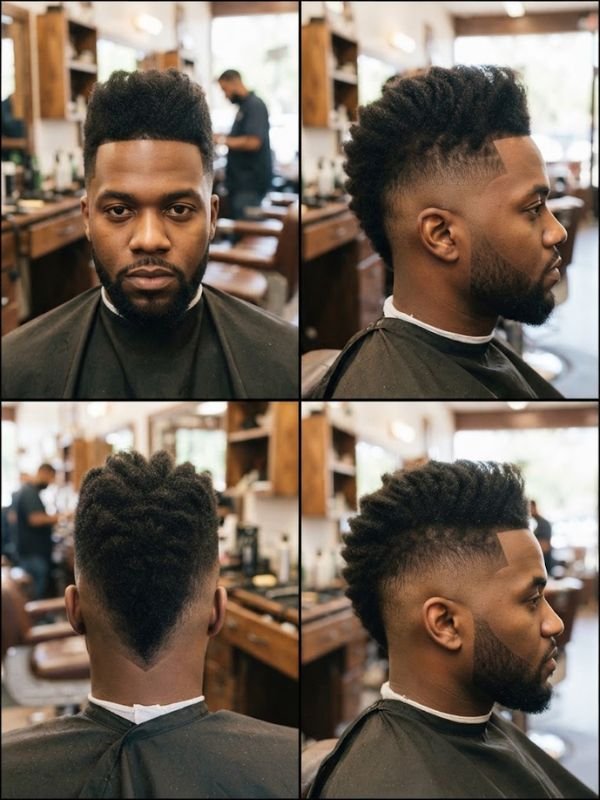
The classic version uses a moderate top length with a mid-level taper, giving a balanced look that works in almost any setting.
This is the baseline most people picture when they hear “taper fade mohawk” — enough length on top to style upward or forward, with sides that stay neat without going to skin. It’s a safe first request if you’re new to the cut.
Low Taper Fade Mohawk
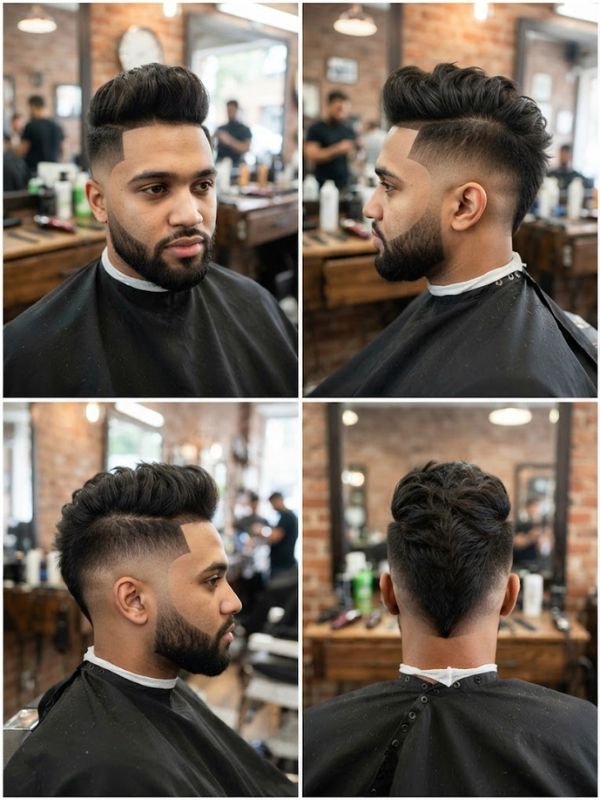
A low taper fade mohawk keeps the fade starting near the hairline and ears, giving the most subtle, conservative contrast of the three fade levels.
Because the transition happens so close to the natural hairline, most of the side hair stays intact, which suits people who want the mohawk shape without drawing too much attention to the sides.
Also Read This 40 Best Short Textured French Crop Haircuts (2026 Guide)
Mid Taper Fade Mohawk
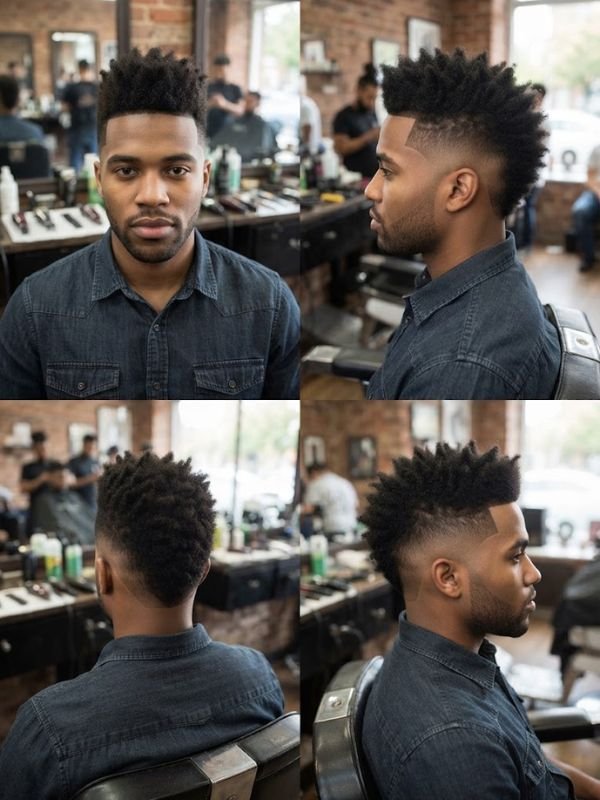
A mid taper fade mohawk starts the fade around the middle of the side of the head, striking a balance between subtle and bold.
It’s the most versatile of the three levels — noticeable enough to look intentional, but not so high-contrast that it feels aggressive. Most barbers default to a mid taper when a client doesn’t specify a preference.
High Taper Fade Mohawk
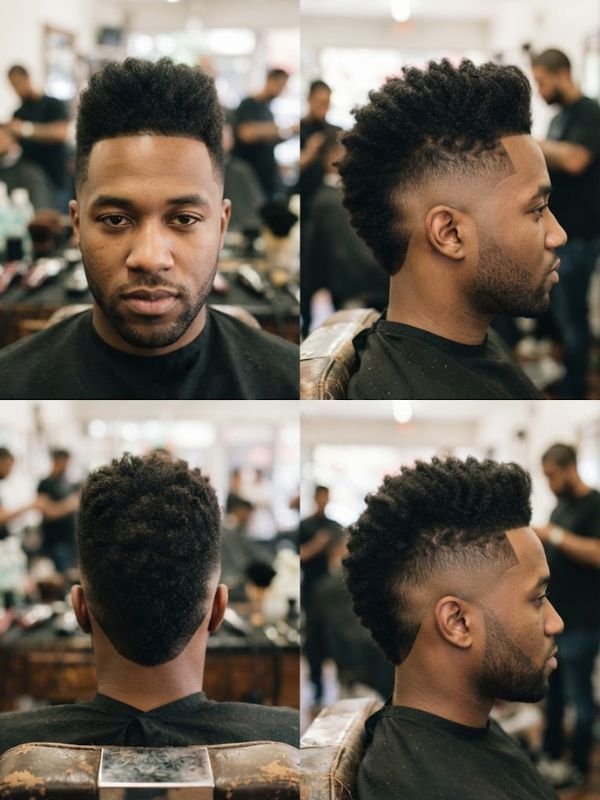
A high taper fade mohawk starts the fade near the temple or crown, creating the boldest contrast of the three levels.
This version removes the most bulk from the sides, which sharpens the outline of the center strip and makes the mohawk shape read clearly even when the top isn’t heavily styled.
Burst Taper Fade Mohawk
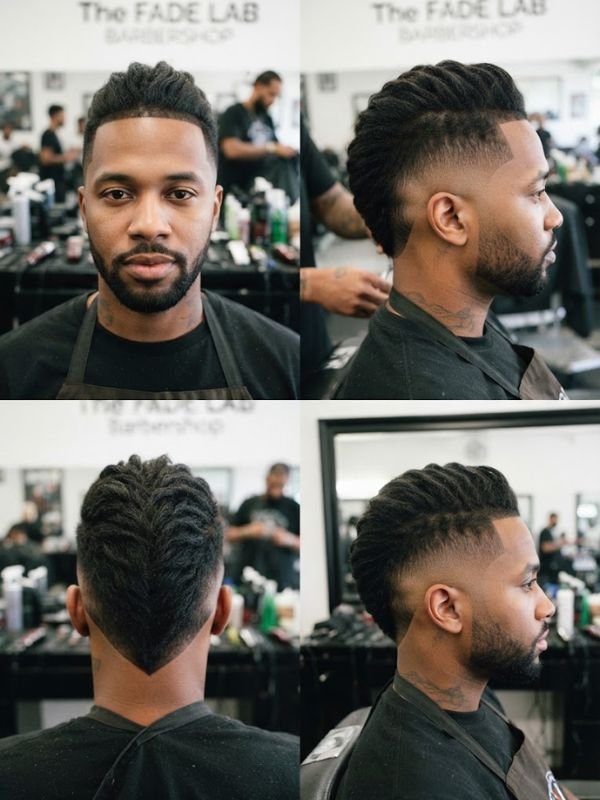
A burst taper fade mohawk curves the fade around the ear in a rounded shape instead of following a straight line down the side.
The curved pattern follows the natural contour of the head, which softens the transition near the ear while keeping strong contrast everywhere else. It’s a common pairing for both short and long mohawk strips.
Skin Fade Mohawk
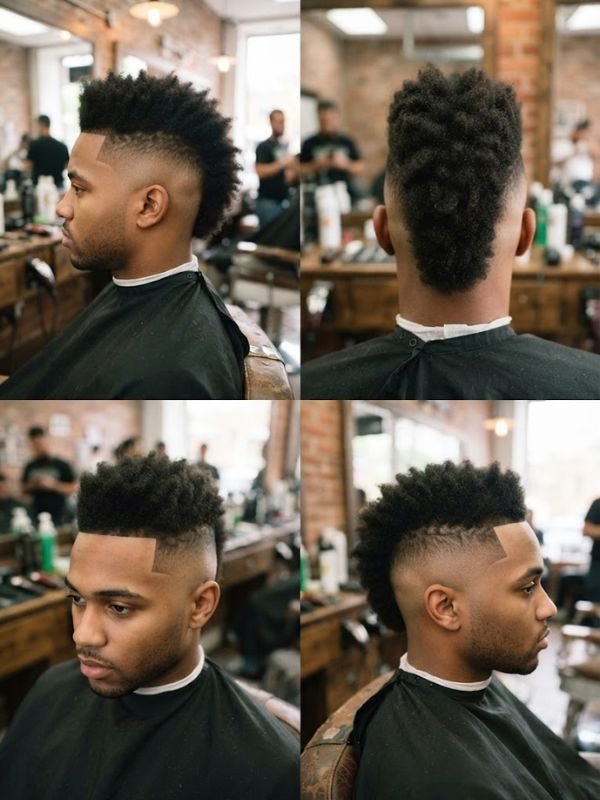
A skin fade mohawk takes the sides all the way down to bare skin, giving the sharpest possible contrast against the longer top.
Unlike a taper, which always leaves some length, a skin fade removes hair completely at its shortest point, usually with a foil shaver for the cleanest finish. It needs more frequent touch-ups than a taper since regrowth shows quickly against bare skin.
Curly Taper Fade Mohawk
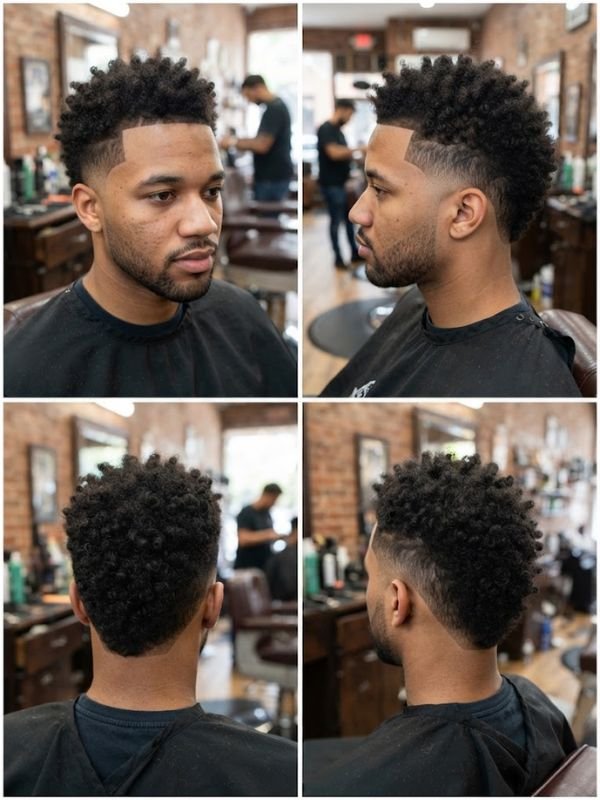
A curly taper fade mohawk uses natural curl pattern as the main feature on top while the taper controls bulk on the sides.
Curls hold volume differently than straight hair, so barbers typically leave a bit more length in the center strip to let the curl pattern show rather than getting cut too short and losing its shape.
Straight Hair Taper Fade Mohawk
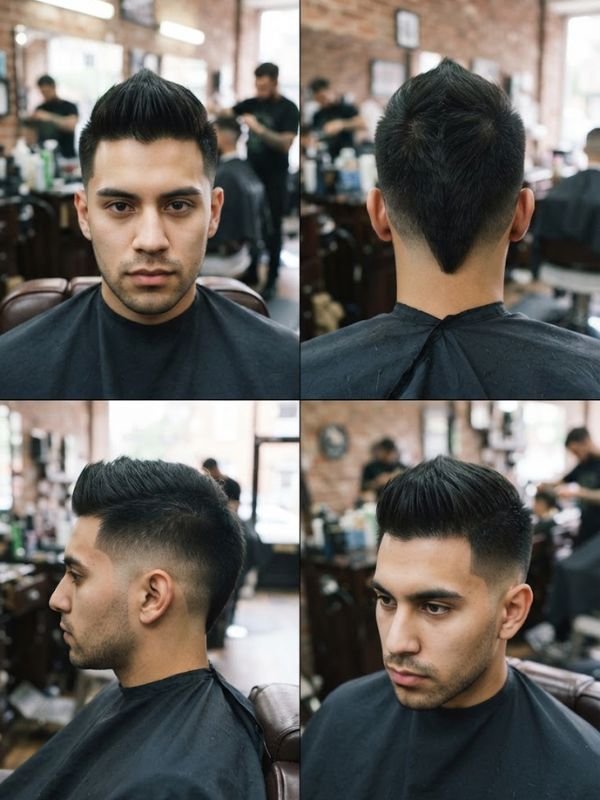
Straight hair takes well to a taper fade mohawk because it holds sharp lines and spikes without much fuss.
Since straight strands don’t add their own texture, styling relies more on product — a matte clay or paste gives the top hold and separation that straight hair won’t create on its own.
Textured Mohawk Fade
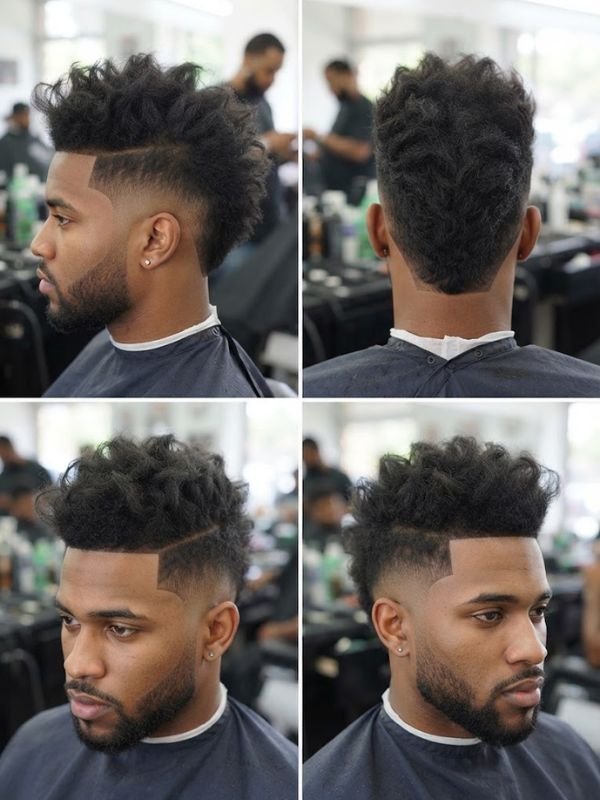
A textured mohawk fade uses scissor or thinning-shear work on top to break up the silhouette instead of leaving it blocky.
The result looks less uniform and more lived-in, with individual pieces of hair visible rather than one solid mass. It suits people who want the mohawk shape without a stiff, sculpted finish.
Messy Mohawk Fade
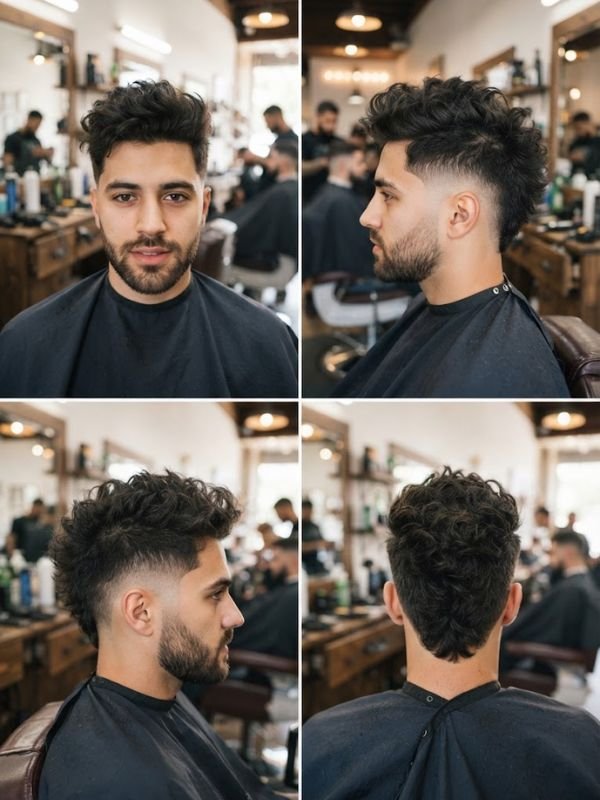
A messy mohawk fade is styled loosely by hand rather than combed or shaped into a precise line.
A light matte product worked through damp hair with fingers, then left mostly undone, gives this cut its relaxed feel. It’s a good option for anyone who doesn’t want to spend much time styling in the morning.
Spiky Taper Fade Mohawk
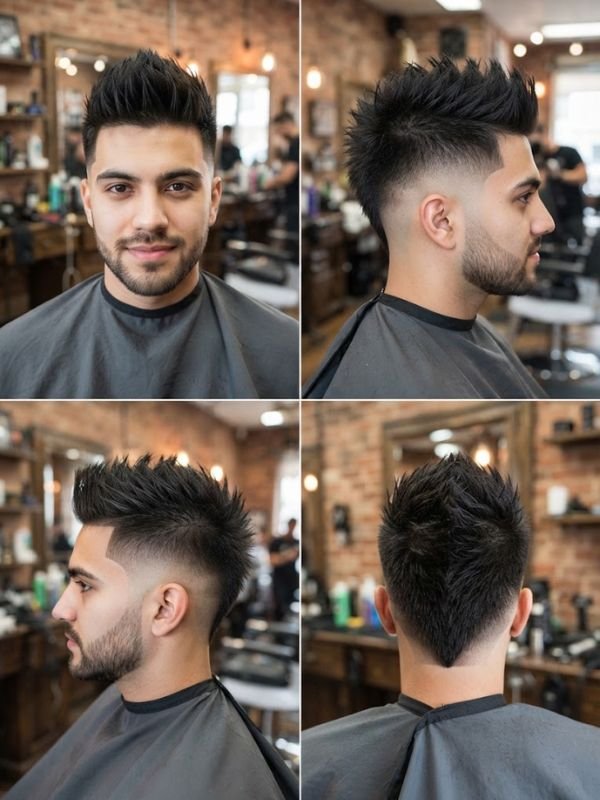
A spiky taper fade mohawk uses strong-hold product to push individual sections of hair straight up into defined points.
This version leans furthest into the mohawk’s punk origins and typically needs thicker or straighter hair to hold the shape through the day. A strong-hold gel or wax applied to damp hair, then set with a quick blast of hairspray, keeps the spikes standing.
Drop Fade Mohawk
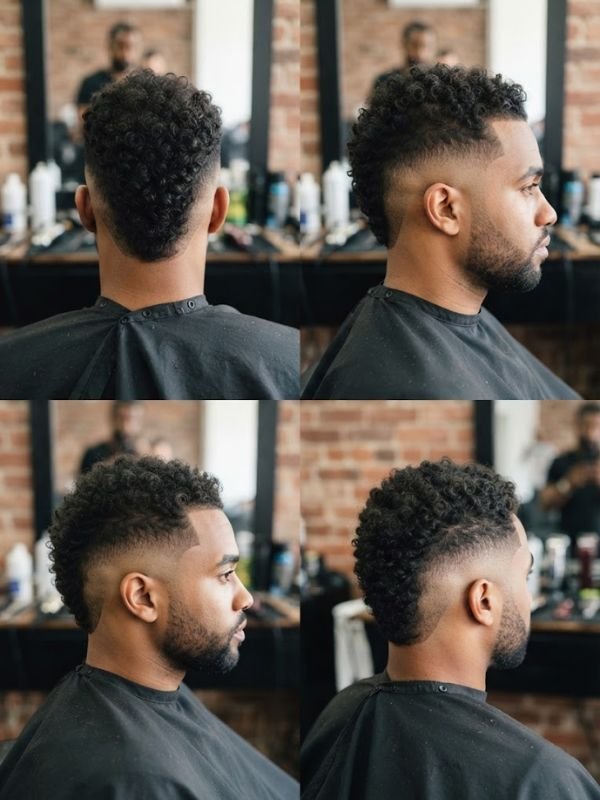
A drop fade mohawk curves the fade line downward behind the ear instead of keeping it level across the side of the head.
Following the natural curve of the skull this way gives a rounder, more sculpted look than a straight fade line, and it’s often requested alongside a slightly wider mohawk strip.
Temple Fade Mohawk
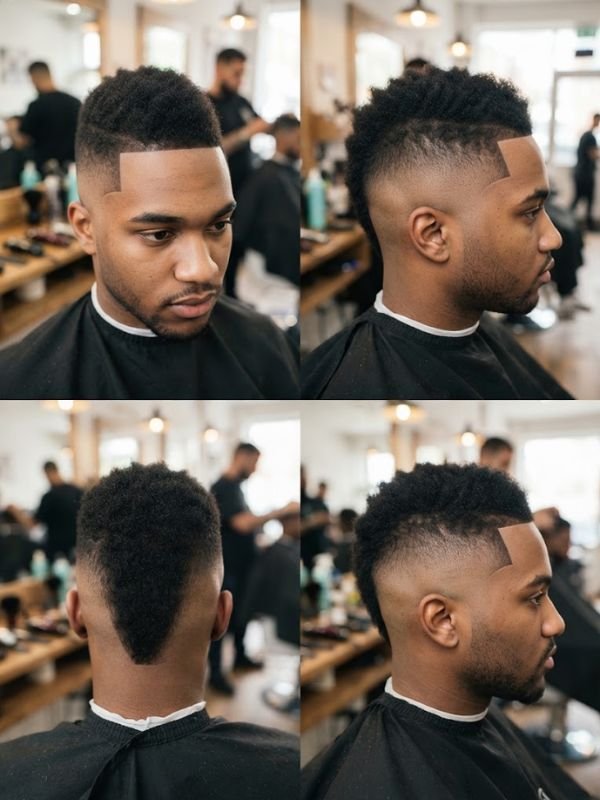
A temple fade mohawk concentrates the fade specifically at the temple area, often paired with a shorter center strip.
This version emphasizes the forehead and hairline more than the back or crown, which makes it a good match for people who want the taper effect to show mainly from the front.
Mohawk Fade With Beard
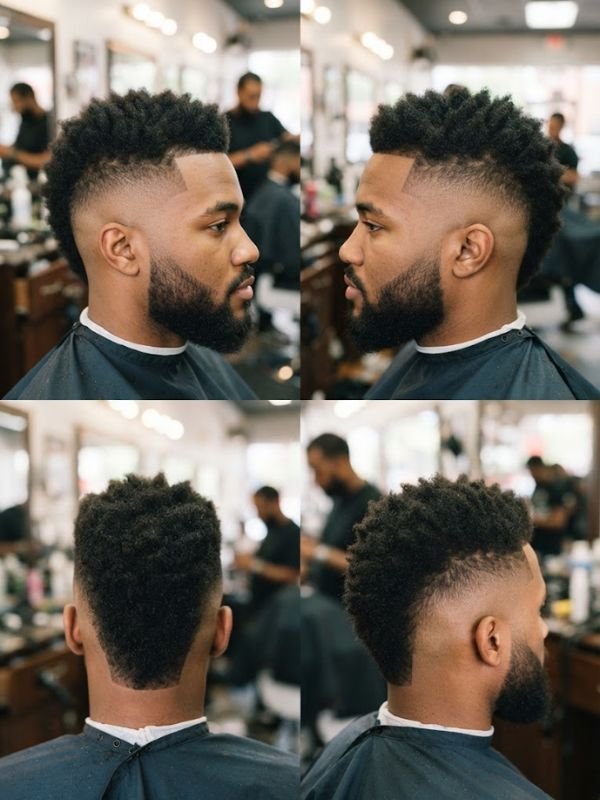
Pairing a mohawk fade with a beard works best when the sideburns blend directly into the beard rather than stopping at a hard line.
Ask your barber to connect the two so there’s no visible gap between where the haircut ends and the beard begins — that continuous line is what makes the combination look finished instead of like two separate grooming choices.
Faux Hawk Fade (No-Shave Mohawk Illusion)
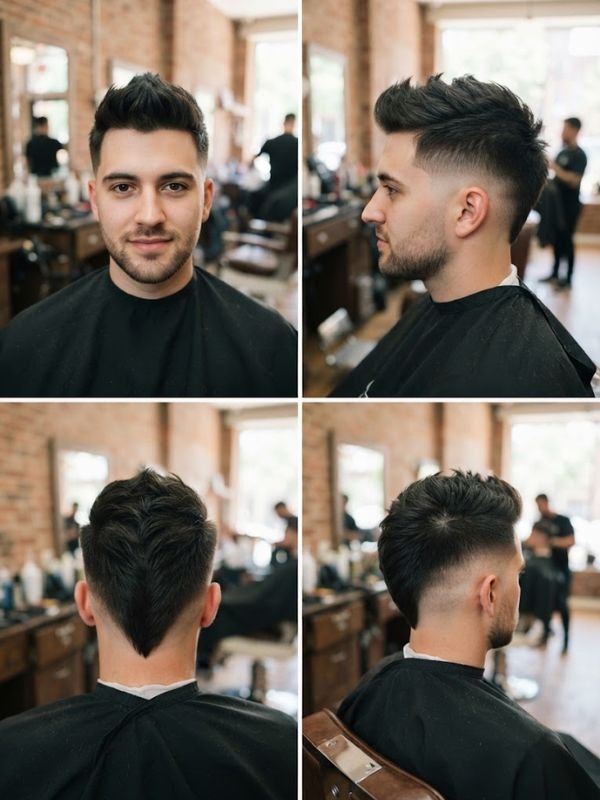
A faux hawk fade creates the mohawk’s shape through styling alone, without cutting the sides into a true narrow strip.
The sides are trimmed shorter than the top but never taken down as far as a real mohawk fade, so the “strip” only appears when the top is styled upward with product. It’s a lower-commitment way to try the look, and it’s easier to grow out into a different style later.
More Taper Fade Mohawk Haircut Ideas
These variations cover specific hair types, age groups, and styling preferences beyond the core sixteen above.
Mohawk Fade for Black Men
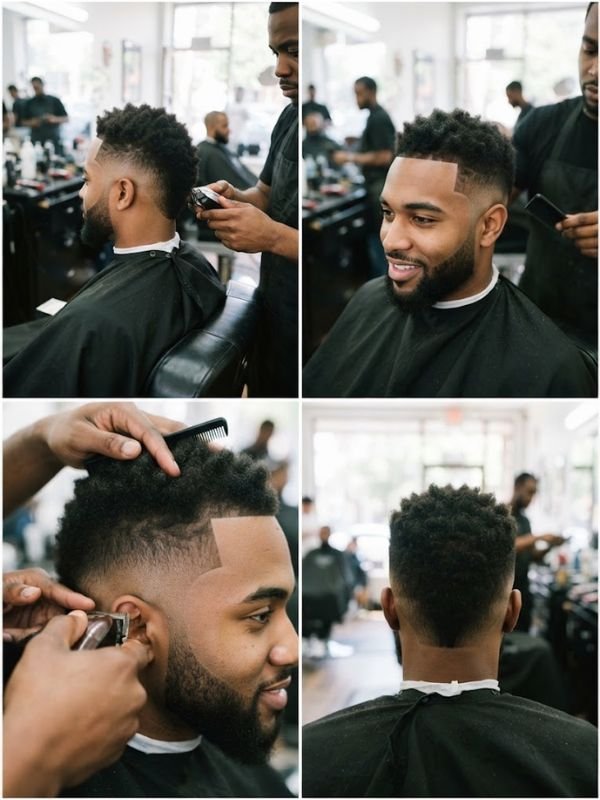
Coily and afro-textured hair naturally holds height, which makes it well suited to a mohawk fade with a crisp line-up along the hairline.
Barbers often finish this version with a sharp edge-up around the front and sides, since the defined line contrasts cleanly against the density of coily hair on top.
Afro Taper Fade Mohawk
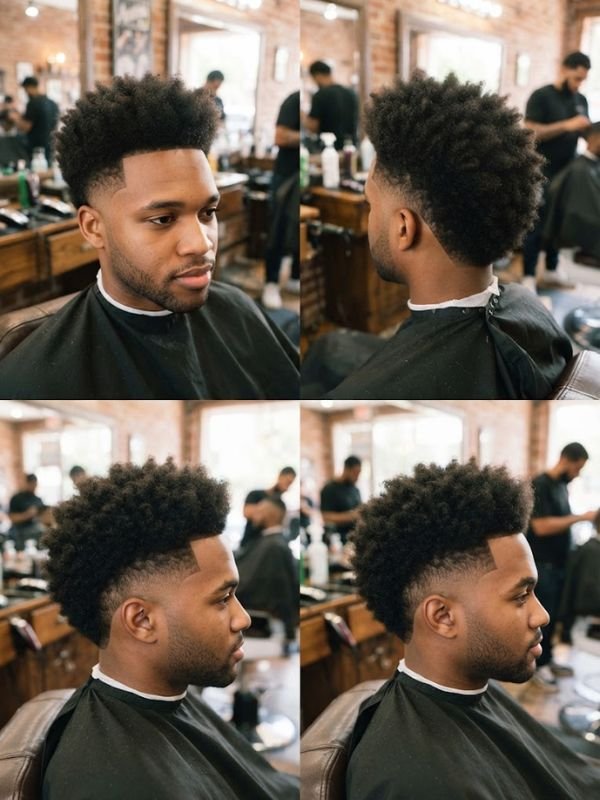
An afro taper fade mohawk keeps more volume through the center strip to let natural afro texture shape the silhouette on its own.
Less shaping product is needed here than with straight or wavy hair — a curl-defining cream applied to damp hair is usually enough to control frizz without flattening the natural pattern.
Taper Fade Mohawk for Kids
A kids’ taper fade mohawk uses a shorter top length and a lower-contrast fade, keeping the look practical for school and everyday play.
Because children’s hair sees more friction from pillows, hats, and activity, a shorter strip holds its shape longer between visits than a taller, styled version would.
Boys Taper Fade Mohawk
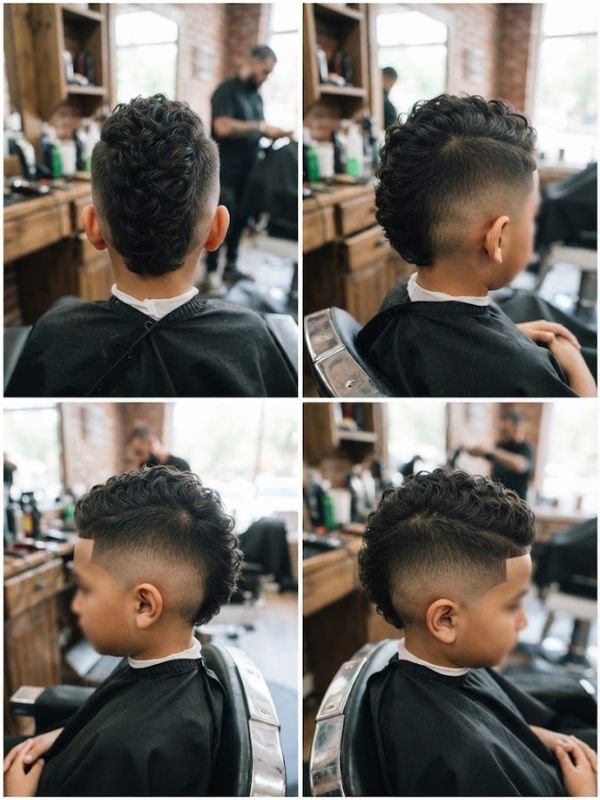
A boys’ taper fade mohawk gives slightly more length and styling flexibility than a younger child’s version, without going as bold as an adult cut.
This is often the first version a barber suggests for pre-teens and teenagers who want more personality in their haircut but aren’t ready for a high-contrast, heavily styled look.
Taper Fade Mohawk Mullet
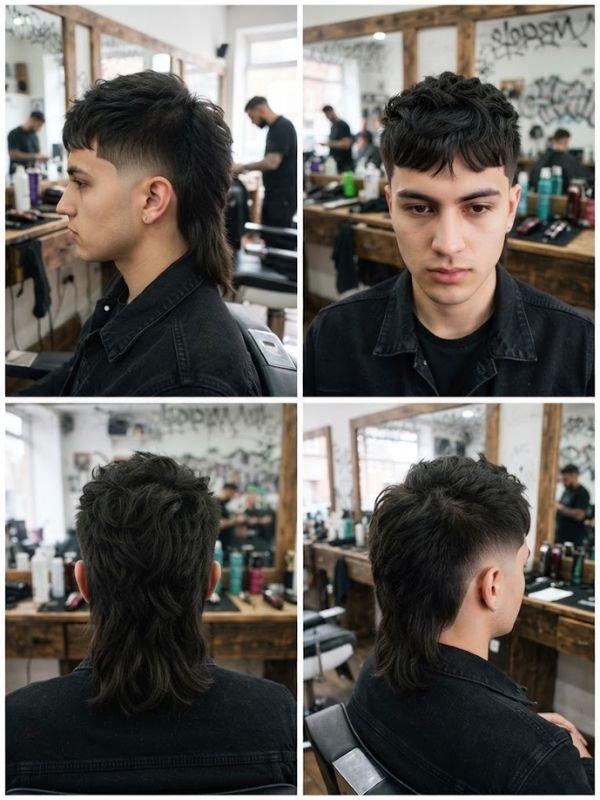
A taper fade mohawk mullet leaves the back section long, blending mohawk styling on top with mullet-length hair at the nape.
The sides still taper in the usual way, but instead of tapering the back short too, the barber lets it grow out, creating a hybrid that keeps the mohawk’s height while adding length in the back.
Long Mohawk Fade
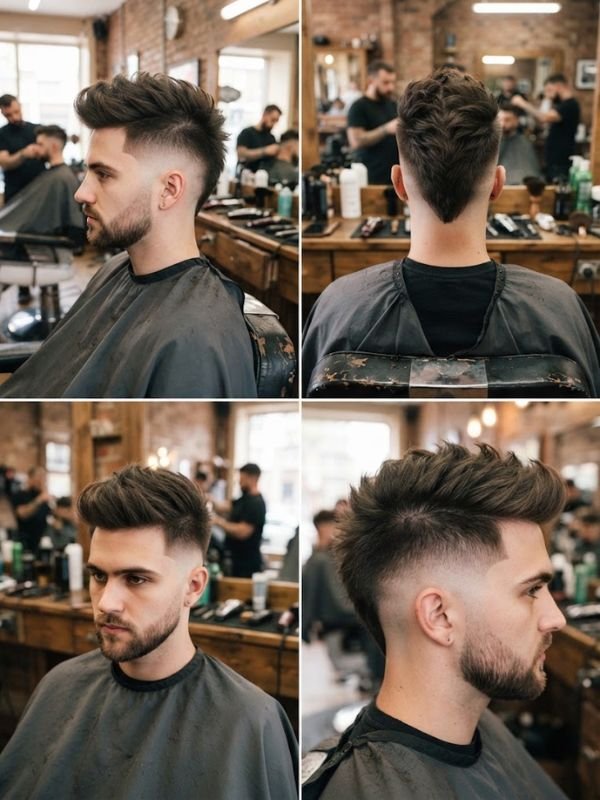
A long mohawk fade leaves several inches of length on top, giving enough hair to style into height, a slicked-back shape, or loose waves.
Longer length also gives more room for styling variety day to day — the same cut can look sharp and spiked one day and smoothed down the next, depending on the occasion.
Wavy Mohawk Fade
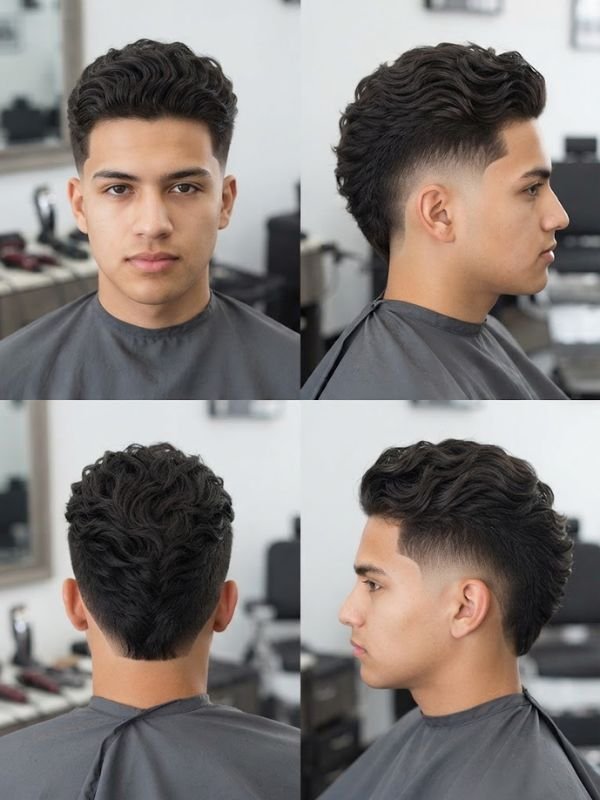
A wavy mohawk fade works with natural wave pattern instead of fighting it, using light product to enhance texture rather than force a shape.
A sea salt spray applied to damp hair brings out definition and a bit of lift at the root, which suits wavy hair better than heavier, shine-based products.
Buzz Cut Mohawk Fade
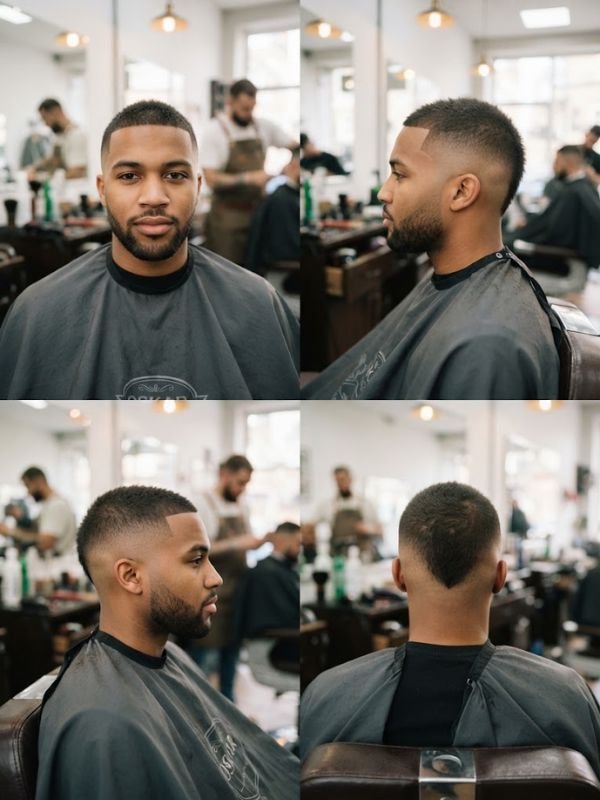
A buzz cut mohawk fade uses a very short, uniform top length paired with a tight taper for the lowest-maintenance version of the cut.
There’s little to no daily styling required — the shape comes entirely from the cut itself, which makes this a practical option for anyone who wants the mohawk silhouette without spending time on it each morning.
Mohawk With Hair Design
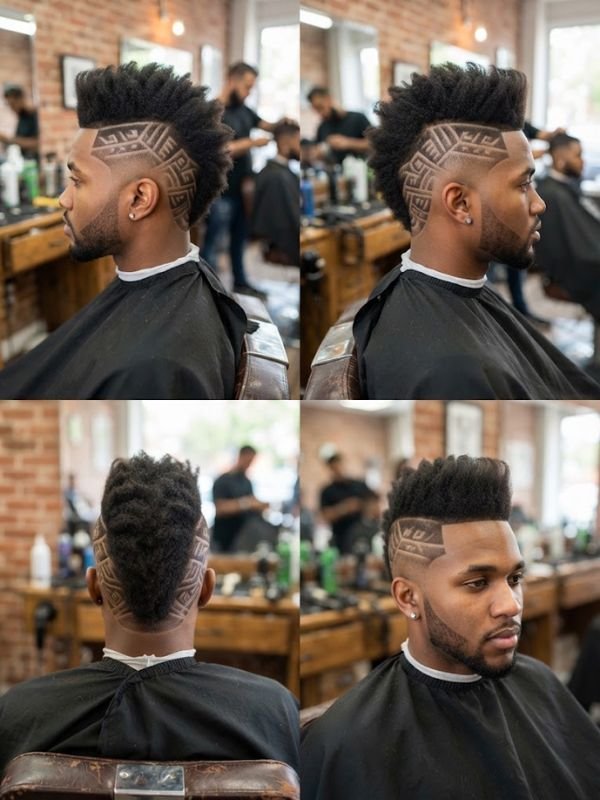
A mohawk with hair design adds shaved-in patterns or lines within the faded sides for a more personalized finish.
These designs are typically cut with a detail trimmer after the main fade is complete, and they work best on shorter fades where there’s enough visible skin or short hair to hold a crisp pattern.
Professional Taper Fade Mohawk
A professional taper fade mohawk uses a low-contrast fade and a moderate top length to keep the cut workplace-appropriate.
Keeping the strip narrower and the top length shorter than a statement version means the mohawk shape is still present but reads more like a textured, structured haircut than a bold style choice.
Undercut Mohawk Fade
An undercut mohawk fade cuts the sides very short with a sharper disconnect from the top, rather than a smooth graduated blend.
Where a standard taper fade transitions gradually, this version creates a more visible step between the long top and short sides, giving a harder, more defined edge.
Pompadour Mohawk Fade
A pompadour mohawk fade combines a swept-back, lifted top with mohawk-style tapered sides instead of straight-up spikes.
The top is blow-dried and styled backward for volume rather than upward for height, which gives this version a more polished, dressed-up feel than a typical spiked mohawk.
V-Shape Nape Mohawk Fade
A V-shape nape mohawk fade shapes the back hairline into a defined point at the neck instead of leaving it rounded.
This detail is added at the very end of the cut with a straight razor or detail trimmer, and it gives the back of the haircut the same crisp finish as the fade on the sides.
Line-Up / Hard Part Mohawk Fade
A line-up mohawk fade adds a sharp razor line along the hairline, sometimes with an extra part line shaved into the side for definition.
The line-up is typically the last step in the cut, done with a straight razor or detail trimmer to create a crisp, geometric edge along the forehead and temples.
Fine Hair Taper Fade Mohawk
Fine hair works best with a shorter top length in a taper fade mohawk, since longer fine hair tends to look thin rather than full.
Texturizing spray or a lightweight matte product adds the appearance of density without weighing the strands down, which is a common issue with heavier creams on fine hair.
Gray Hair / Salt-and-Pepper Taper Fade Mohawk
A taper fade mohawk on gray or salt-and-pepper hair works well with a shorter, neater top rather than a tall, heavily styled one.
Keeping the length modest gives the cut a clean, put-together look rather than an aging one, and a matte finishing product avoids the shine that can make gray hair look flat under light.
Taper Fade Mohawk for Teens
A taper fade mohawk for teens usually allows more room for bold styling and color than an adult professional version.
Since school dress codes are typically more relaxed than workplace ones, teens often go for higher contrast fades, added designs, or brighter product finishes that a working adult might tone down.
Colored / Dyed Taper Fade Mohawk
A colored taper fade mohawk dyes the center strip a contrasting shade to make the mohawk shape stand out against the faded sides.
Because color fades and roots grow in faster than the haircut itself does, this version needs more frequent touch-ups to keep both the cut and the color looking sharp.
Two-Block Mohawk Fade
A two-block mohawk fade uses two clearly separate lengths — a fuller top and a short, distinct side section — rather than one smooth graduated taper.
Instead of blending gradually, the barber cuts the sides to a single short length and lets the top sit noticeably longer on top of it, creating a more layered, stacked look.
Fringe Mohawk Fade
A fringe mohawk fade styles the front section forward into a fringe instead of sweeping it straight up.
This softens the overall silhouette compared to a spiked or swept-back top, and it works especially well on straight or slightly wavy hair that falls forward naturally.
Braided Mohawk Fade
A braided mohawk fade works on longer, curly, or coily top sections by braiding or twisting the center strip instead of leaving it loose.
Cornrows or two-strand twists running front to back keep the top controlled between wash days, while the faded sides stay part of the regular maintenance routine.
Widow’s Peak Mohawk Fade
A widow’s peak mohawk fade shapes the front hairline to emphasize a natural widow’s peak rather than cutting a straight line across the forehead.
Barbers follow the natural point of the hairline when lining up the front, which gives the cut a slightly more angular, distinctive look at the front of the strip.
Razor-Line Design Mohawk Fade
A razor-line design mohawk fade cuts multiple thin lines into the faded sides for a graphic, pattern-based finish.
These lines are usually spaced evenly and shaved with a detail trimmer after the main fade, and they hold up best on shorter fades where the pattern stays visible longer between trims.
Rock/Punk-Style Spiked Mohawk Fade
A rock or punk-style spiked mohawk fade is the most dramatic version of the cut, often using a wider strip and maximum height.
This version leans fully into the mohawk’s original punk aesthetic, usually paired with a high or skin fade for the sharpest possible contrast against the tall, spiked top.
Low vs Mid vs High Taper Fade Mohawk
The difference between low, mid, and high taper fade mohawks comes down to where the fade starts on the side of the head.
| Fade Level | Where It Starts | Typical Guard | Overall Look |
| Low | Near the hairline and ears | Skin to #1 | Subtle, conservative contrast |
| Mid | Around the middle of the side | #2 to #3 | Balanced, noticeable but wearable |
| High | Near the temple or crown | #3 or skin | Bold, high-contrast statement |
Choosing between them usually comes down to lifestyle rather than looks alone — a low taper suits people who want the mohawk shape without much attention on the sides, while a high taper removes more hair and makes a bolder statement.
Also Read This 40 Best Short Textured French Crop Haircuts (2026 Guide)
Best Hair Types for a Taper Fade Mohawk
Hair type changes how a taper fade mohawk should be cut, styled, and maintained, even when the overall shape stays the same.
Curly Hair
Curly hair holds a taper fade mohawk well when the barber leaves slightly more length in the center strip to preserve the curl pattern.
A curl-defining cream on damp hair controls frizz without collapsing the curl, and trims should focus on shaping rather than cutting too short, since curls shrink up once dry.
Straight Hair
Straight hair takes taper fade mohawks in almost any direction, from sharp spikes to a smooth brushed-back finish, since it holds a styled shape cleanly.
Because straight strands don’t create their own texture, a matte clay or paste is usually necessary to add grip and separation that the hair won’t provide on its own.
Wavy Hair
Wavy hair adds natural movement to a taper fade mohawk with very little styling effort required.
A sea salt spray on damp hair enhances the natural wave and adds light volume at the root, giving texture without needing a heavy-hold product.
Thick Hair
Thick hair suits a fuller mohawk shape, but it often needs some bulk removed with thinning shears so the top doesn’t sit too heavy.
A firmer-hold product is usually needed to control thick strands through the day, since lighter creams tend to get absorbed without giving enough hold.
Thin Hair
Thin hair reads fuller in a taper fade mohawk when the top is kept shorter and styled with texture rather than length.
Heavy products should be avoided since they can flatten thin hair further — a lightweight texturizing spray builds the appearance of density without weighing strands down.
Best Face Shapes
Face shape can influence how a taper fade mohawk looks, though these are general starting points rather than fixed rules.
Oval Face
Oval faces tend to suit most taper fade mohawk variations without adjustment, since the proportions are already balanced.
There’s more freedom here to choose a variation based on personal style rather than needing to correct for face shape.
Square Face
A softer, textured top is often recommended for square faces over a flat, sharply squared-off mohawk shape.
This isn’t a strict rule — some people with square faces prefer the extra structure — but a rounder or more textured top can soften strong jawlines if that’s the goal.
Round Face
Extra height on top can help elongate a round face, while very short, uniform buzzed sides tend to emphasize roundness instead.
A taller center strip with a higher taper is a common suggestion here, though personal preference still matters more than any single guideline.
Diamond Face
Diamond faces often suit a taper fade mohawk with volume concentrated toward the crown rather than at the temples.
Keeping the sides closer to the head near the temples can help balance the proportions of a diamond-shaped face.
Heart Face
A moderate strip width tends to balance a heart-shaped face better than an especially wide or narrow mohawk top.
Since heart faces are often wider at the forehead and narrower at the chin, a barber may suggest adjusting strip width slightly to keep the overall look proportional.
How to Ask Your Barber for a Taper Fade Mohawk
The clearest way to ask for a taper fade mohawk is to specify the fade level, the width of the center strip, and the length you want on top.
Saying only “give me a mohawk fade” leaves too much open to interpretation, since barbers use terms like taper, fade, and burst differently from shop to shop. A more useful request sounds something like: “I’d like a mid taper fade mohawk, about two inches on top, with a two-and-a-half-inch strip, and the sides blended down near the ears.” Bringing a reference photo removes even more guesswork and helps confirm you and your barber are picturing the same result.
How to Style a Taper Fade Mohawk at Home
Styling a taper fade mohawk at home takes four basic steps: wash, dry, apply product, and shape the top.
Step 1: Wash Your Hair
Start with clean hair using a shampoo suited to your hair type, since product buildup makes styling harder and can weigh the top down.
Rinse thoroughly and towel-dry until hair is damp rather than dripping, which gives you the right starting point for the next step.
Step 2: Blow Dry
Blow-dry the top while lifting it with your fingers or a round brush, directing airflow upward from the roots to build volume before styling.
Keep the dryer on a medium heat setting and work in sections if your hair is thick, since drying it all at once can leave some areas underdone.
Step 3: Apply Product
Apply a small amount of your chosen product — matte clay, gel, or sea salt spray depending on hair type — to slightly damp or fully dry hair.
Work it through with your fingers rather than a comb for the first pass, since fingers distribute product more evenly through the roots without flattening the shape you’re about to build.
Step 4: Shape the Mohawk
Use your fingers or a comb to push the center strip upward or into whatever shape you’re going for, then set it with a light hold spray if needed.
Check the shape from the front and both sides before heading out, since a mohawk that looks even head-on can shift unevenly once you turn.
Common Mistakes to Avoid
The most common mistake with a taper fade mohawk is asking for it vaguely instead of specifying the fade level and strip width.
Other frequent issues include using the wrong product for your hair type — heavy pomade on fine hair, or light spray on thick hair that needs more hold — and letting too much time pass between trims, which lets the fade grow out unevenly and lose its defined contrast.
Maintenance Tips
A taper fade mohawk typically needs a trim every two to four weeks, depending on how high-contrast the fade is.
Higher and skin fades show regrowth faster and usually need touch-ups closer to the two-week mark, while lower tapers can often stretch to three or four weeks before losing their shape. Washing two to three times a week with a clarifying shampoo helps prevent product buildup, which can make styling harder over time and leave the top looking dull.
Taper fade mohawk women
Taper fade mohawks work the same way on women as on men, with the fade level and strip width adjusted to personal preference rather than gender.
More women have been requesting this cut for the same reasons it appeals to men — it’s versatile, grows out cleanly, and can be styled dramatically or kept low-key depending on the day. The main difference is often a slightly wider or longer strip on top, giving more room for styling variety.
Taper fade mohawk straight hair
Straight hair is one of the easier textures to style into a taper fade mohawk since it holds sharp, defined lines without much product.
For the cleanest result, ask your barber for a slightly shorter top than you’d request with curly or wavy hair, since straight strands can look heavier and flatter when left too long. A matte clay applied to fully dry hair gives the most control for spiking or brushing the top into shape.
Frequently Asked Questions
Is a taper fade mohawk the same as a normal mohawk?
No, a taper fade mohawk keeps hair on the sides through a gradual blend, while a traditional mohawk shaves the sides to bare skin.
The taper fade version is generally easier to maintain and grows out more evenly than a fully shaved mohawk.
How often should I get my taper fade mohawk trimmed?
Most taper fade mohawks need a trim every two to four weeks, depending on the fade level.
Higher and skin fades need more frequent touch-ups than low tapers, since regrowth shows faster the closer the fade gets to bare skin.
Can I get a taper fade mohawk with curly hair?
Yes, curly hair works well with a taper fade mohawk, and barbers usually leave slightly more length on top to preserve the curl pattern.
A curl-defining product applied to damp hair helps control frizz without flattening the natural texture.
Is a taper fade mohawk professional enough for work?
Yes, a low-contrast taper fade mohawk with a moderate top length can look professional enough for most workplaces.
Keeping the fade low and the strip narrower makes the cut read more like a structured, textured haircut than a bold statement style.
What’s the difference between low, mid, and high taper fade mohawks?
The difference is where the fade starts on the side of the head — low near the hairline, mid around the middle, and high near the temple or crown.
Higher fades remove more hair and create bolder contrast, while lower fades keep the look more subtle.
How do I style a taper fade mohawk without gel?
A sea salt spray or lightweight texturizing spray can style a taper fade mohawk without the stiffness or shine of gel.
These products add volume and hold while keeping the finish more natural, which works especially well for wavy or curly hair.
Summary
A taper fade mohawk offers the boldness of a classic mohawk with a softer, more manageable transition on the sides. Whether you go for a low, subtle version or a high, dramatic one, the cut adapts to different hair types, face shapes, and lifestyles without losing its core shape.
With the right barber conversation and a bit of regular maintenance, this is one of the easiest bold haircuts to keep looking sharp between visits.
Hi, I’m Jake Miller a passionate barber based in Los Angeles, California, with over 3 years of hands-on experience in the craft. I specialize in modern fades, clean cuts, precision beard grooming, and classic barbering techniques, blending sharp technical skill with a relaxed, personal touch.
Over these years, I’ve had the opportunity to work with all kinds of clients, each with their own style and personality and that’s exactly what I love about this craft. For me, it’s never just about a haircut. It’s about understanding who you are and bringing that out through precision and care.
Every client who sits in my chair gets my full attention and expertise, because I believe great barbering is where confidence meets individuality. My goal is simple: to make sure you walk out looking sharp and feeling like the best version of yourself.

1 thought on “Taper Fade Mohawk: 42 Best Styles, Ideas & Barber Tips”