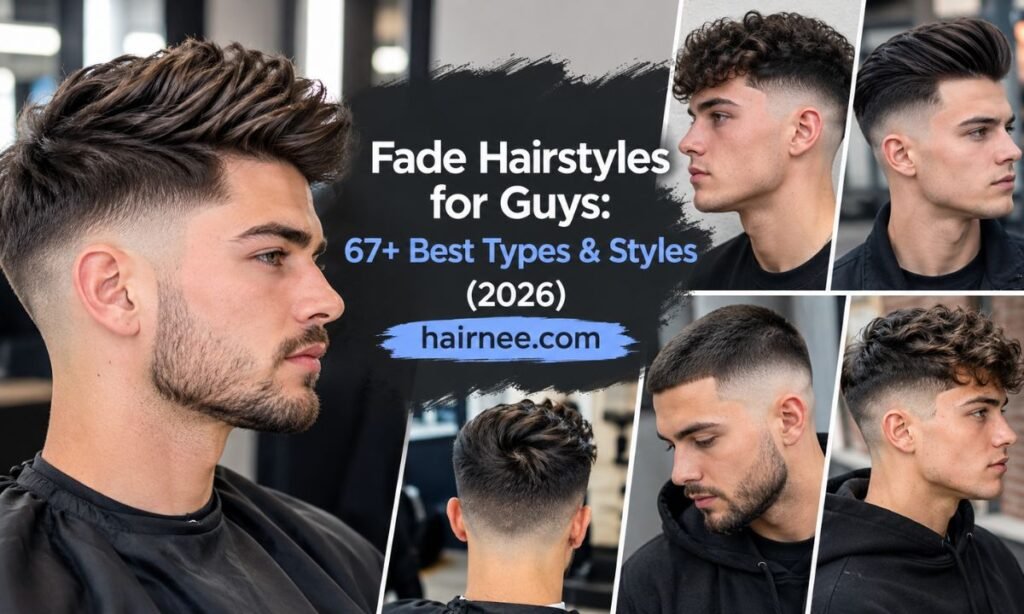
Fade hairstyles for guys have taken over modern barbershops, and it’s easy to see why. A good fade gives you clean, sharp lines with almost no daily upkeep, and it works with nearly every hair type, texture, and face shape. From a subtle low fade for the office to a bold skin fade with a hard part, there’s a version built for you.
This guide breaks down every major fade type, shows you which one fits your hair and face shape, and gives you the exact words to use in the barber’s chair. You’ll also find guard number charts, styling steps, and maintenance timelines you won’t find bundled together anywhere else.
Key Points
- A fade gradually shortens hair from longer on top to skin or near-skin at the sides, using clipper guards that step down in length.
- The three core blend heights are low, mid, and high fade, with skin, shadow, drop, taper, burst, and temple fades as style variations of those heights.
- Straight, wavy, curly, coily, thick, and fine hair all support fades, but the styling and guard choice should change with texture.
- Most fades need a trim every 1 to 4 weeks depending on how short the sides are cut.
- Face shape should guide your fade height, but it’s a starting point, not a strict rule.
What Is a Fade Haircut?
A fade haircut is a technique where hair length gradually decreases from longer at the top to very short or bare skin at the sides and back. It’s created with clipper guards that step down in size, blending one length into the next so there’s no visible line between sections.
The word “fade” describes the blending technique itself, not a single haircut. That’s why you’ll hear people talk about a “low fade” or a “skin fade” — these are the same core technique applied at different heights and with different finishing lengths. A skilled barber uses clippers, combs, and sometimes a straight razor to make the transition look seamless rather than choppy.
Fade Haircut Guard Number Chart
Clipper guard numbers correspond to fixed hair lengths, and knowing them helps you communicate exactly what you want. Guard #0 leaves skin almost bare, while guard #8 leaves over an inch of hair.
| Guard Number | Length (Inches) | Length (mm) | Common Use |
| #0 (no guard) | 0″ (skin) | 0.5 mm | Skin fade base, bald fade |
| #0.5 | 1/16″ | 1.5 mm | Skin fade blend start |
| #1 | 1/8″ | 3 mm | Low/high fade base for skin fade look |
| #2 | 1/4″ | 6 mm | Buzz cut length, fade base |
| #3 | 3/8″ | 10 mm | Shadow fade base |
| #4 | 1/2″ | 13 mm | Longer fade base, textured tops |
| #5–#6 | 5/8″–3/4″ | 16–19 mm | Blend zone into top length |
| #7–#8 | 7/8″–1″ | 22–25 mm | Top length for crops, quiffs, pompadours |
A low fade typically starts its shortest point around a #1 or #0.5 near the ear, while a high fade starts that same short length much higher, closer to the temple. Skin fades drop to guard #0 for a bare-skin finish, and shadow fades stop around #2 to #3 so a light shadow of hair remains instead of exposed scalp.
Types of Fade Hairstyles for Guys
Every fade style is really a variation of blend height and finishing texture, and understanding the differences makes it much easier to describe what you want to your barber.
| Fade Type | Blend Starts | Finish | Best For |
| Low Fade | Near the ears | Guard #1–#2 | Conservative, workplace-friendly looks |
| Mid Fade | Above the ear/temple midpoint | Guard #1–#2 | Balanced, versatile styling |
| High Fade | Near the temple/hairline | Guard #0.5–#1 | Bold contrast, statement looks |
| Skin Fade | Any height | Bare skin (#0) | Maximum contrast, sharp definition |
| Shadow Fade | Any height | Guard #2–#3 | Softer contrast, professional settings |
| Drop Fade | Curves down behind the ear | Guard #0.5–#1 | Rounding out the head shape |
| Taper Fade | Sides and back only | Guard #1–#3 | Subtle, classic finish |
| Burst Fade | Curves around the ear only | Guard #0.5–#1 | Curly or textured tops |
| Temple Fade | Around the temple area only | Guard #1–#2 | Framing the hairline, works with any length top |
Low Fade Haircut
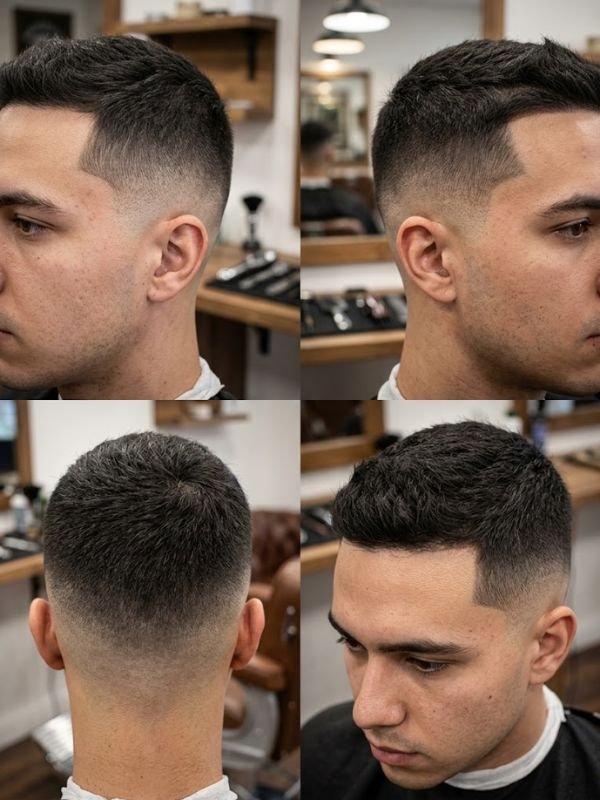
A low fade keeps the blend close to the ears, leaving most of the sides longer for a subtle, professional look. It’s one of the most versatile fade options because it works with short, medium, or long hair on top without drawing too much attention to the sides.
This style suits guys who want the clean lines of a fade without a dramatic contrast. It’s a safe choice for offices, formal settings, or anyone easing into fades for the first time, and it pairs naturally with pompadours, side parts, and textured crops.
Mid Fade Haircut
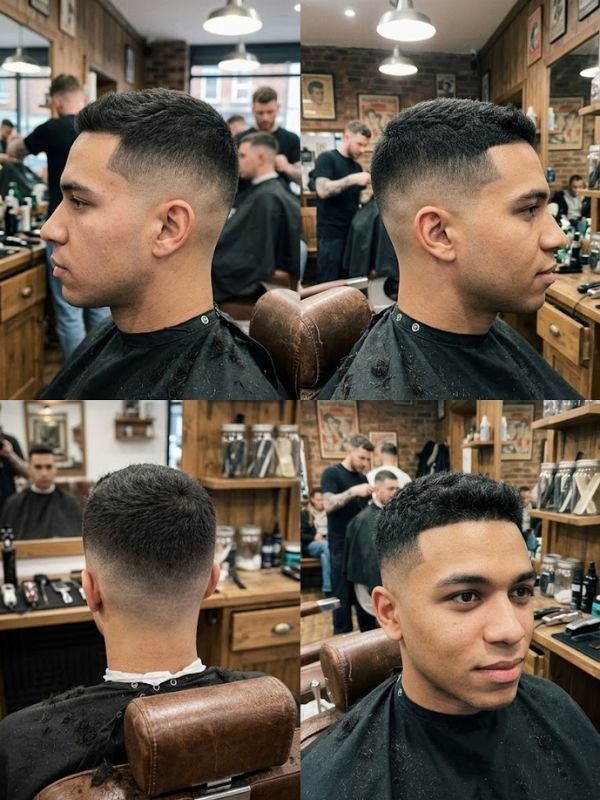
A mid fade starts its blend around the middle of the head, between the temple and the ear, giving noticeable but balanced contrast. It sits right between the subtlety of a low fade and the boldness of a high fade.
Because the blend point is centered, a mid fade flatters a wide range of face shapes and hair types. Barbers often recommend it as a starting point when a client isn’t sure how dramatic they want their fade, since it can be adjusted higher or lower on the next visit.
High Fade Haircut
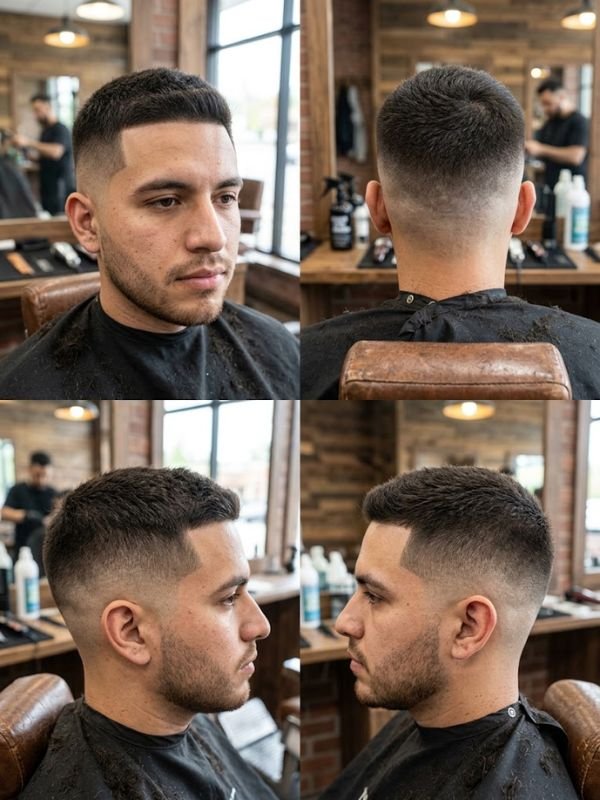
A high fade begins the blend near the temple or hairline, creating a sharp contrast between the short sides and longer top. This height puts more visual focus on whatever you’re doing with the hair on top, whether that’s a quiff, spiky texture, or slicked-back style.
High fades need more frequent trims than low or mid fades since new growth shows up faster at the temple line. Guys who like a bold, high-maintenance-looking style but don’t want to style their hair for long each morning often gravitate toward this option.
Skin Fade Haircut
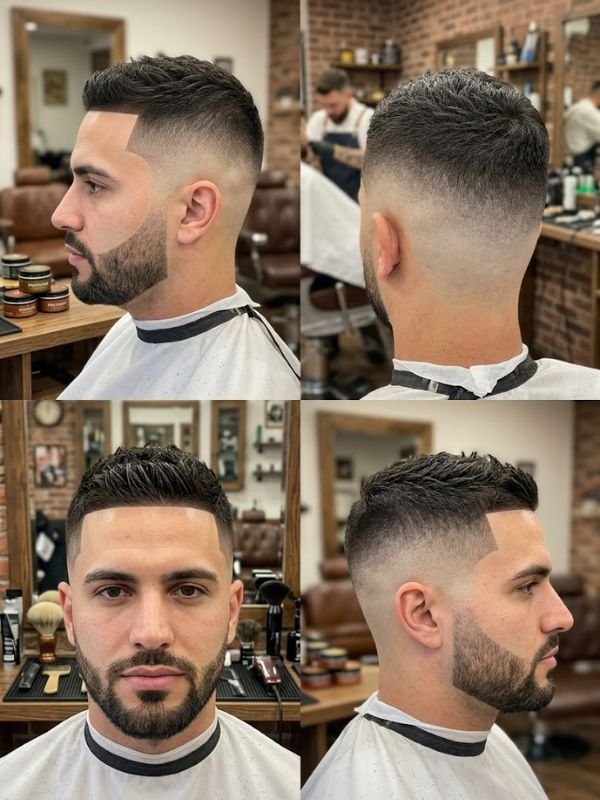
A skin fade blends the hair all the way down to bare skin, creating the highest possible contrast against the top. It can be combined with any blend height — low, mid, or high — since “skin” refers to the finishing length, not where the fade starts.
This is the sharpest-looking fade option and photographs extremely well, which is part of why it dominates barbershop portfolios and social media. It does require more upkeep, since exposed skin shows regrowth within a week or two.
Also Read This Taper Fade Mohawk: 42 Best Styles, Ideas & Barber Tips
Shadow Fade Haircut
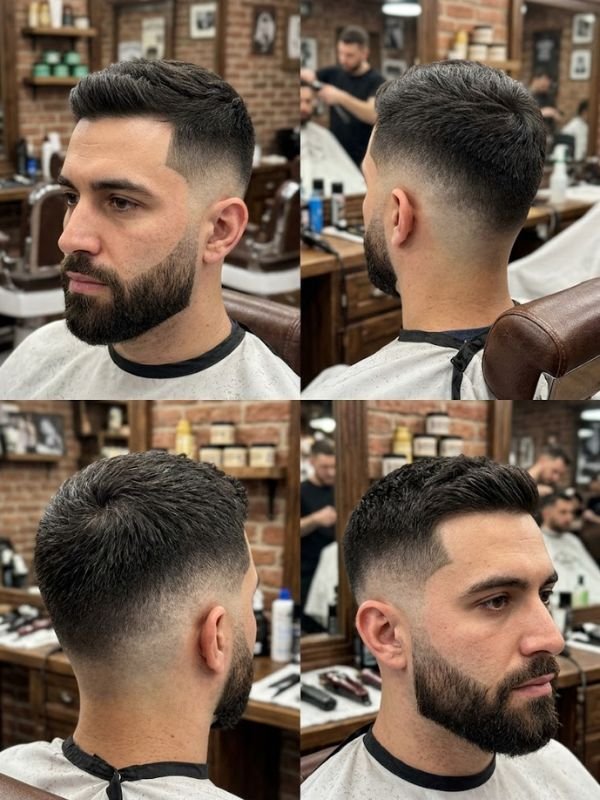
A shadow fade stops short of bare skin, leaving a light layer of hair (roughly a guard #2–#3) instead of exposing the scalp completely. It gives a softer, less severe version of the skin fade look.
This style works well for guys who like the clean appearance of a fade but want something more forgiving between barber visits. Since there’s still hair on the sides, regrowth is less obvious, which stretches out the time between trims.
Drop Fade
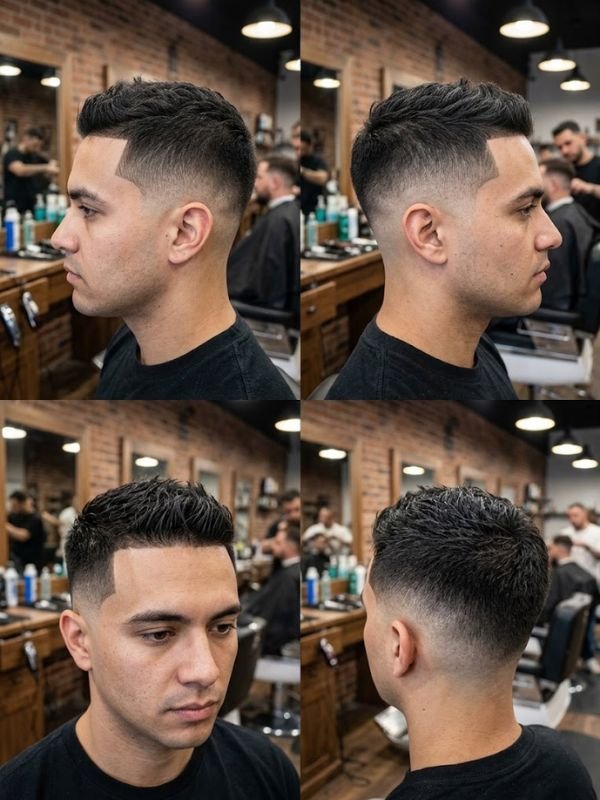
A drop fade curves downward behind the ear instead of staying in a straight horizontal line, following the natural curve of the skull. This “drop” creates a more rounded, contoured finish compared to a standard straight fade.
It’s a strong option for guys with curly or textured hair on top, since the curved line complements rounder hairstyles like curls, twists, and afro tops. Ask your barber specifically for a “drop fade” since a standard fade won’t include this curved shape by default.
Taper Fade
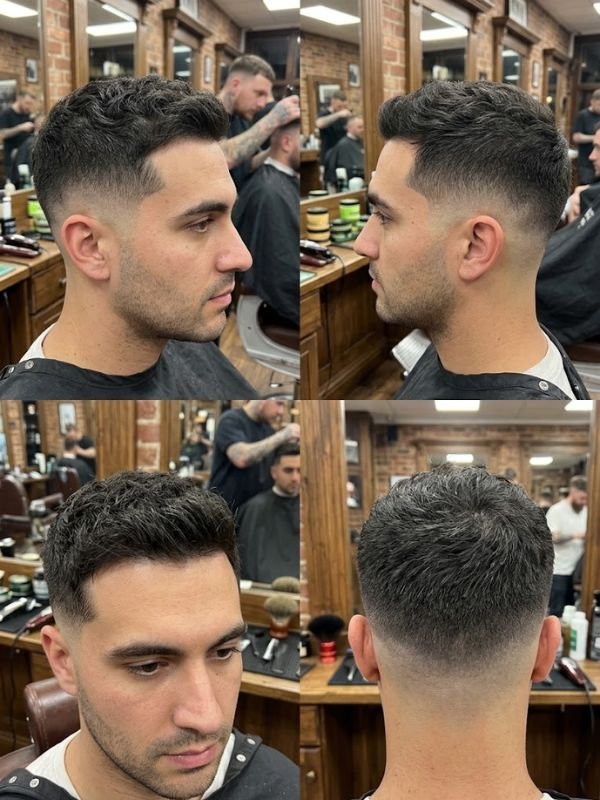
A taper fade keeps length gradually decreasing only at the sides and back, without the dramatic skin or near-skin finish of other fades. It’s the most subtle and classic version of the fade family.
Because the contrast is gentle, a taper fade suits conservative or formal environments where a bold skin fade might feel too flashy. It’s also lower maintenance, since the softer blend hides regrowth longer than sharper fade styles.
Burst Fade
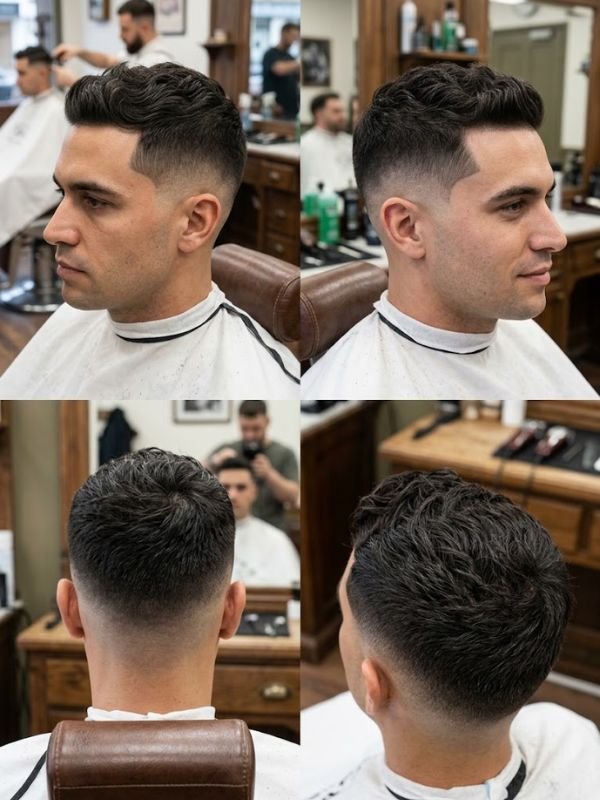
A burst fade wraps around the ear in a semi-circular shape rather than running in a straight line across the head. It’s commonly paired with longer or curlier tops, including curls, twists, and mullets.
This style gives extra shape around the ear without fully committing to a fade across the entire side of the head. It’s a popular choice for guys who want their fade to look more custom and less like a standard barbershop template.
Temple Fade
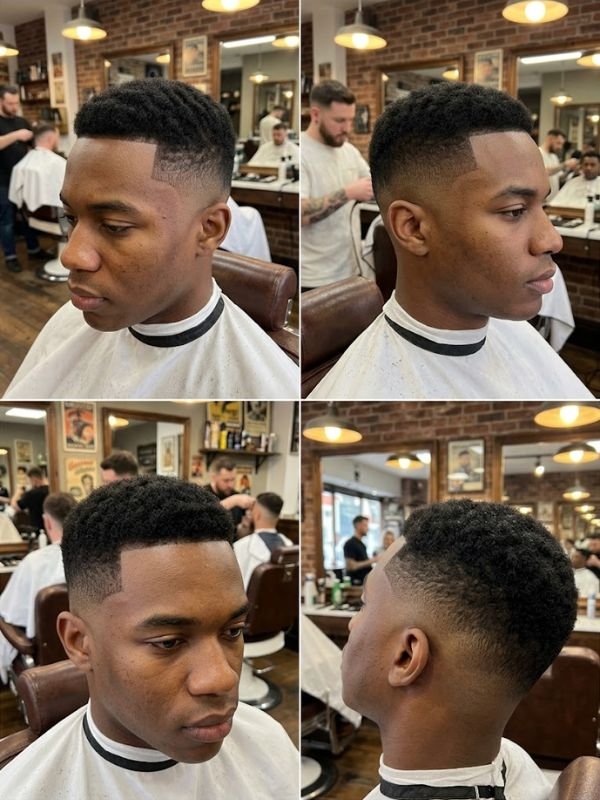
A temple fade focuses the blend specifically around the temple area, framing the hairline rather than fading the entire side of the head. It’s often used to clean up the edges of longer hairstyles.
This is a great low-commitment fade for guys who want sharper lines without cutting the rest of their hair much shorter. It works especially well alongside afros, curly tops, and other longer natural hairstyles.
Best Fade Hairstyles for Different Hair Types
Fades work on every hair type, but the guard number, blend height, and styling routine that work best change depending on your natural texture.
| Hair Type | Recommended Fade Height | Guard Range | Key Styling Focus |
| Straight | Low to mid | #1–#3 | Sharp lines, defined part |
| Wavy | Mid | #1–#2 | Texture products for natural movement |
| Curly | Low to mid, drop or burst | #2–#3 | Curl definition creams, avoid over-drying |
| Coily/Afro | Any height, drop or burst | #2–#4 | Moisture-focused products, gentle detangling |
| Thick | Mid to high | #1–#2 | Thinning shears on top to reduce bulk |
| Fine | Low to mid | #2–#3 | Volumizing products, avoid heavy pomades |
Fade Hairstyles for Straight Hair
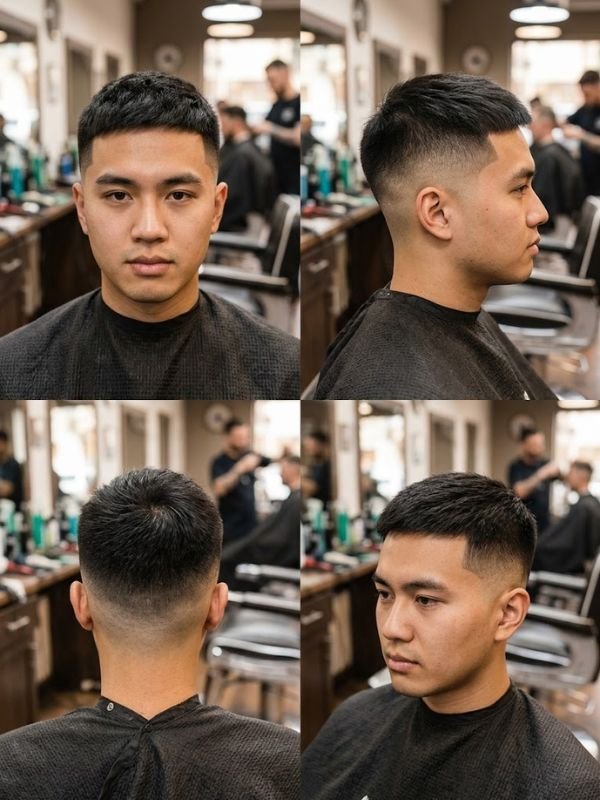
Straight hair holds crisp, defined lines exceptionally well, making it ideal for fades paired with sharp side parts or comb-overs. The lack of natural texture means every line the barber cuts stays visible and clean.
A low or mid fade with a matte clay or light pomade works best here, since straight hair tends to look flat with heavier products. Regular trims every 3 to 4 weeks keep the sharp lines from softening as the hair grows out.
Fade Hairstyles for Curly Hair
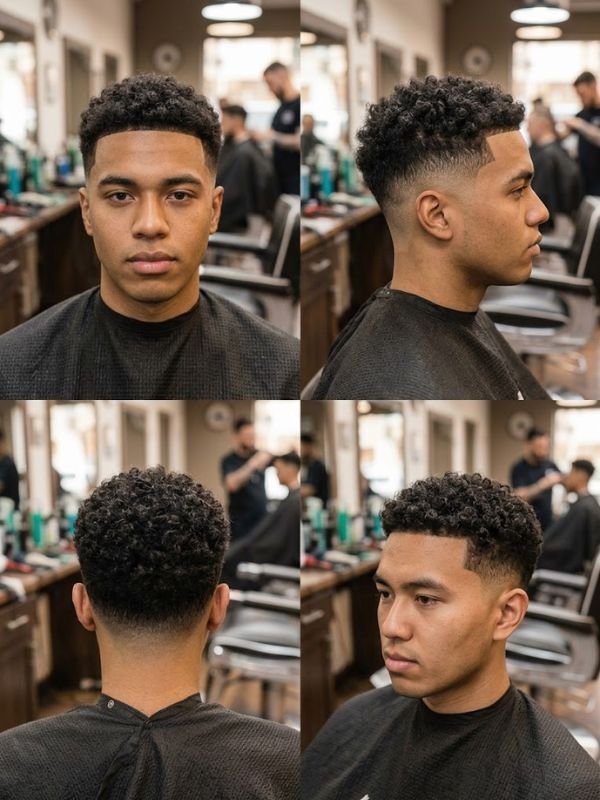
Curly hair adds natural volume and texture on top, which pairs especially well with drop fades and burst fades that follow the head’s natural curve. The curls provide visual interest that a straight-haired fade doesn’t have.
Curl-defining cream or a light curl gel applied to damp hair helps maintain curl pattern without weighing it down. Because curls shrink as they dry, ask your barber to cut slightly longer than you think you want on top.
Fade Hairstyles for Thick Hair
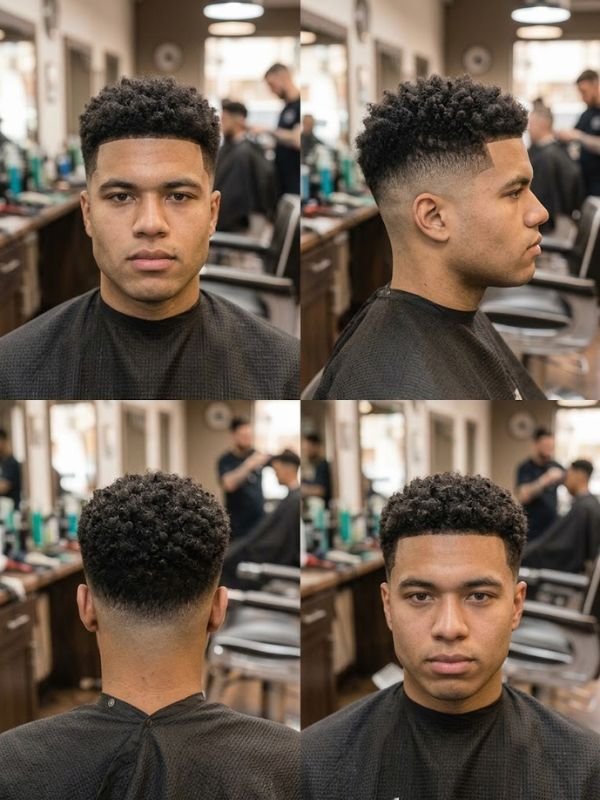
Thick hair can look bulky on top if it isn’t thinned out properly, so pairing it with a mid or high fade helps balance the volume. Thinning shears are often used on the top section to remove weight without sacrificing length.
A styling cream or light-hold pomade works better than heavy wax, which can make already-dense hair feel greasy or stiff. Thick hair also tends to hide new growth well, so fades on this hair type can often stretch to 4 weeks between trims.
Fade Hairstyles for Fine Hair
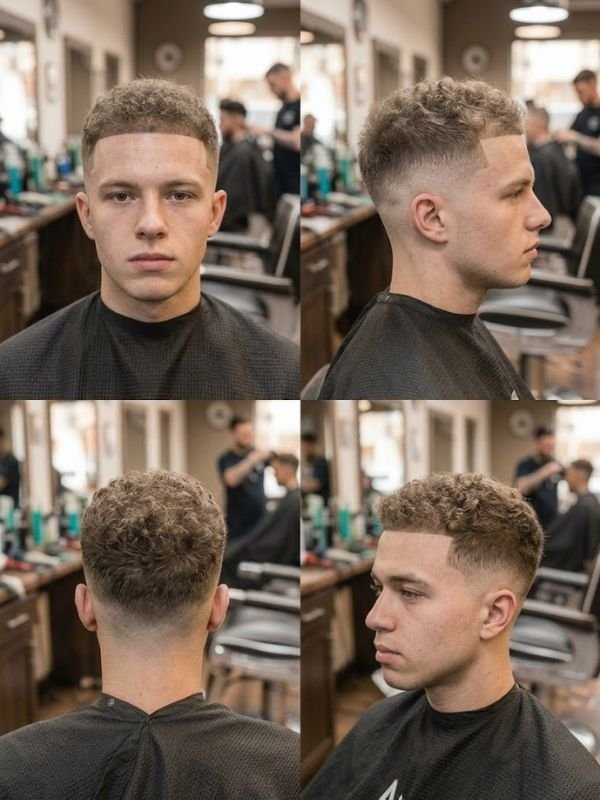
Fine hair lacks natural volume, so a low or mid fade paired with a texture powder or lightweight sea salt spray helps create the illusion of thicker hair. Heavy pomades and waxes should generally be avoided since they can flatten fine strands.
Keeping the top slightly longer, rather than very short, gives more room to create texture and lift. Because fine hair shows scalp more easily at short lengths, a shadow fade is often more flattering than a full skin fade.
Fade Hairstyles for Wavy Hair
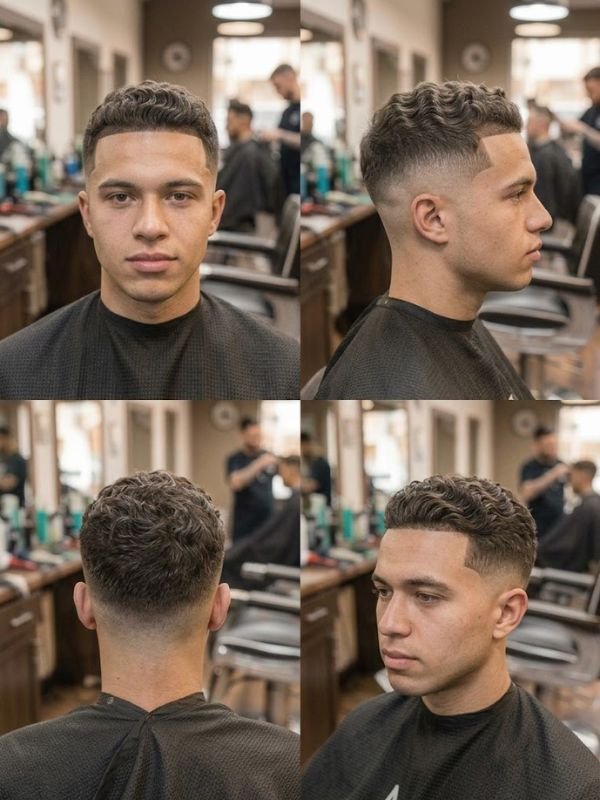
Wavy hair sits between straight and curly, and it responds especially well to sea salt spray or a light texture cream that enhances the natural wave pattern. A mid fade tends to balance wavy top hair nicely without competing for attention.
Avoid brushing wavy hair too much after styling, since this can break up the wave pattern and create frizz. Air-drying with fingers rather than a brush usually gives the cleanest, most natural-looking wave definition.
Fade Hairstyles for Afro Hair
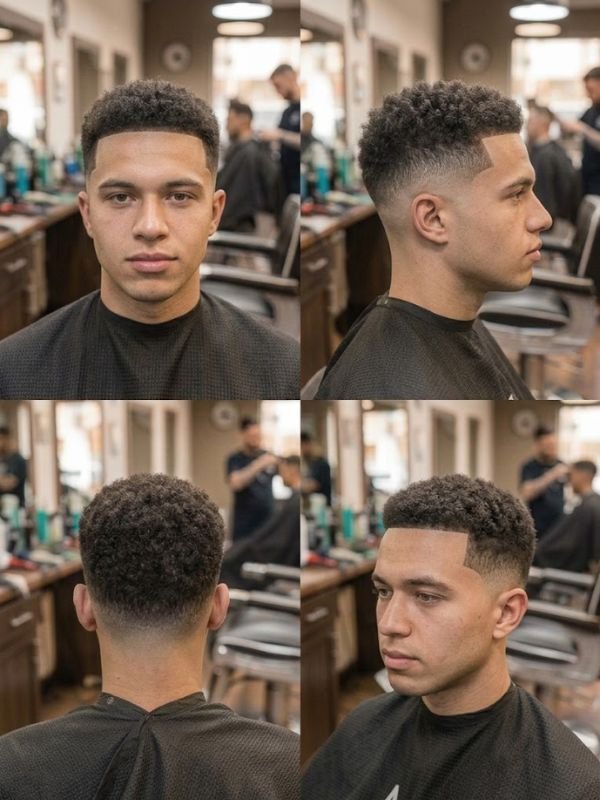
Afro hair holds its shape and volume exceptionally well, which makes drop fades, burst fades, and temple fades particularly popular since they frame the natural afro shape. Moisture is the top priority for this hair type, both for health and for styling.
A leave-in conditioner or curl cream applied to damp hair helps define curl pattern and reduce frizz throughout the day. Because coily hair shrinks significantly when dry, barbers typically cut it while stretched to avoid taking off more length than intended.
Fade Hairstyles for Black Guys
Fades are especially popular among Black men because they pair naturally with coily and curly hair textures, hair designs, and beard styling. The combinations below highlight some of the most requested looks.
Low Fade with Waves
A low fade with waves combines a subtle sideburn-to-nape blend with a “360 waves” pattern brushed into the top. The waves are created through consistent brushing and a durag, not by the haircut itself.
This look is popular because the low fade keeps focus on the wave pattern rather than competing with a dramatic side blend. Guys maintaining waves typically brush multiple times a day and wear a durag overnight to keep the pattern crisp between fade touch-ups.
Temple Fade with Afro
A temple fade with afro keeps the top hair in its natural coily shape while cleaning up just the hairline and temple area. It’s a lower-commitment way to add definition without shortening the overall afro.
This combination works well for guys who want a groomed appearance without sacrificing volume on top. Because most of the hair length stays intact, moisture and curl definition products remain the main styling focus.
Drop Fade with Curls
A drop fade with curls uses the curved fade line to complement defined curls sitting on top of the head. The rounded fade shape mirrors the natural curl pattern rather than cutting against it.
Curl cream applied to damp hair, followed by air-drying or diffusing, keeps the curls separated and bouncy. This pairing is especially popular for medium-length curls that need a clean base without losing their spring.
Burst Fade with Twist Hair
A burst fade with twist hair pairs the ear-hugging burst shape with two-strand or comb twists on top. The rounded fade line gives the twisted top a clean, framed finish.
Twists require regular re-twisting, typically every 1 to 3 weeks, to keep them looking fresh and defined. This combination is popular because the burst fade itself can go slightly longer between trims than a full side fade.
Skin Fade with Beard
A skin fade with beard connects a bare-skin side fade to a well-lined beard for a fully groomed, high-contrast look. The clean fade emphasizes the sharp beard lineup, and vice versa.
This combination requires the most frequent maintenance on this list, since both the fade and the beard line need touch-ups roughly every 1 to 2 weeks. Beard oil and a boar-bristle brush help keep the facial hair looking as intentional as the haircut.
Afro Fade
An afro fade shapes the sides into a fade while leaving a rounded, full afro on top rather than styled curls or waves. It’s a modern take on the classic afro that adds definition without losing volume.
Regular picking with an afro comb keeps the shape rounded and even. This style works best with a low or mid fade so the sides don’t visually shrink the afro’s natural volume on top.
High Top Fade
A high top fade pairs a boxy, flat-topped silhouette with short faded sides, a style with roots in 1980s and ’90s barbershop culture that has made a modern comeback. The top is cut flat and even, often with a slight taper at the edges.
This cut needs strong hold products, like a firm pomade or edge control, to keep the flat shape crisp throughout the day. It’s a bolder, more structured alternative to a standard afro fade.
Fade with Hair Design (Line-Up Art)
A fade with hair design adds razor-etched patterns, lines, or shapes into the shorter sections of a skin fade for a personalized, artistic finish. Designs range from simple parting lines to intricate geometric or freehand patterns.
This look requires a barber experienced with clipper and razor detailing, since mistakes are difficult to fix until hair grows back. Designs typically need refreshing every time the fade itself is trimmed, roughly every 1 to 2 weeks.
Twist Fade
A twist fade combines a clean side fade with two-strand twists left longer on top, offering texture and movement without full dreadlock commitment. It’s a versatile style that works for both casual and professional settings.
Twisting cream or gel applied to slightly damp sections keeps the twists defined and reduces frizz. Re-twisting frequency depends on hair length, but most guys refresh their twists every 2 to 4 weeks.
Also Read This Taper Fade Mohawk: 42 Best Styles, Ideas & Barber Tips
Fade Hairstyles for White Guys
These combinations are especially popular styles requested by guys with straight to wavy hair textures, though most work across other hair types too.
Textured Crop with Low Fade
A textured crop with low fade pairs choppy, layered top texture with a subtle side blend. The look is casual and effortless, requiring minimal daily styling.
A small amount of matte clay worked through damp hair creates the messy, textured finish this style is known for. The low fade keeps the sides understated so the textured top remains the focal point.
Quiff with Mid Fade
A quiff with mid fade combines a swept-back, lifted front section with a noticeable side blend for added contrast. The height at the front balances the shorter sides created by the fade.
Blow-drying the front section upward and back while applying a strong-hold pomade builds the structured lift this style needs. This combination suits guys who want a polished but not overly formal appearance.
Pompadour with High Fade
A pompadour with high fade pairs dramatic height and volume at the front with a sharply contrasted, closely faded side. The high blend point draws attention upward toward the voluminous top.
This style requires blow-drying with a round brush to build the pompadour’s signature shape before applying a firm pomade to lock it in place. It’s a striking, statement-making combination best suited for guys comfortable with regular styling.
Slick Back with Skin Fade
A slick back with skin fade combines fully combed-back top hair with a bare-skin side blend for maximum contrast. The clean lines of the skin fade complement the polished, formal look of the slicked-back top.
A strong-hold pomade with high shine works best for achieving the wet-look finish this style is known for. This is one of the more formal fade combinations, often chosen for weddings, interviews, or professional settings.
Side Part with Taper Fade
A side part with taper fade pairs a classic, defined hair part with the subtler blend of a taper fade rather than a bare-skin finish. It’s a timeless, conservative combination.
A fine-tooth comb and light-hold pomade create the crisp part line, while the gentle taper keeps the sides looking neat without harsh contrast. This combination is a reliable choice for workplaces with traditional grooming expectations.
French Crop with Low Fade
A French crop with low fade pairs short, textured top hair with a blunt fringe and a subtle low blend on the sides. It’s one of the lowest-maintenance fade combinations available.
Working a small amount of matte paste through slightly damp hair is usually all the styling this cut needs. The low fade keeps the overall look understated, which suits guys who want a fade without much daily effort.
Undercut with Mid Fade
An undercut with mid fade leaves noticeably longer hair on top, often 3 to 5 inches, contrasted against a disconnected mid-height blend on the sides. Unlike other fades, the transition here is intentionally sharper rather than gradual.
This combination is popular for guys who want to style longer top hair into slick backs, quiffs, or textured looks while keeping the sides low maintenance. A strong-hold product is usually needed to manage the longer length on top.
Slicked Man Bun with Skin Fade
A slicked man bun with skin fade pairs long top hair, pulled back and tied into a bun, with completely bare-skin sides. The dramatic length contrast makes this one of the more distinctive fade combinations.
Growing hair long enough for a bun typically takes 8 to 12 months from a short starting point. A lightweight pomade or hair tie without metal parts helps prevent breakage while keeping flyaways controlled.
Spiky Fringe with High Fade
A spiky fringe with high fade combines short, gel-spiked front pieces with a sharply contrasted high blend on the sides. It’s a bold, youthful combination that draws the eye upward.
Applying a strong-hold gel or wax to dry hair and pulling pieces upward with fingers creates the defined spikes this style needs. Because the fringe is short, this look needs trims roughly every 3 to 4 weeks to keep its shape.
Most Popular Fade Haircut Combinations
Certain fade pairings show up in barbershops more consistently than others because they balance style, practicality, and ease of maintenance.
Buzz Cut Fade
A buzz cut fade uses a single short guard length across the entire top, blended into a fade on the sides for subtle contrast rather than a completely uniform buzz. It’s one of the lowest-maintenance fade styles available.
This combination requires no daily styling products at all, making it a favorite among athletes and guys with busy schedules. Regular trims every 2 to 3 weeks keep the uniform length looking fresh.
Crew Cut Fade
A crew cut fade pairs slightly longer top hair, typically 1 to 2 inches, with a classic fade on the sides for a neat, structured look. It offers more versatility than a buzz cut while staying low maintenance.
A small amount of matte paste or light pomade adds texture without heavy shine. This combination works especially well for guys who want a professional appearance with minimal morning routine.
Comb Over Fade
A comb over fade combines a side-swept top section with a disconnected or blended fade beneath the part line. The hard part line, often razored in, adds a sharp, deliberate finish.
Blow-drying the top hair to one side while it’s damp, then setting with pomade, creates the smooth comb-over shape. This is one of the most requested formal fade combinations for interviews and business settings.
French Crop Fade
A French crop fade features a short, textured fringe across the forehead paired with a fade beneath it. It’s distinct from a standard textured crop because of its defined, blunt fringe line.
Applying matte clay to slightly damp hair and pressing the fringe forward creates the signature look. This combination suits guys with straight to wavy hair and thinning hairlines especially well, since the fringe provides coverage.
Pompadour Fade
A pompadour fade pairs the classic swept-up-and-back pompadour shape with any height of fade on the sides. It’s a more voluminous alternative to the quiff, with more height concentrated toward the front.
This style needs blow-drying with a round brush and a firm-hold pomade to maintain its structured shape through the day. It’s a versatile combination that works for both casual and formal occasions depending on how sharp the sides are cut.
Slick Back Fade
A slick back fade combines fully back-combed top hair with a fade on the sides, offering a sleeker alternative to the pompadour. The hair lies flatter against the head rather than standing up at the front.
A high-shine, strong-hold pomade applied to damp hair and combed straight back achieves this look. It’s a go-to choice for formal events and professional environments where a polished appearance matters.
Curly Top Fade
A curly top fade leaves natural curls untouched on top while fading the sides for contrast and definition. It celebrates natural texture rather than trying to straighten or suppress it.
Curl cream or gel applied to damp curls, followed by air-drying, keeps the curl pattern defined without frizz. This combination works particularly well with low to mid fades that don’t compete visually with the curls on top.
Quiff Fade
A quiff fade pairs the swept-back, lifted quiff shape with a fade at any height for added contrast. It sits between the pompadour’s height and the crop’s simplicity.
Blow-drying the front section back and slightly up, then applying a medium-hold pomade, creates the quiff’s signature lift. This is one of the most adaptable fade combinations, working for both casual and business settings.
Faux Hawk Fade
A faux hawk fade combines a strip of longer, styled hair down the center of the head with faded sides, without fully shaving the sides like a true mohawk. It offers a bold look with more day-to-day versatility.
Strong-hold gel or wax is applied to the center section and pulled upward to create height and separation. This combination suits guys who want an edgier look without the full commitment of a shaved-side mohawk.
Mohawk Fade
A mohawk fade takes the faux hawk concept further, with the sides shaved down to skin using a fade rather than just short clipper work. The contrast between the shaved sides and the central strip is much more dramatic.
This is one of the boldest fade combinations and requires daily restyling with strong-hold product to maintain the raised center strip. It’s best suited for guys comfortable with a statement look and frequent barber visits to maintain the sharp fade.
Textured Fringe Fade
A textured fringe fade pairs a choppy, layered fringe with a fade beneath it, offering a softer alternative to the blunt French crop fringe. The layers create movement rather than a single solid line.
A texture powder or light clay worked through the fringe with fingertips creates natural-looking separation. This combination is popular for guys who want some styling flair without a high-maintenance routine.
Undercut Fade
An undercut fade leaves significant length on top, often long enough to sweep back or push forward, while the sides are cut in a disconnected, sharply contrasted fade. The line between top and sides is intentionally abrupt rather than gradually blended near the part.
This combination gives maximum styling flexibility for the top hair, since the length allows for slicked, textured, or swept looks. Guys with straight to wavy hair generally get the cleanest results from this combination.
Man Bun Fade
A man bun fade pairs long top hair pulled into a bun with faded, closely cut sides. It’s a popular choice for guys growing their hair out who still want a groomed, low-maintenance side profile.
A lightweight pomade smooths flyaways before tying the bun, and a soft, non-metal hair tie helps prevent breakage. This combination works especially well with low or mid fades that don’t draw too much attention away from the bun itself.
Flat Top Fade
A flat top fade uses a completely flat, even top section cut with clippers over a comb, paired with a fade on the sides. It’s a structured, retro-inspired look that requires precise cutting technique.
Strong-hold gel or pomade is needed daily to keep the flat shape crisp, since natural hair growth will round it out over time. This style suits thick, coarse hair textures best, since fine hair struggles to hold the flat shape.
Mullet Fade
A mullet fade combines short, faded sides and front with noticeably longer hair left at the back and nape. It’s a modern take on a retro style that has become popular again in recent years.
Curl cream or texturizing spray applied to the back section enhances movement and volume. This combination works well with straight, wavy, or curly hair, though the styling routine differs slightly depending on texture.
Spiky Fade
A spiky fade uses short, gelled spikes across the entire top section, paired with a fade at any height on the sides. It’s a bold, low-length styling option that still allows for texture and movement.
Strong-hold gel applied to towel-dried hair and pulled up in small sections with fingers creates defined spikes. This combination suits guys who want an energetic look without growing out much length on top.
Ivy League Fade
An Ivy League fade pairs a slightly longer, side-parted top (a variation of the classic crew cut) with a fade on the sides. It’s a preppy, polished combination rooted in traditional collegiate style.
A light pomade combed through for a natural side part keeps this look neat without excessive shine. This combination is a strong choice for conservative workplaces that still want a modern fade element.
Hard Part (Line-Up) Fade
A hard part fade adds a razored line dividing the part from the rest of the hair, paired with a fade on the sides for extra sharpness. The shaved line makes the part permanent between haircuts, rather than relying on a comb each morning.
This combination needs touch-ups on the razored line roughly every 1 to 2 weeks as hair grows back into the gap. It pairs especially well with comb-overs and side-swept styles that already rely on a defined part.
Curl Sponge Fade
A curl sponge fade pairs a fade on the sides with defined, uniform curl coils created using a curl sponge (also called a twist sponge) on shorter natural hair. It’s popular for creating consistent curl patterns on coily or kinky hair textures.
The sponge is worked in circular motions over damp, product-coated hair to form the coils. This combination typically needs coil refreshing every few days between fade trims, which usually happen every 2 to 3 weeks.
How to Choose the Right Fade Haircut
The best fade for you depends on a combination of face shape, hair type, and how much time you’re willing to spend styling it each day. No single factor should be treated as the only deciding one.
Choose Based on Your Face Shape
Face shape can help guide which fade height and top style will look most balanced, though it’s a general guide rather than a strict rule. Barbers often adjust these recommendations based on individual features like jawline strength and hairline shape.
Oval Face
Oval faces are considered the most versatile face shape, generally suiting almost any fade height and top length. Low, mid, or high fades paired with quiffs, crops, or pompadours all tend to work well here.
Round Face
Round faces often benefit from added height on top and a higher fade to create visual length and reduce roundness. A high fade with a pompadour or textured quiff is a commonly recommended combination.
Square Face
Square faces typically pair well with fades that soften strong jawlines, such as textured crops or styles with some length and movement on top. A low to mid fade avoids adding extra harshness to already-defined features.
Heart Face
Heart-shaped faces, wider at the forehead and narrower at the chin, often look balanced with fades that add width lower down, like a side part or textured fringe. A mid fade tends to work better here than an ultra-high fade.
Diamond Face
Diamond faces, widest at the cheekbones, generally suit fades that add some width near the jaw and forehead, such as a fringe or side-swept style. A low to mid fade helps keep the sides from emphasizing narrow areas further.
Choose Based on Your Hair Type
Hair type affects which fade heights, guard numbers, and styling products will realistically work for your daily routine. Straight hair holds sharp lines easily, while coily and curly hair often pair better with curved fades like the drop or burst fade.
Thicker hair usually needs thinning on top to avoid bulk, while fine hair benefits from texture-building products rather than heavy pomades. Matching your fade to your natural texture, rather than fighting against it, generally produces better results with less daily effort.
Choose Based on Your Lifestyle
Your daily routine and how often you can realistically visit a barber should factor heavily into your fade choice. High fades and skin fades look sharper but need trims every 1 to 2 weeks, while low fades and taper fades can often stretch to 4 weeks.
Guys with active jobs or minimal styling time often do better with buzz cut fades or crew cut fades that need little to no product. Those with more flexibility can consider higher-maintenance combinations like pompadour fades or slicked-back styles.
Fade Haircut vs Other Haircuts
Understanding how a fade compares to related haircuts helps clarify what makes it distinct and which option fits your goals.
| Comparison | Key Difference |
| Fade vs Taper | A fade typically reaches skin or near-skin; a taper stays gradually short without going bare |
| Fade vs Undercut | A fade blends gradually; an undercut has an abrupt, disconnected length change |
| Fade vs Buzz Cut | A fade varies length across the head; a buzz cut is one uniform length all over |
| Fade vs Skin Fade | “Skin fade” is a specific fade finish that reaches bare skin; “fade” is the broader category |
Fade vs Taper
Is a fade the same as a taper? Not quite — a fade usually finishes at bare skin or very close to it, while a taper gradually shortens hair without necessarily reaching skin at all.
Both use the same blending technique with clippers, but a taper is generally considered the more subtle, conservative option. Many barbers use “taper” and “low fade” almost interchangeably, but a true taper rarely goes as short as a skin fade does.
Fade vs Undercut
Is a fade the same as an undercut? No — an undercut features a sharp, visible line between the long top and short sides, while a fade blends the two lengths gradually with no visible line.
Undercuts are often chosen for their dramatic contrast and styling flexibility on top, while fades are chosen for their smoother, more polished transition. Some styles, like the “undercut fade,” combine both by using a fade technique but keeping the transition point more abrupt than a typical fade.
Fade vs Buzz Cut
Is a fade the same as a buzz cut? No — a buzz cut uses one guard length across the entire head, while a fade uses multiple guard lengths that blend into each other.
A buzz cut is the lower-maintenance option since there’s no blending to maintain as hair grows. A “buzz cut fade” is a specific combination that keeps the top uniformly short while still adding a subtle fade at the sides for extra polish.
Fade vs Skin Fade
Is a skin fade different from a regular fade? A skin fade is a specific type of fade that finishes at bare skin, while “fade” is the general term covering all blend heights and finishes, including ones that don’t reach skin at all.
Every skin fade is a fade, but not every fade is a skin fade. Shadow fades, taper fades, and standard low or mid fades can all finish with some hair remaining rather than going down to bare scalp.
How to Ask Your Barber for a Fade Haircut
Being specific about height, guard number, and top length gives your barber the clearest picture of what you want and reduces the chance of miscommunication.
Try a script like this: “I’d like a [low/mid/high] fade, finishing at a guard [number] on the sides, blended into [length] on top. Can you [add/skip] a hard part and keep the top styled for [pomade/clay/natural texture]?” Bringing a reference photo alongside this description gives your barber both visual and verbal direction, which tends to produce the most accurate results.
If you’re unsure about guard numbers, it’s completely fine to say something like, “I want it short enough to see some scalp on the sides, but not fully bald,” and let your barber translate that into the right guard. Most barbers would rather ask a clarifying question mid-cut than guess and get it wrong.
How to Style Fade Hairstyles for Guys
The right product depends on your hair type, the top length of your fade, and the finish you’re going for, whether that’s matte, shiny, textured, or sleek.
Matte Clay
Matte clay gives a strong hold with a flat, non-shiny finish, making it ideal for textured crops, French crops, and messy top styles. Apply a small, dime-sized amount to slightly damp hair and work it through with fingertips rather than a comb for the most natural texture.
Matte clay works especially well on straight to wavy hair that needs help holding a textured shape throughout the day.
Pomade
Pomade ranges from light, natural-finish formulas to heavy, high-shine options, and it’s the go-to product for slick backs, pompadours, and side parts. Work it through damp hair from roots to ends, then comb or brush into your desired shape while it still has some flexibility.
Oil-based pomades tend to offer more shine and flexibility, while water-based versions wash out more easily and suit lighter styling needs.
Texture Powder
Texture powder adds volume and grip without adding shine or weight, making it a strong choice for fine hair or guys wanting a matte, tousled look. Sprinkle a small amount at the roots and massage it in with fingertips for instant lift.
Because it’s lightweight, texture powder is easy to overdo — a little goes a long way compared to creams or clays.
Sea Salt Spray
Sea salt spray enhances natural wave and texture, giving hair a beachy, effortless finish that works well with wavy or slightly curly top styles. Spray it onto damp hair and scrunch or tousle with your hands, then allow it to air-dry or diffuse.
This product isn’t ideal for straight hair seeking sleek, defined lines, since it’s designed to add texture rather than smooth it out.
Styling Cream
Styling cream offers light to medium hold with a natural, slightly glossy finish, making it versatile for thick or curly hair that needs some control without stiffness. Rub a coin-sized amount between your palms and distribute evenly through damp or dry hair.
Creams are generally more forgiving than clays or waxes if you apply slightly too much, since they blend more smoothly into the hair.
Hair Wax
Hair wax provides strong hold and a range of finishes from matte to shiny, and it’s especially useful for detailed styles like spikes, faux hawks, and precise separation. Warm a small amount between your fingers before applying to break down its texture for easier distribution.
Wax can be harder to wash out than cream or clay, so it’s best used sparingly, especially on finer hair types.
How Long Does a Fade Haircut Last?
A fade haircut generally holds its sharp appearance for 2 to 3 weeks before regrowth starts to blur the blend lines. The exact timeline depends heavily on how short the fade is cut and how fast your hair grows.
Skin fades and high fades show regrowth fastest, often needing a touch-up within 1 to 2 weeks to maintain the crisp contrast. Low fades, taper fades, and shadow fades tend to hold their shape longer, sometimes stretching to 3 or 4 weeks between visits, since the blend point sits higher up and the finish isn’t as short.
How Much Does a Fade Haircut Cost?
A fade haircut typically costs between $20 and $50 at a standard barbershop, though prices vary significantly based on location and barber experience. High-end grooming lounges or barbers specializing in detailed designs can charge $60 or more per visit.
Added services like beard lineups, hair designs, or hot towel treatments usually cost extra on top of the base fade price. Because fades need frequent touch-ups, it’s worth factoring in the recurring cost — getting a skin fade every 1 to 2 weeks adds up faster over a year than a low fade trimmed monthly.
Fade Haircut Maintenance Tips
Keeping a fade looking fresh takes more than just showing up to the barber; daily hair care habits play a big role in how long the cut holds its shape.
Visit Your Barber Regularly
Regular barber visits are the single biggest factor in keeping a fade looking sharp, since the blend line is the first part of the cut to lose definition. Booking a standing appointment every 1 to 4 weeks, depending on your fade height, helps avoid letting it grow out too far before a touch-up.
Wash Your Hair Properly
Washing with a sulfate-free shampoo two to three times a week helps remove product buildup without stripping natural oils that keep hair and scalp healthy. Over-washing can dry out both the scalp and hair, especially for guys with coily or curly textures on top.
Keep Your Hair Moisturized
A lightweight leave-in conditioner or hair oil helps prevent dryness and breakage, particularly for curly, coily, or chemically treated hair. Moisturized hair also styles more easily and holds curl or texture patterns better than dry, brittle strands.
Maintain Your Beard
For combinations like a skin fade with beard, keeping the beard trimmed and lined up on the same schedule as the fade keeps the whole look cohesive. Beard oil and a brush help train facial hair growth direction and reduce itchiness during the growing-out phase.
Common Fade Haircut Mistakes
Even a well-executed fade can look off if a few common errors happen during the cut or the styling routine afterward.
| Mistake | Why It Happens | How to Fix It |
| Choosing the wrong guard for hair density | Not accounting for how thick or thin hair sits | Ask your barber to test a slightly longer guard first |
| Waiting too long between trims | Underestimating how fast the blend line grows out | Book recurring appointments matched to your fade height |
| Using too much product | Applying pomade or wax made for a different hair length | Start with a small amount and build up as needed |
| Skipping a reference photo | Assuming verbal description alone is enough | Bring 1-2 clear photos showing height and top length |
| Ignoring face shape entirely | Choosing a fade purely based on trends | Ask your barber for input based on your features |
| Not moisturizing curly or coily hair | Treating all hair types the same in aftercare | Add a leave-in conditioner or oil to your routine |
Pros and Cons of Fade Hairstyles
Like any haircut, fades come with real trade-offs worth considering before committing to one, especially a shorter or more dramatic version.
Pros
Fades offer a clean, sharp appearance that works for both casual and formal settings, and they pair with nearly any hair type or top length. They also give you flexibility to change your top style — from curls to a pompadour — without needing to redo the sides.
Cons
Shorter fades, especially skin fades and high fades, require frequent barbershop visits to maintain their appearance, which adds up in both time and cost. They can also expose scalp conditions or uneven hairlines more visibly than longer haircuts would.
Who Should Get a Fade Haircut?
A fade haircut suits most guys looking for a low-to-moderate maintenance style that adapts to their hair type, face shape, and personal style preferences. It’s a strong option whether you want a subtle, professional look or a bold, high-contrast statement cut.
Guys who dislike frequent barbershop visits should lean toward lower, softer fades like a taper or shadow fade rather than a skin fade. Those comfortable with more upkeep and who want maximum visual impact are better suited to high fades, skin fades, or detailed design work.
Trending Fade Hairstyles
Fade trends shift year to year based on celebrity influence, social media, and evolving barbershop techniques, and several styles are seeing renewed or growing popularity heading into 2026.
- Curtain Fringe Fade — center-parted, face-framing fringe paired with a low or mid fade.
- Wolf Cut Fade — heavily layered, shaggy top texture combined with a fade on the sides.
- Butterfly Fade — a symmetrical hair design pattern shaved into a skin fade.
- Low Taper Fade with Beard — a subtle taper paired with a fuller, styled beard.
- Two-Block Fade — a K-pop-inspired style with a longer, textured top and short, blocky sides.
- Bro Flow Fade — medium-length, naturally flowing top hair paired with a low fade.
- Edgar Fade — a straight-across fringe with sharply lined edges and a fade beneath it.
- Caesar Fade — short, horizontally textured top hair paired with a subtle fade.
- Angular Fringe Fade — a diagonally cut fringe combined with a high or mid fade.
- Blowout Fade — voluminous, blown-out top hair contrasted against a tight fade.
- Shape Up Fade — a fade with a precisely lined hairline and edges, often on shorter hair.
- Perm Fade — a loose, textured perm on top paired with a fade on the sides.
- Color Fade — a dyed or bleached top section contrasted against a natural-colored fade.
- Bald Fade with Beard Design — a skin fade combined with a patterned or lined beard.
Long Fade Hairstyles for Guys
Long fade hairstyles keep significant length on top — often 3 inches or more — while the sides are cut in any fade height for contrast. Man buns, mullets, and slicked-back long styles all fall under this umbrella.
This category tends to attract guys who want the low-maintenance sides of a fade without giving up length or styling versatility on top. Growth time is the main commitment here, since reaching a workable long length from short hair typically takes 6 to 12 months depending on your hair’s natural growth rate.
Frequently Asked Questions
What is the difference between a fade and a taper?
A fade usually finishes at bare skin or very close to it, while a taper gradually shortens hair without necessarily reaching skin. Both techniques use the same clipper-blending method, but a taper is generally the more subtle, conservative option of the two.
What guard number is used for a skin fade?
A skin fade typically finishes with a #0 or #0.5 guard, or no guard at all, to achieve a bare-skin appearance. The blend then steps up through guards #1 through #4 or higher as it moves toward the top length.
How often should you get a fade haircut?
Most fades need a trim every 2 to 3 weeks to keep the blend line sharp and clean. Skin fades and high fades often need touch-ups closer to every 1 to 2 weeks, while low or taper fades can sometimes stretch to 4 weeks.
Can curly or coily hair get a fade?
Yes, curly and coily hair works well with fades, especially drop fades, burst fades, and temple fades that follow the head’s natural curve. Barbers typically cut coily hair while stretched, since it shrinks noticeably once dry.
Which fade is best for a round face?
A high fade paired with added height on top, such as a pompadour or textured quiff, is generally recommended for round faces to create visual length. This isn’t an absolute rule, though — a skilled barber can adjust recommendations based on individual features.
Is a skin fade more painful or irritating than other fades?
A skin fade isn’t inherently more painful, but the closer clipper work can cause more irritation for guys with sensitive skin or ingrown hair issues. Using a pre-shave oil or aftershave balm on the sides can help reduce redness and bumps after the cut.
How much does a fade haircut cost on average?
A standard fade haircut typically costs between $20 and $50 at most barbershops, with prices varying by location, barber experience, and any added services like beard work or hair designs. Higher-end grooming lounges or specialty barbers may charge more for detailed fade work.
Final Thoughts
A fade haircut remains one of the most adaptable options in men’s grooming because it scales to almost any hair type, face shape, and lifestyle — from a low-key taper fade to a bold skin fade with a custom design. The right choice comes down to matching the blend height and top style to your hair’s natural texture and how much upkeep you’re realistically willing to commit to.
Whether you’re walking into the barbershop for the first time or refining a look you’ve worn for years, using specific language around guard numbers, blend height, and top length will get you closer to the exact fade hairstyle you have in mind.
Hi, I’m Jake Miller a passionate barber based in Los Angeles, California, with over 3 years of hands-on experience in the craft. I specialize in modern fades, clean cuts, precision beard grooming, and classic barbering techniques, blending sharp technical skill with a relaxed, personal touch.
Over these years, I’ve had the opportunity to work with all kinds of clients, each with their own style and personality and that’s exactly what I love about this craft. For me, it’s never just about a haircut. It’s about understanding who you are and bringing that out through precision and care.
Every client who sits in my chair gets my full attention and expertise, because I believe great barbering is where confidence meets individuality. My goal is simple: to make sure you walk out looking sharp and feeling like the best version of yourself.

1 thought on “Fade Hairstyles for Guys: 67+ Best Types & Styles (2026)”