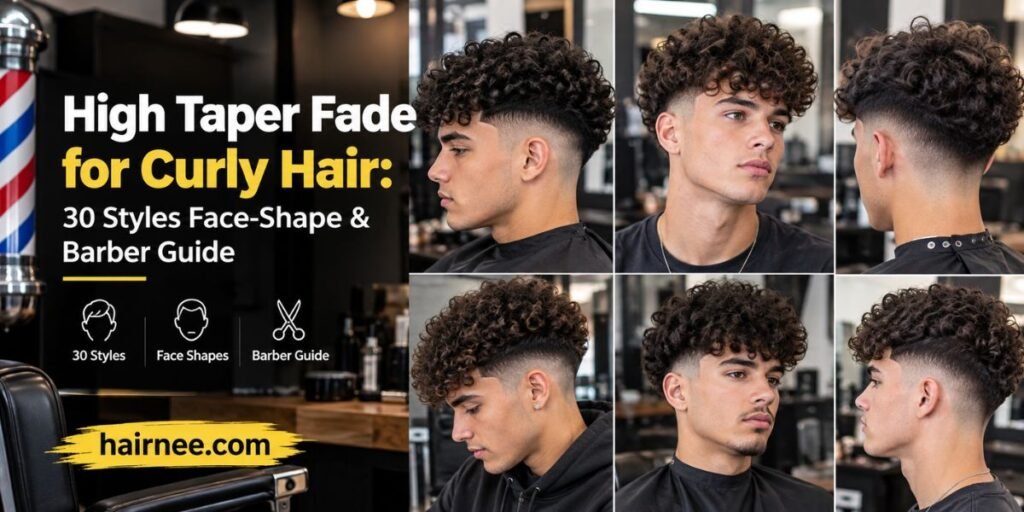
A high taper fade for curly hair is one of the most requested cuts in barbershops right now, and for good reason. It strips weight off the sides while leaving your curls room to move, which is exactly what most curl patterns need to look intentional instead of bulky.
This guide walks through every curl type from loose waves to tight coils, shows 30 real style variations, and gives you the exact words to use in the barber’s chair so you don’t leave with less length than you wanted.
What is a high taper fade for curly hair?
A high taper fade for curly hair starts the fade just above the temples and blends the sides and back down to a short length or skin, leaving full curls on top for contrast. It works across curl patterns from loose 2B waves to tight 4C coils, and it needs a fresh line every 2 to 3 weeks to stay sharp.
Key points
- Fade begins above the temple, not at ear level
- Works on wavy, curly, coily, and kinky-coily hair
- Requires touch-ups roughly every 2-3 weeks
- Best paired with round, oval, or square face shapes
What Is a High Taper Fade?
A taper and a fade aren’t quite the same thing, and mixing them up is where a lot of bad haircuts start. A taper shortens hair gradually but never reaches the skin, while a fade blends all the way down to bare skin or near it.
A high taper fade for curly hair combines both: the gradual shortening of a taper, started high near the temple, finished with a fade’s clean skin transition. That’s why it reads as sharper and more dramatic than a standard taper on its own.
The word “high” refers only to where the fade begins. Move that starting point down to ear level and you get a mid taper; move it to the nape and you’re looking at a low taper instead. You’ll also see this cut called a curly taper fade or a high fade curly hair style online, and people mean the same thing by all three.
Does a High Taper Fade Work on Curly Hair?
Yes. A high taper haircut works on every curl pattern, from loose 2B waves to dense 4C coils, because the cut is doing the opposite job of the curl: removing bulk on the sides so the texture on top has space to show itself.
Where people run into trouble is shrinkage. Curly and coily hair pulls up noticeably once it dries, and a barber who doesn’t plan for that will leave you shorter on top than you asked for.
| Curl Pattern | Typical Shrinkage | Ask For (to land at 2″ dry) |
| 2B-2C (wavy) | 10-20% | About 2.5″ |
| 3A-3B (curly) | 20-40% | 2.5″ to 3″ |
| 3C-4A (coily) | 40-60% | 3.5″ to 4″ |
| 4B-4C (kinky-coily) | 50-70% | 4″ to 6″ |
Looser waves (2B-2C) hold their shape with almost no product, so the contrast against the fade comes from movement rather than volume. Defined curls (3A-3B) are the pattern most people picture when they hear “curly high taper fade,” since the ringlets sit densely enough to frame the cut on their own.
Coily and kinky-coily patterns (3C-4C) shrink the most, which means more length has to be left on top than the finished look suggests. A barber who cuts these patterns dry, so they can see how the coil actually sits, avoids the disappointment of a top that’s shorter than planned.
Also Read This Low Taper Fade Textured Crop Haircut: 30 Best Styles for Men
Will a High Taper Fade Suit My Face Shape?
A high taper fade adds height by piling volume on top while narrowing the sides, so it tends to suit shapes that benefit from extra length rather than extra width.
| Face Shape | Best Fade Height | Curly Hair Note |
| Oval | High, mid, or low | Nearly any curl length works |
| Round | High or mid | Medium curl length (3-4″) elongates the face |
| Square | High or mid | Curls soften a strong jawline |
| Diamond | Mid | Keep the top moderate, 2-3″, to avoid top-heaviness |
| Heart | Mid or low | Skip a wide, high top that draws attention to the forehead |
None of these are hard rules. A barber who can see your hairline and jawline in person will always give you a more accurate read than a table, so treat this as a starting point for the conversation, not the final word.
30 High Taper Fade Styles for Curly Hair
These 30 variations span every curl pattern and length, so you can walk into your next appointment with something specific to show your barber instead of a vague description.
1. Classic Natural Curl Top
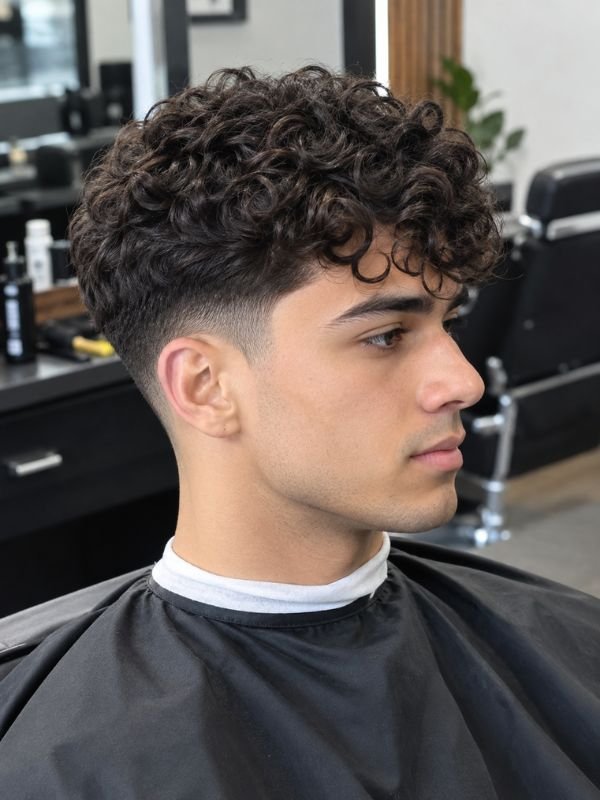
A skin or #1 fade blends into 3-4 inches of curls left exactly as they grow, no forced shaping. Suits 3A-3B patterns and flatters oval or round faces.
2. Full 4C Coily Crown
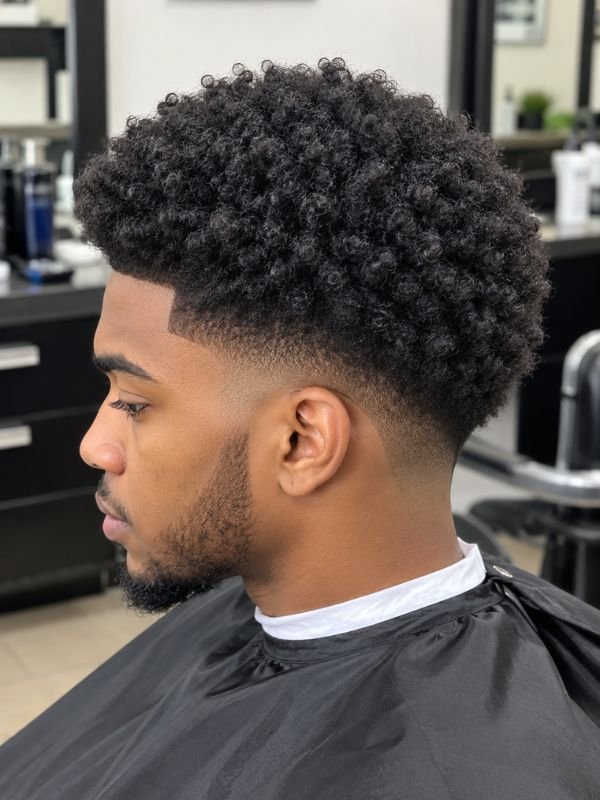
The fade runs from skin through a #0.5 into a rounded, full coily top. Ask for 4-6 inches to account for shrinkage on 4B-4C hair.
3. Defined Ringlet Top
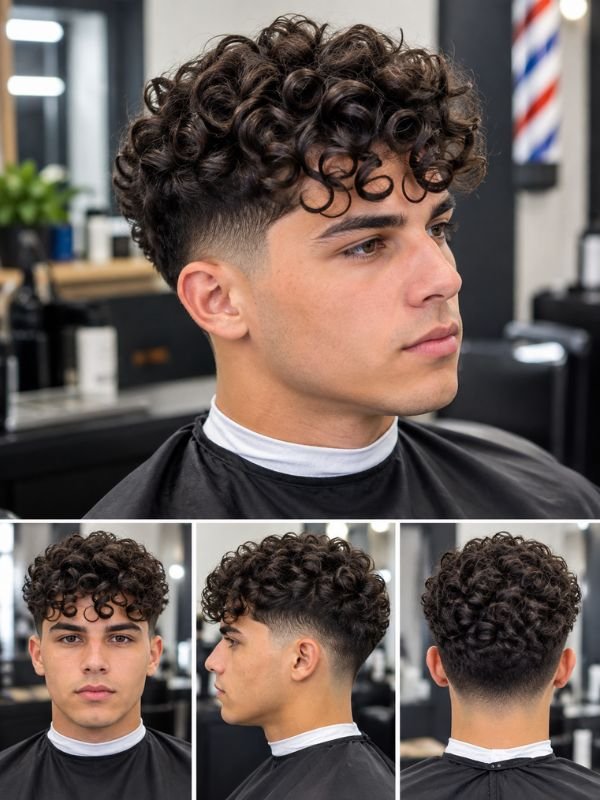
Individual spiral curls are left loose on top, faded on a #2 guard down to the skin. Works best on 3B patterns with light curl cream for hold.
4. Loose Wavy Texture
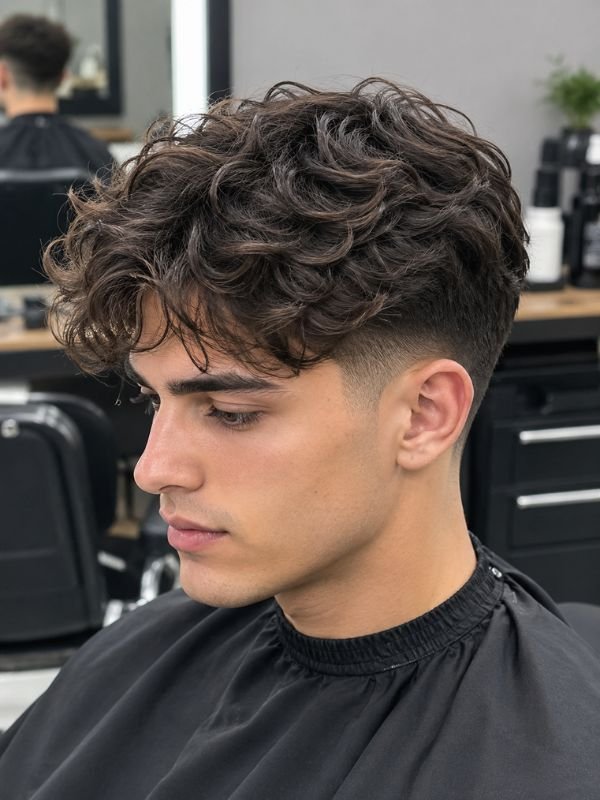
A softer take for 2B-2C hair, where the high fade still gives sharp contrast even though the top moves freely. Sea salt spray keeps it from looking flat.
5. Curly Fringe
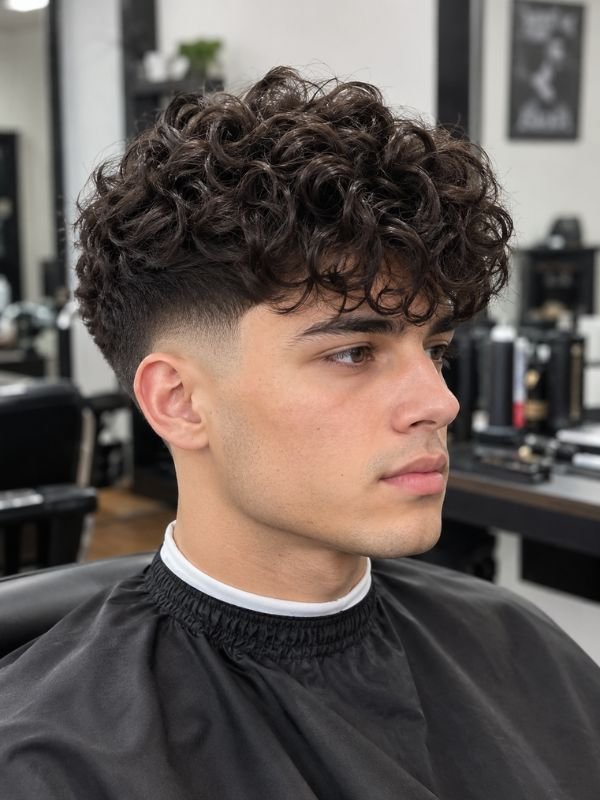
Curls are left longer at the hairline, 4-5 inches, and shorter toward the crown for a natural fringe effect. Suits 3A-3C hair and pairs well with an oval face.
6. Curly Pompadour
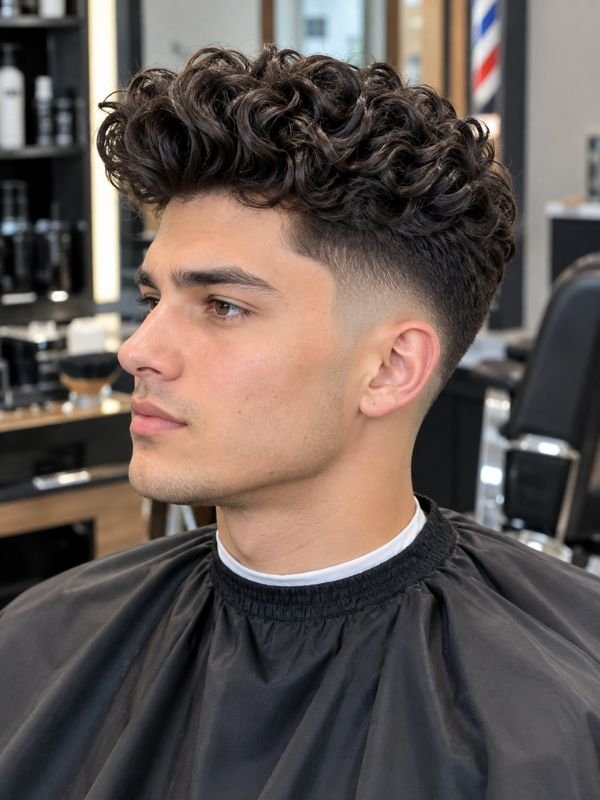
The top is directed up and back with a diffuser to build height, while the sides stay tight. Best on round or diamond faces that benefit from the added lift.
7. Textured Crop
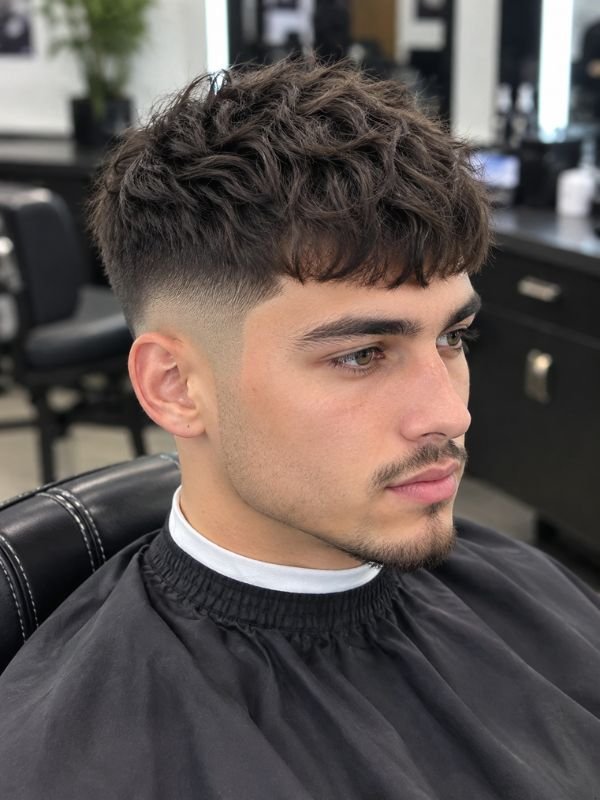
A shorter, blunt-cut top around 1.5-2 inches keeps daily styling minimal. Works across most curl patterns and looks intentional even at short lengths.
8. Curly Quiff
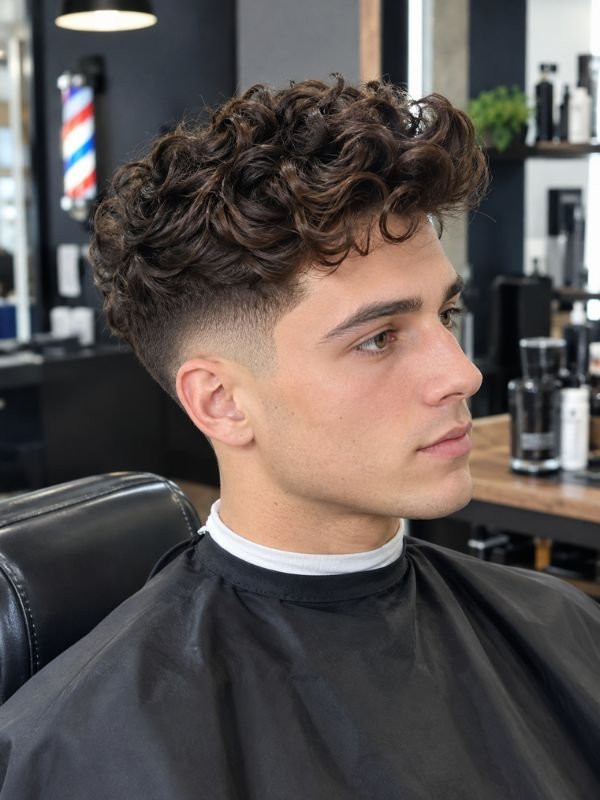
Similar to the pompadour but pushed slightly forward rather than straight up. Flatters a heart-shaped face by drawing focus toward the front hairline.
9. Sponge Curl Finish
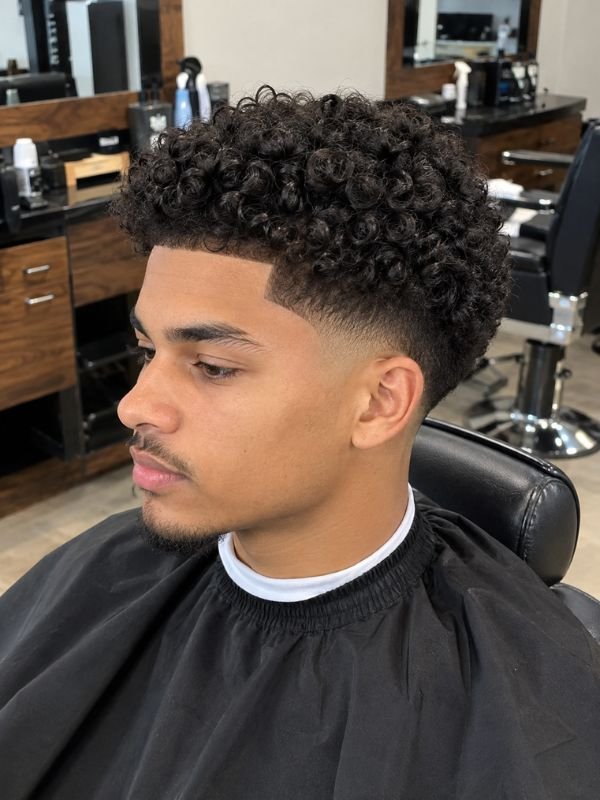
A curl sponge is used on very short coily hair, half to one inch, to create uniform texture. Pairs neatly with a tight fade for round or oval faces.
10. Finger-Coiled Top
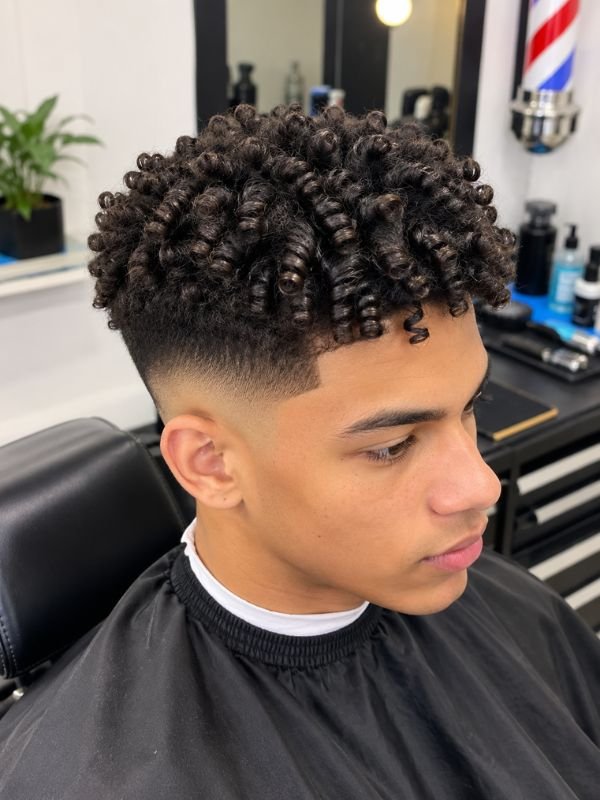
Sections are individually coiled by hand while damp for maximum curl definition. Takes longer to style but produces the most consistent result on 3C-4A hair.
11. Loose Casual Ringlets
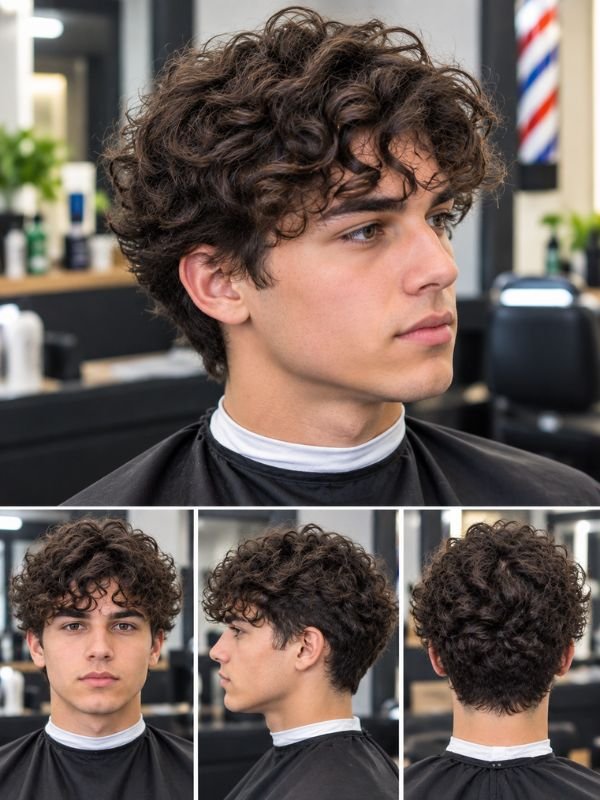
Curls fall in uneven clusters instead of uniform coils for a lower-effort, weekend-ready look. Leave-in conditioner and air-drying are all it needs.
12. Side-Swept Curls
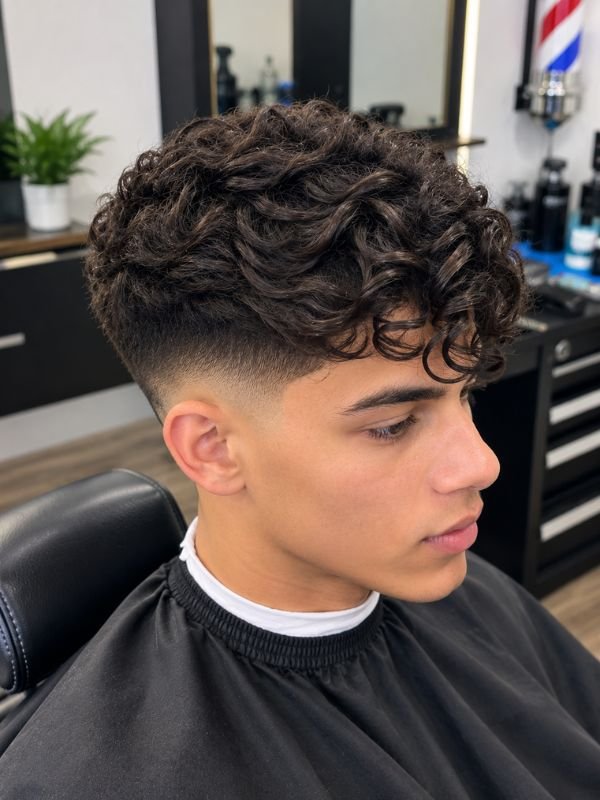
The top is finger-directed to one side and diffused in that direction for an asymmetric finish. Works well on 3B-3C hair with 3-4 inches of length.
13. Dense Coil Crown
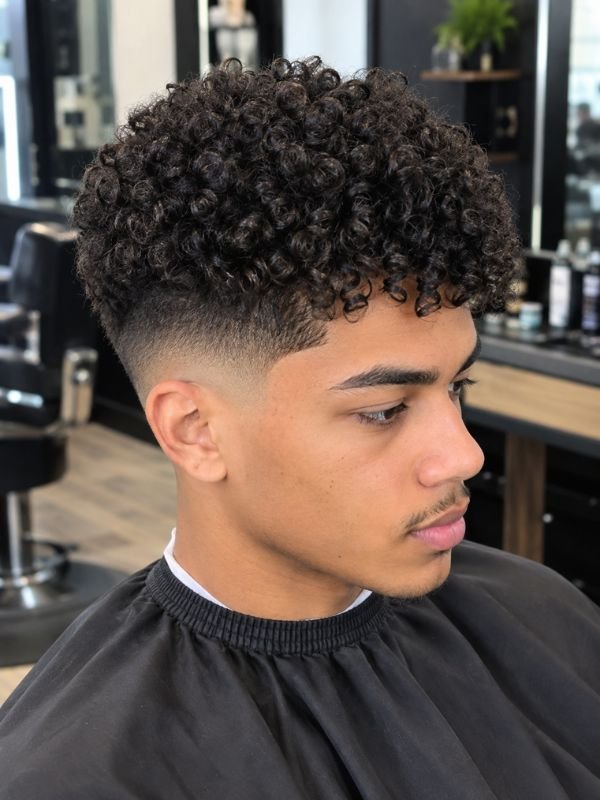
A full, rounded coil shape sits above a very high, skin-tight fade for a bold, architectural silhouette. Best suited to 4B-4C hair with a moisture-rich leave-in.
14. Messy Undone Curls
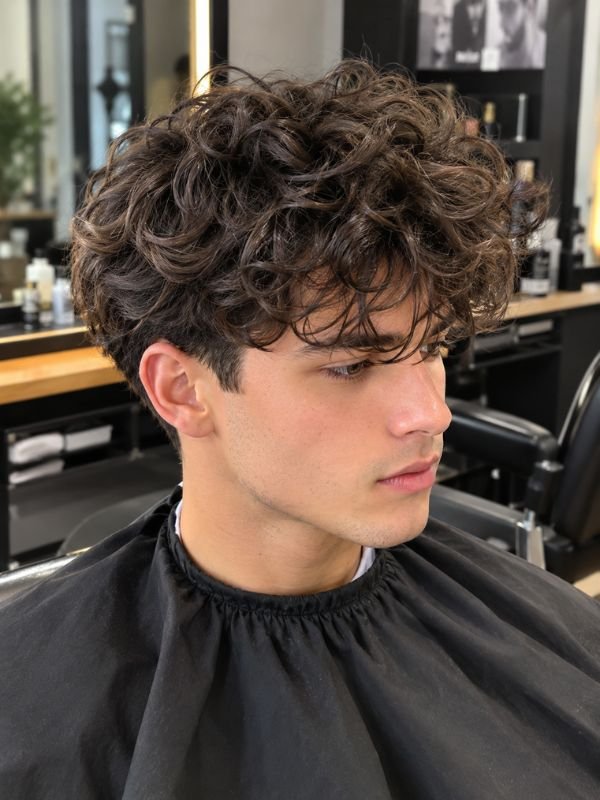
Curls are scrunched rather than defined, with no attempt at uniform clumping. The high fade gives the whole cut structure even when the top looks deliberately loose.
15. Curly Mohawk Strip
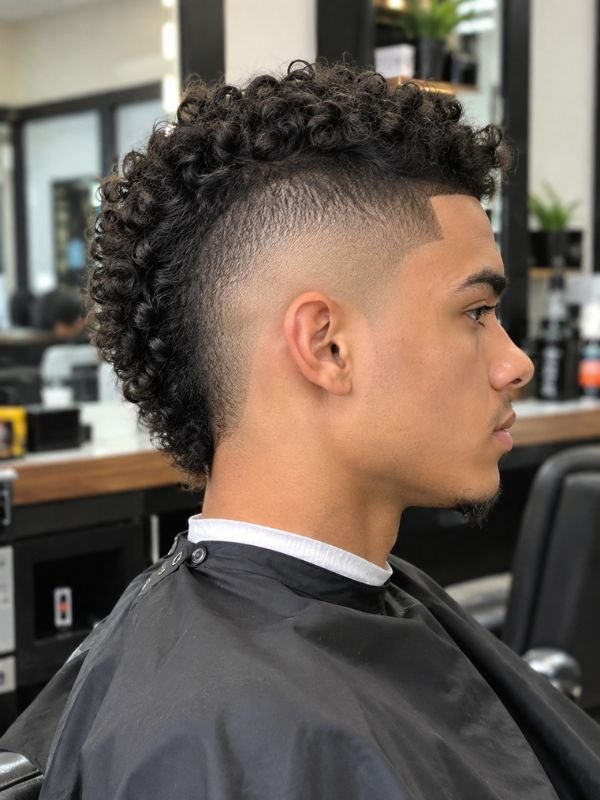
Both sides are faded very high and tight, leaving a strip of curls running front to back. Curl gel holds the center strip defined on 3A-4A patterns.
16. Short Curly Top (2 Inches)
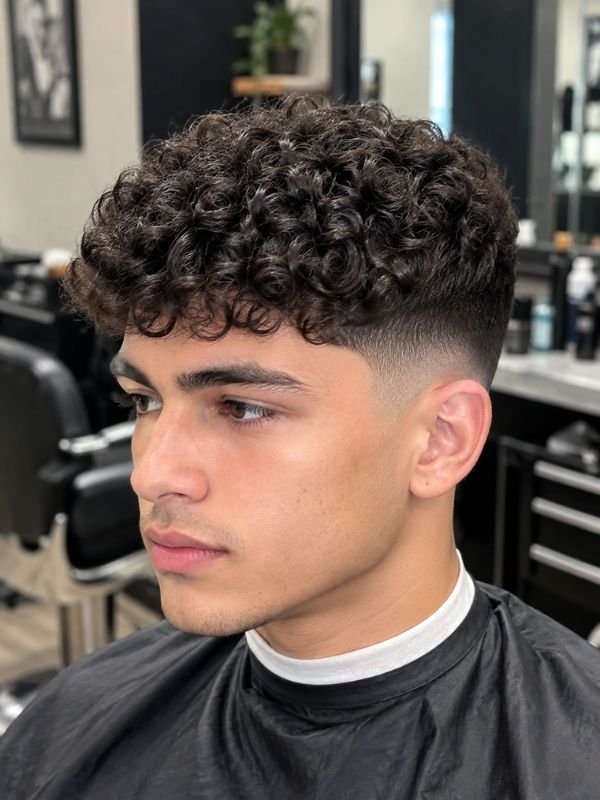
A conservative length that still reads as clean and professional. On 3C-4C hair, factor in shrinkage since 2 inches will appear shorter once dry.
17. Long Voluminous Curls (4+ Inches)
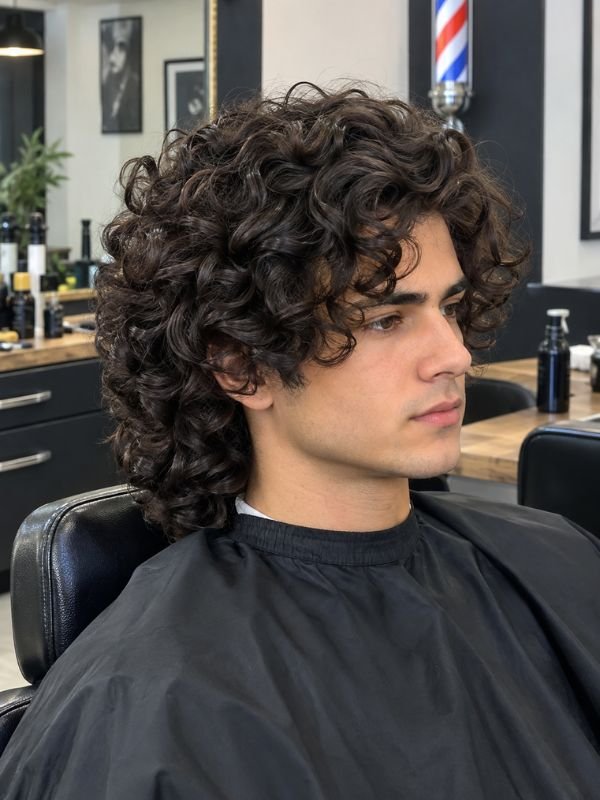
The boldest version, with curls sitting well above the fade line for maximum contrast. Needs enough density (3B-4C) to hold its own weight.
18. Hard Part Detail
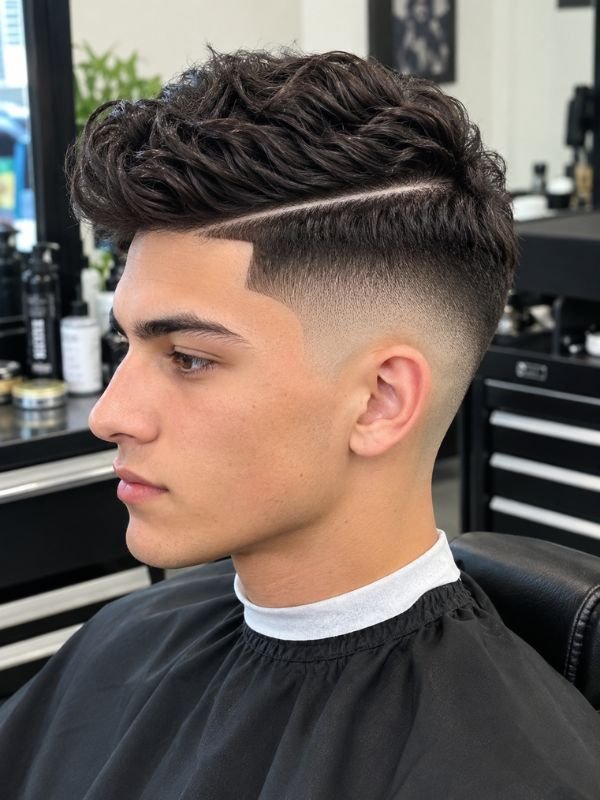
A shaved line at the temple separates the top from the fade for a graphic edge. Grows out faster on curly hair, so expect touch-ups every 7-10 days.
19. Curly Fringe with Line-Up
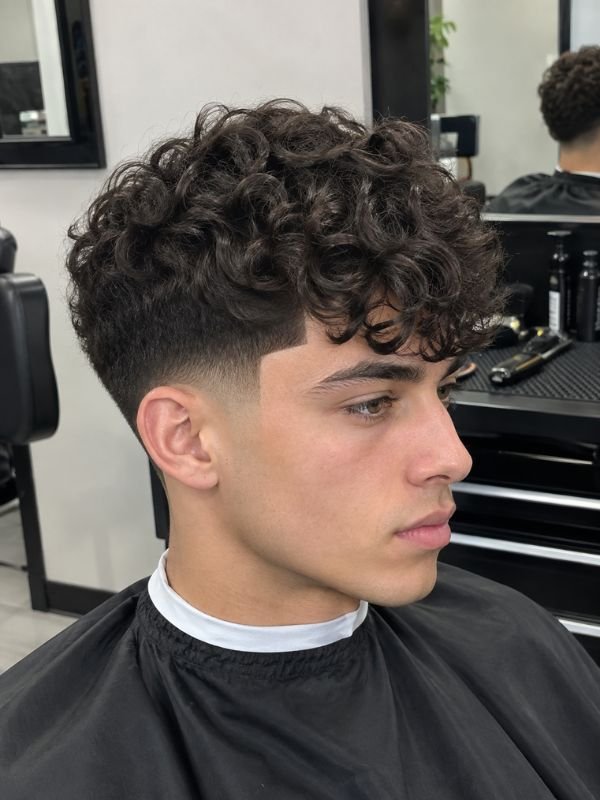
Full curls at the front paired with a crisp, squared hairline across the forehead. Popular on 4C hair for the sharp contrast against a soft top.
20. Rounded Coil Silhouette
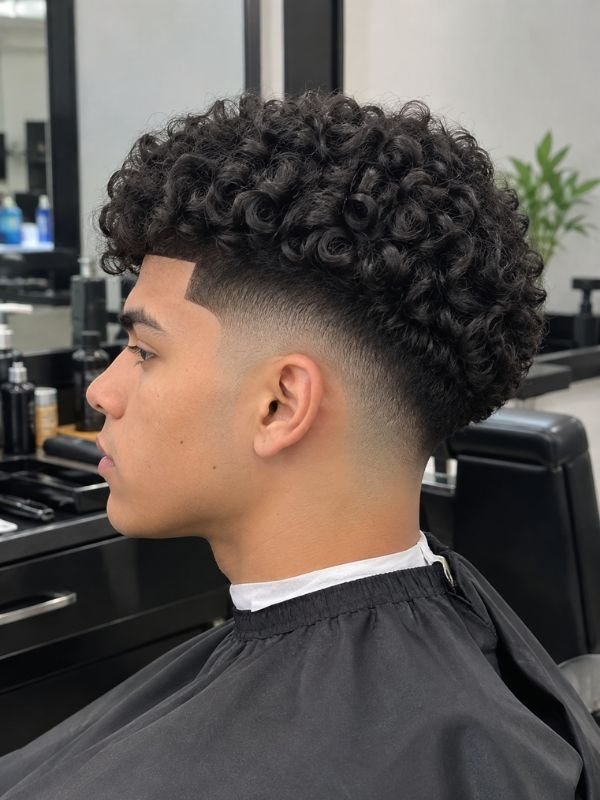
The barber shapes the coily top into a clean, symmetrical dome, sometimes called a shape-up on top. Works on 4A-4C hair with a thick leave-in to prevent dryness.
21. Curly Undercut Blend
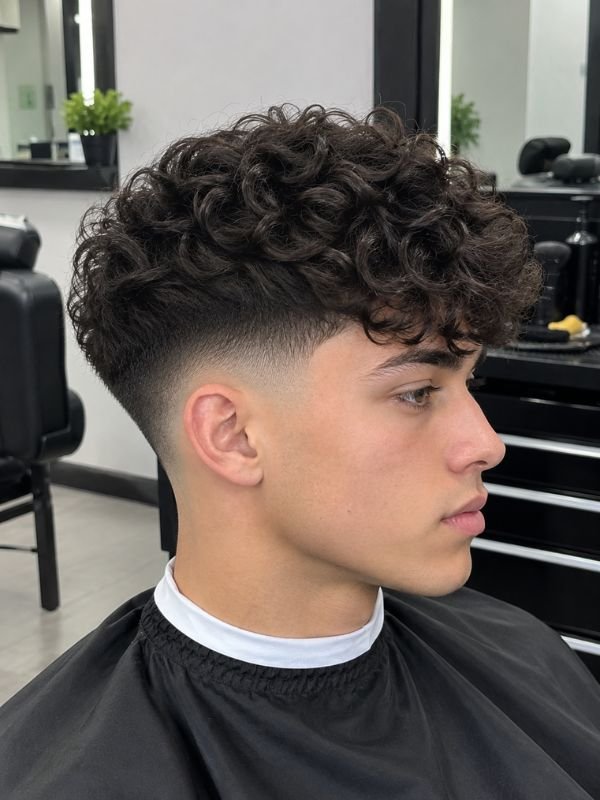
A longer curly top sits over a disconnected, very short undercut rather than a gradual blend. Gives more styling freedom for those who like switching looks.
22. Curly Caesar Hybrid
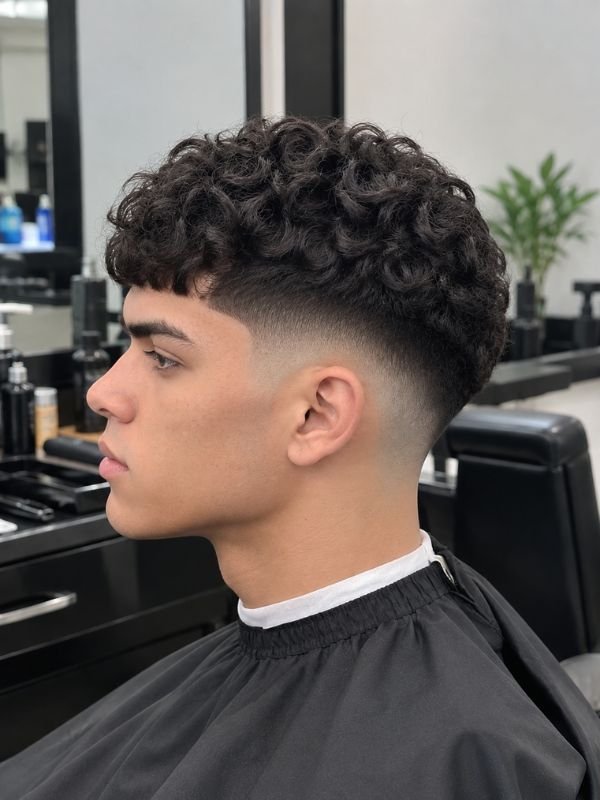
A short, forward-brushed curly top pairs with a high fade instead of the traditional straight fringe. Low maintenance and works on 2C-3B hair.
23. Afro-Top High Taper
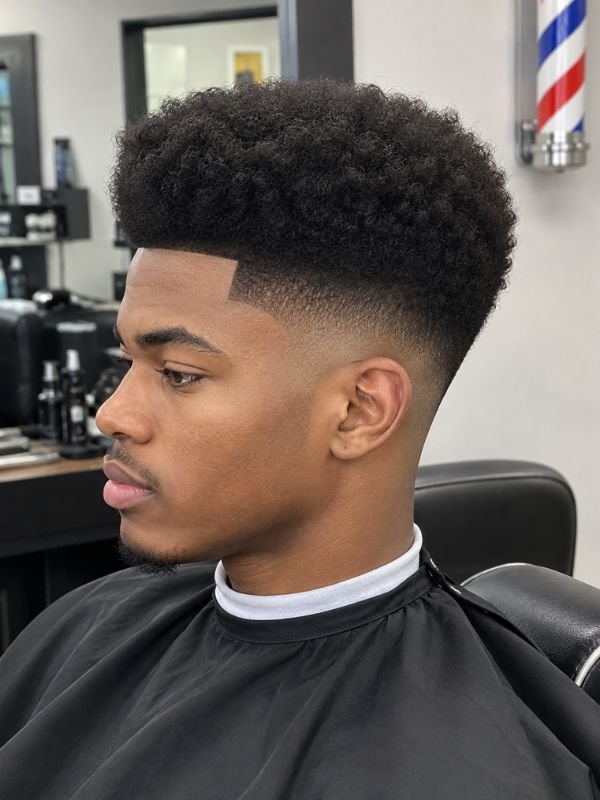
The sides are tapered tightly while the natural afro on top stays full and round. Curl cream and a wide-tooth pick keep the shape even.
24. Curly Mullet
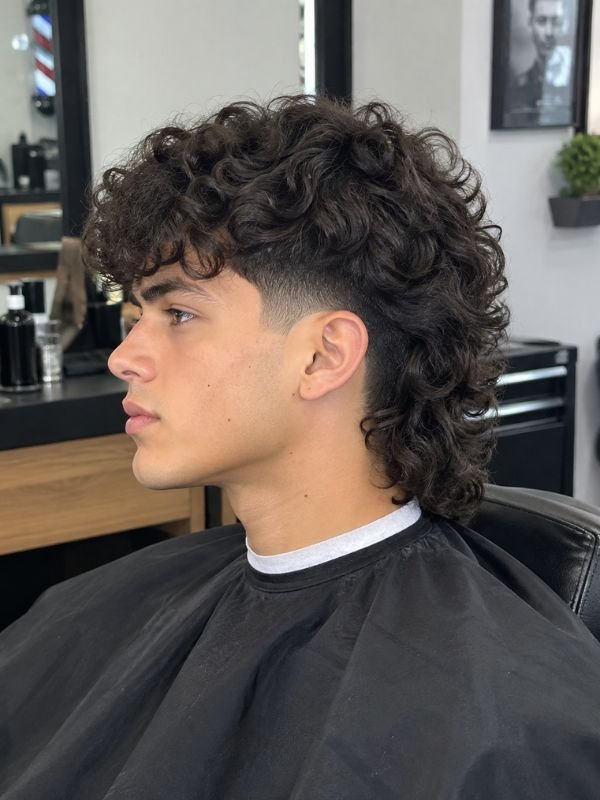
Short, faded sides meet longer curls left at the back and crown. A modern take that works particularly well on 3B-3C texture with natural movement.
25. Locs or Dreads High Taper
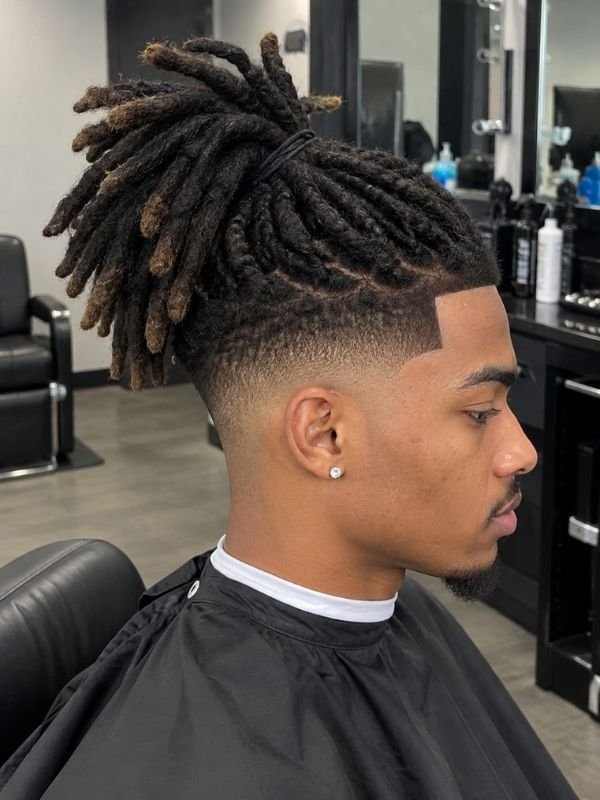
Established locs are left full on top while the sides and back get a sharp, high fade. Needs a barber comfortable blending around loc roots.
26. Design or Razor-Line Accent
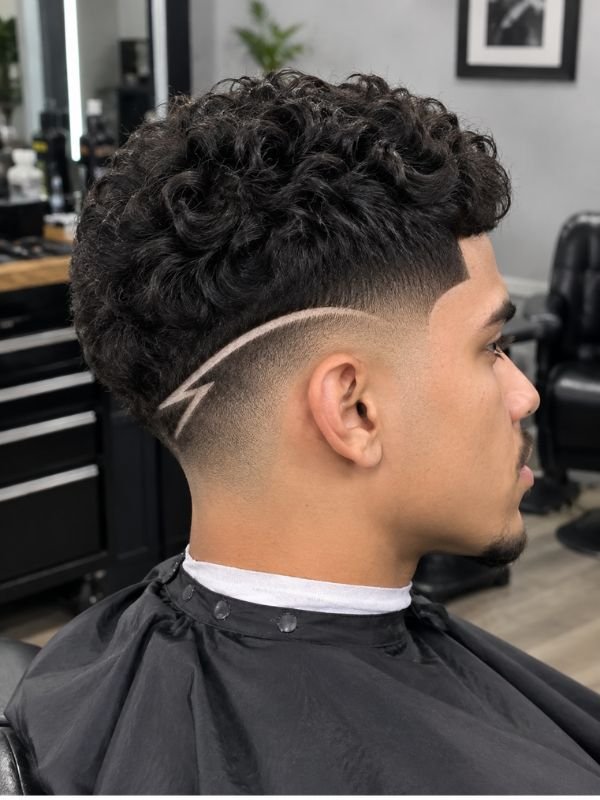
A shaved pattern or single line is added within the fade for a personalized touch. Works on any curl pattern since it doesn’t change the top.
27. Curly Top with Full Beard
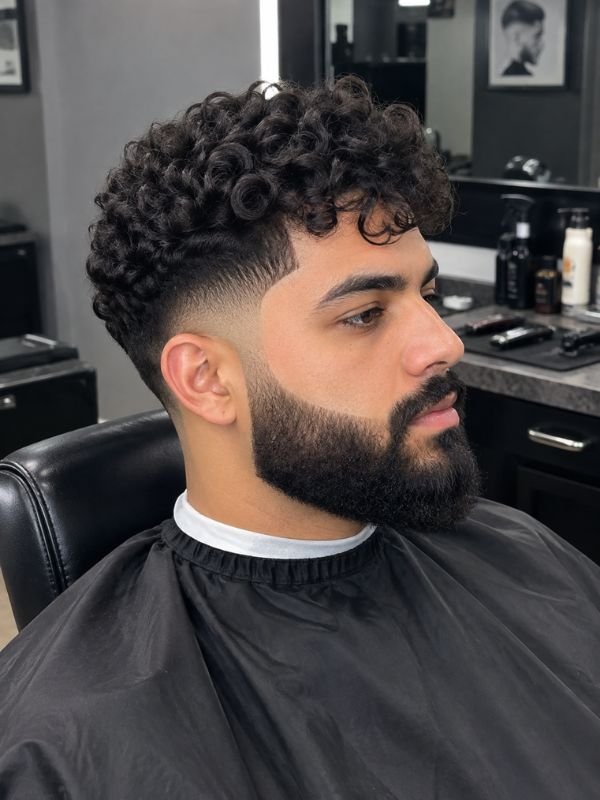
The curly high taper is paired with a fuller beard to balance a square or angular jaw. Keeps focus split evenly between top and lower face.
28. Blowout Curl Volume
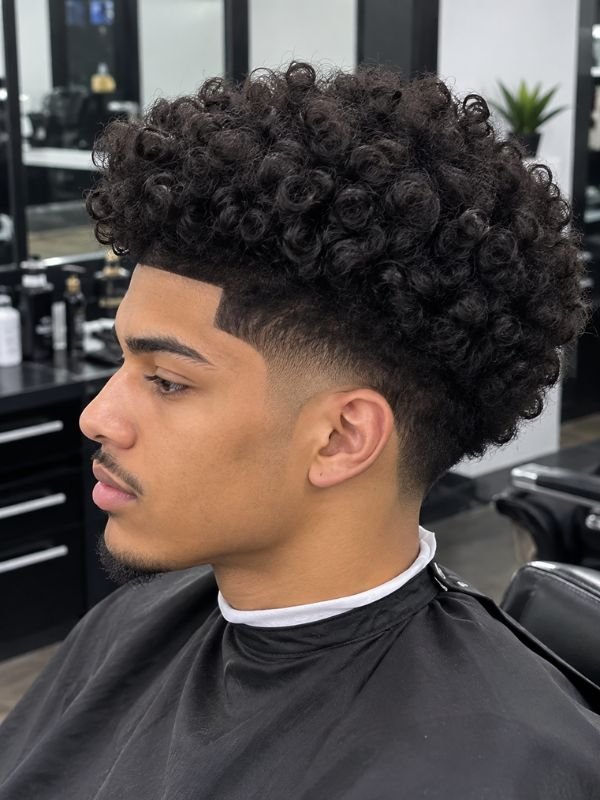
Hair is blow-dried with a diffuser to push curls outward and upward for a retro, voluminous finish. Best on 3B-4A hair with enough length to move.
29. Highlighted or Color Curl Top
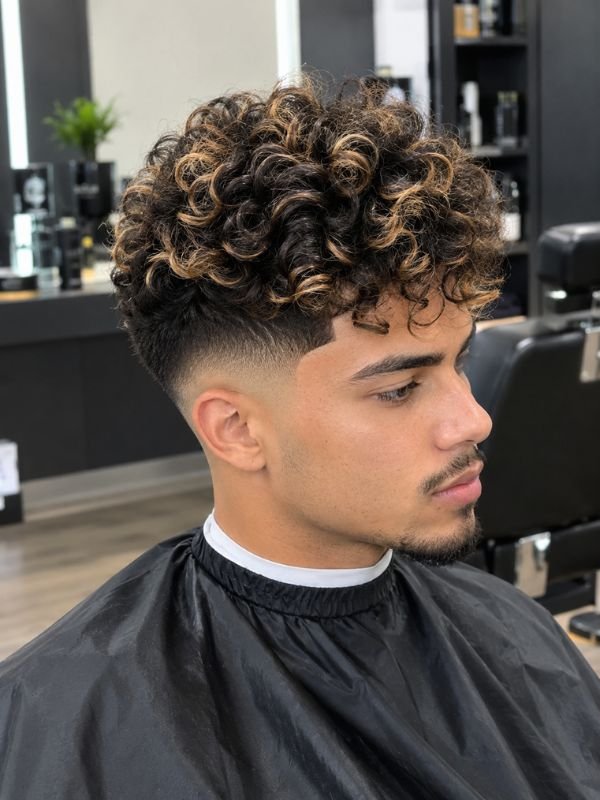
Lightened sections or a solid color change sit on top of the same high taper structure. Adds contrast without changing the cut itself.
30. Perm-Enhanced Wave Top
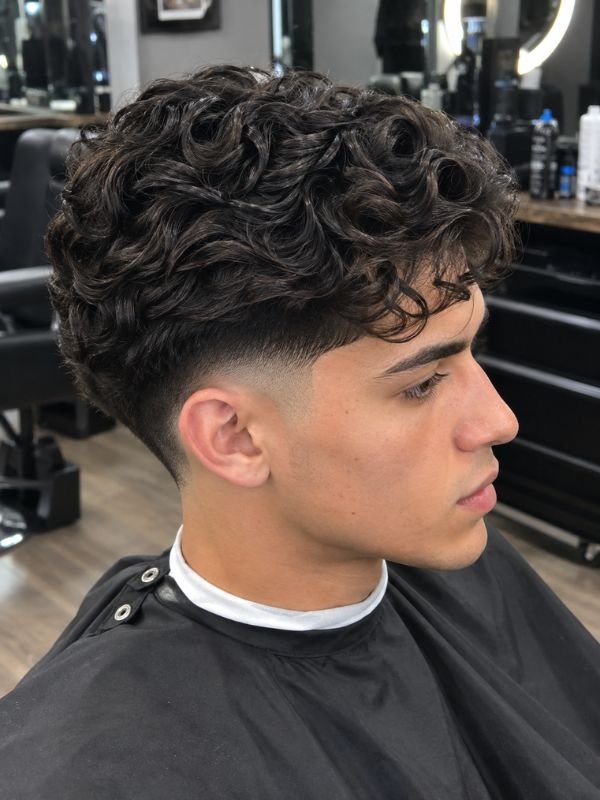
For naturally straight or barely-wavy hair, a perm creates the curl pattern before the high taper fade is applied. Common on Asian and straight-hair textures wanting the curly-top look.
High Taper Fade for Short Curly Hair
A short high taper fade keeps the top around 1 to 2 inches of finished, dry curl length, which is enough to show texture without needing a diffuser session every morning. It’s the lowest-maintenance version of the cut and works well for anyone who wants the contrast without the daily styling commitment.
Because the top is so short, shrinkage matters even more than usual. Ask your barber to leave slightly more length than you think you need, especially on 3C-4C hair, so the finished result doesn’t look sheared instead of styled.
High Taper Fade for Black Men with Curly Hair
On coilier curl patterns, which are common among Black men, the high taper fade is usually paired with a #0.5 or skin finish on the sides and a rounded or squared top shape. The sharper the fade, the more the natural volume of 4A-4C hair stands out by comparison.
A line-up along the hairline is a common addition here, since it adds a crisp edge that holds up well between the every-2-to-3-week fade touch-ups. Finding a barber who regularly works with coily textures matters more for this pattern than almost any other, since dry-cutting technique changes the outcome significantly.
Also Read This Low Taper Fade Textured Crop Haircut: 30 Best Styles for Men
High Taper Fade for White Guys with Curly Hair
For lighter, looser curl patterns, typically 2B through 3B, the high taper fade tends to lean into movement rather than density. The top often gets left a bit longer, 3 to 4 inches, since these patterns have less natural volume than tighter coils and benefit from the extra length to hold shape.
Styling usually needs less product too. A lightweight mousse or sea salt spray is often enough, where heavier creams built for tighter coils would just weigh looser waves down.
How Do You Style a High Taper Fade with Curly Hair?
Getting the top to look intentional instead of frizzy comes down to moisture and heat control, not a long product list.
- Start damp, not soaked. Towel off until hair is roughly 70% dry before applying anything, since soaking wet hair dilutes product and weakens curl hold.
- Apply a leave-in first. This forms the moisture base that everything else sits on top of, especially important for 3C-4C hair.
- Scrunch in a curl cream. Work from the ends up, not with a rubbing motion, which breaks curl clumps apart.
- Diffuse on low heat. Keep the diffuser moving constantly to avoid overheating any one section of hair.
- Stop at 80-90% dry. Letting the last bit air-dry on its own cuts down on frizz far more than diffusing to bone dry.
What Products Work Best for This Cut?
Product choice should follow your curl pattern and hair porosity, not just personal habit, since the wrong weight of product is the most common reason a curly hair fade ends up looking flat or crunchy.
- 2B-2C (wavy): A light mousse or sea salt spray. Heavy creams flatten the wave pattern.
- 3A-3B (curly): A medium-hold curl cream applied to damp hair and scrunched in.
- 3C-4A (coily): A leave-in plus a heavier curl cream, sometimes layered under a curl gel for extra hold.
- 4B-4C (kinky-coily): Start with a thick leave-in or curl butter, add cream or gel, then seal with a light oil.
Low-porosity hair, where the cuticle sits tightly closed, does better with lightweight, water-based products applied to warm damp hair. High-porosity hair absorbs product fast but loses moisture just as quickly, so heavier creams and a sealing oil on top help it hold longer.
What Should You Tell Your Barber?
Two things decide whether this haircut turns out right: whether your barber understands your curl pattern, and whether they cut it dry. The guard number they use on the sides matters just as much as the length you leave on top, so it helps to know the scale before you sit down.
| Guard Number/Finish | Length Left | Best For |
| Skin (0) | Bare skin | Sharpest contrast, coiliest patterns |
| 0.5 | A faint shadow of hair | Slightly softer than skin |
| 1 | Roughly 3mm | A first high taper fade, less commitment |
| 2 | Roughly 6mm | Denser hair needing a more gradual blend |
Bring a specific request rather than a single reference photo. A short barber script like this one works well: “I want a high taper fade starting just above my temples, a skin fade finish on the sides, and I want [X] inches on top since my curls shrink about [Y]% when they dry. Please cut the top dry so you can see how it actually sits.”
Ask upfront whether they cut curly hair wet or dry. Dry is the correct answer for this cut, since cutting curls while stretched removes more length than you’ll see once they spring back.
How Is a High-Taper Fade Different from a Mid- or Low-Taper Fade?
The only real difference between the three is where the fade starts on the head. Everything else, the top styling, the finish at the bottom, stays the same.
| Fade Type | Starting Point | Contrast Level | Grow-Out Speed | Curl Types It Suits |
| High | Just above the temple | Strongest | Fastest, needs trims every 2-3 weeks | All patterns, especially tighter coils |
| Mid | Roughly ear level | Balanced | Moderate | Medium curls, 2B-3C |
| Low | Near the nape/lower ear | Most subtle | Slowest, can stretch to 3-4 weeks | Fine waves, looser texture |
A high taper fade is the boldest of the three because more of the head is affected by the fade, which is also why it grows out faster and needs more frequent barber visits. If a 3-week trim schedule doesn’t fit your routine, a low taper on the same curl pattern will hold its shape noticeably longer.
How Do You Maintain a High Taper Fade with Curly Hair?
Maintaining this cut means running two separate routines at once: keeping the fade line sharp, and keeping the curls on top hydrated. Neither one substitutes for the other.
Touch-up schedule: The fade line is crisp for about the first week, starts to blur by week two, and looks fully grown out by week four. Most people book a fresh trim every 2-3 weeks to stay ahead of that.
| Tier | Typical Price | Visit Frequency | Rough Monthly Cost |
| Chain salon | $20-30 | Every 2-4 weeks | $20-60 |
| Standard barbershop | $30-45 | Every 2-3 weeks | $40-90 |
| Curl-specialist shop | $45-65 | Every 2-3 weeks | $60-140 |
DIY touch-ups aren’t a great idea for curly or coily hair specifically, since the clipper-over-comb blending that keeps a fade smooth takes real practice, and an uneven blend is very visible against tight curls. Trimming the neckline yourself between visits is usually fine; redoing the fade line yourself isn’t.
Between barbershop visits, a light refresh every 2-3 days keeps the curls from drying out: dampen with a spray bottle, work in a small amount of leave-in, then scrunch and either air-dry or diffuse briefly.
Does a High Taper Fade Reduce Bulk?
Yes, noticeably. Removing hair from the sides and back takes weight off the whole head, which lets curls on top spring and move rather than sitting flat under the pull of longer sides.
That said, the fade doesn’t reduce the maintenance your curls need day to day. The hair on top still needs the same leave-in and moisture routine it would need at any length, so if you’re after low-maintenance hair overall rather than just a cleaner shape, a shorter cut across the board is the more realistic option.
Common Mistakes to Avoid
Cutting the Top Wet
Wet curls stretch out, so a barber cutting to a wet length removes more hair than you’ll see once it dries and springs back.
Ignoring Shrinkage When Specifying Length
Asking for “2 inches on top” without mentioning your curl pattern often becomes 1 inch or less once dry, especially on tighter patterns.
Choosing a Barber with No Curly-Hair Experience
A barber unfamiliar with textured hair may blend too harshly or misjudge length, and correcting it can take 6-8 weeks of regrowth.
Over-Diffusing
Drying all the way to 100% is the single biggest cause of frizz. Stopping at 80-90% and letting the rest air-dry keeps the curl pattern intact.
Skipping Leave-In Conditioner
Going straight to curl cream without a moisture base underneath leaves 3C-4C hair especially prone to dryness and breakage.
Attempting a DIY Fade Touch-Up
The blending technique that keeps a fade smooth is difficult to self-execute, and mistakes show up clearly against curly texture.
Frequently Asked Questions
Does a high taper fade work on 4C hair?
Yes, a high taper fade works well on 4C hair. Ask for 4-6 inches on top to allow for shrinkage, and make sure your barber cuts the top dry so they can see the coil pattern before deciding on length.
How much does a high taper fade for curly hair cost?
Expect $30-65 per visit at most barbershops, with curl-specialist shops toward the higher end. At a 2-3 week touch-up schedule, that works out to roughly $60-140 a month.
Should curly hair be cut wet or dry for a taper fade?
Dry. Cutting curls while wet stretches them out, so the barber ends up removing more length than intended once the hair dries and shrinks back into shape.
Can I maintain a high taper fade at home between visits?
You can trim your own neckline, but the actual fade blend is best left to a barber. The clipper-over-comb technique that keeps the line smooth is hard to replicate on yourself, and mistakes are easy to spot on curly hair.
How long do my curls need to be to get a high taper fade?
At least 2-3 inches of stretched length gives enough volume to contrast against the fade. For 4C patterns specifically, aim for 4-5 inches of actual hair to land around 2 inches once it dries.
What’s the difference between a high taper fade and a regular high fade?
A high taper fade leaves a bit more hair above the fade line before blending to skin, while a straight high fade blends higher up the head and shows more scalp overall. The taper version tends to look slightly softer at the transition.
Key Takeaways
A high taper fade for curly hair works across every curl pattern, but the result depends entirely on two things: finding a barber who cuts curls dry, and requesting your length with shrinkage built in rather than as a flat number.
Beyond the cut itself, the daily routine, leave-in conditioner, a curl cream suited to your porosity, and diffusing to 80-90% rather than bone dry, is what keeps the top looking defined between your barber visits. Get both pieces right and this stays one of the lowest-maintenance ways to wear curly hair with real structure.
Hi, I’m Jake Miller a passionate barber based in Los Angeles, California, with over 3 years of hands-on experience in the craft. I specialize in modern fades, clean cuts, precision beard grooming, and classic barbering techniques, blending sharp technical skill with a relaxed, personal touch.
Over these years, I’ve had the opportunity to work with all kinds of clients, each with their own style and personality and that’s exactly what I love about this craft. For me, it’s never just about a haircut. It’s about understanding who you are and bringing that out through precision and care.
Every client who sits in my chair gets my full attention and expertise, because I believe great barbering is where confidence meets individuality. My goal is simple: to make sure you walk out looking sharp and feeling like the best version of yourself.

1 thought on “High Taper Fade for Curly Hair: 30 Styles, Face-Shape & Barber Guide”