

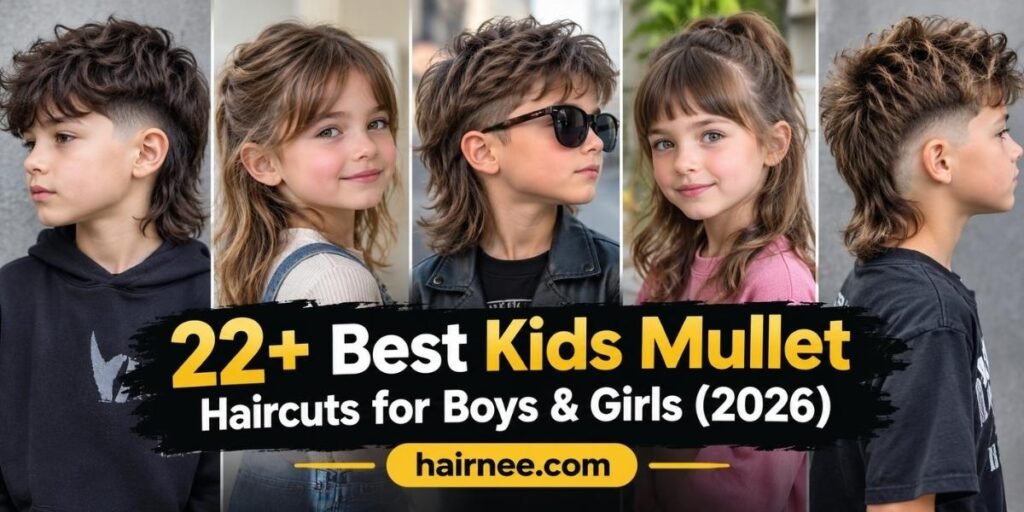
A kids mullet pairs short, tidy hair on top and the sides with noticeably longer hair left at the back. It’s the single most requested kids’ hairstyle at barbershops heading into 2026, and it works on almost every hair type once a child’s hair has grown in thick enough to hold shape.
This guide covers every real variation worth knowing, plus the details most articles skip: actual guard numbers, growing-out timelines, and scripts you can read straight to your barber.
Key Points
- A kids mullet keeps the front and sides short while leaving extra length at the back. This is the classic “short up front, long behind” shape.
- Most barbers wait until a child is around 2-3 years old, once hair has grown in evenly.
- Plan on a trim every 4-6 weeks to keep the fade sharp and the back from growing uneven.
- Tapered and low-fade versions read as the most school-appropriate; skin fades and undercuts are the boldest.
- The style works on straight, wavy, curly, and coily hair. The cutting technique just needs to change per texture.
Popular Kids Mullet Haircuts
The most-requested kids mullet styles right now split into twelve distinct looks, ranging from the barely-there classic taper to bold skin-fade versions. Each one changes how much contrast sits between the front and the back.
| Style | Sides | Back Length | Maintenance |
| Kids Mullet Fade | Skin/low fade | Medium-long | Medium |
| Boys Mullet Haircut | Short, scissor-cut | Medium | Low |
| Burst Fade Mullet Kids | Arc fade around ear | Medium-long | Medium |
| Tapered Mullet Kids | Soft blended taper | Medium | Low |
| Undercut Mullet Kids | Shaved/clipper guard | Long | Medium |
| Shag Mullet Kids | Textured, no hard line | Medium, layered | Low |
Kids Mullet Fade
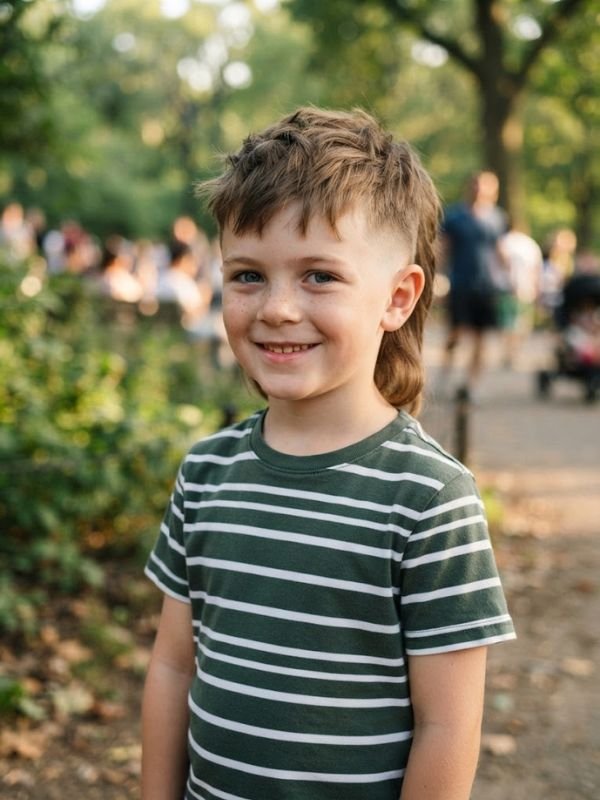
A kids mullet fade is a mullet where the sides are cut with a clipper fade instead of scissors, creating a sharp line between the short sides and the longer back.
The fade can sit high, low, or mid-height on the skull, and it’s the detail that gives this cut its clean, barbershop-fresh look. Kids with thicker hair usually ask for this version because the fade removes bulk without touching length at the crown.
Ask for a low or mid fade if your child’s school has a stricter dress code, since it reads as more subtle than a high skin fade.
Pro Tip: A mid fade grows out far more gracefully than a high skin fade. You’ll get an extra week or two between trims before it looks messy.
Boys Mullet Haircut
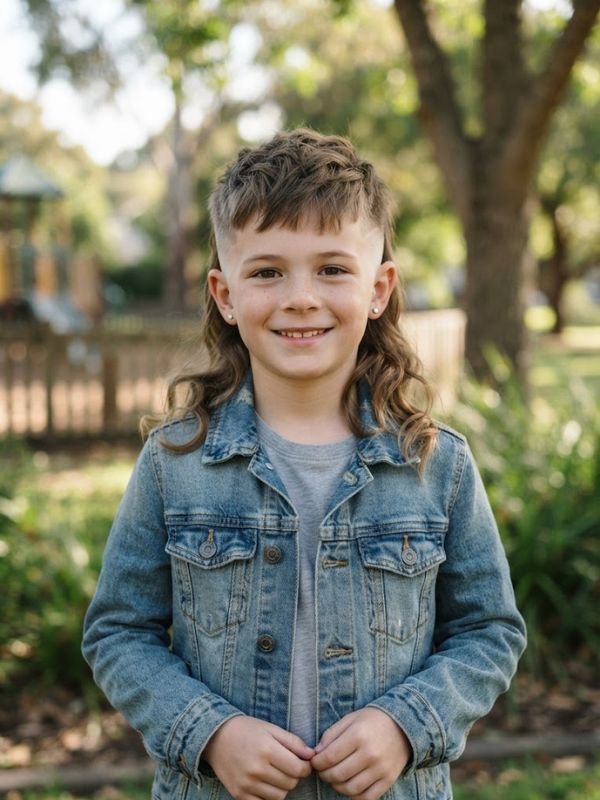
The boys mullet haircut is the base version every other style in this list builds on: short sides, short top, and noticeably longer hair left at the back.
There’s no fade or hard line involved, just scissor-cut sides that blend naturally into the length. It’s the easiest version for a first-time barber visit because almost any barber, even one with no fade experience, can execute it well.
It’s also the simplest style to walk back if your child changes their mind. A few trims and it settles into a regular short haircut.
Burst Fade Mullet Kids
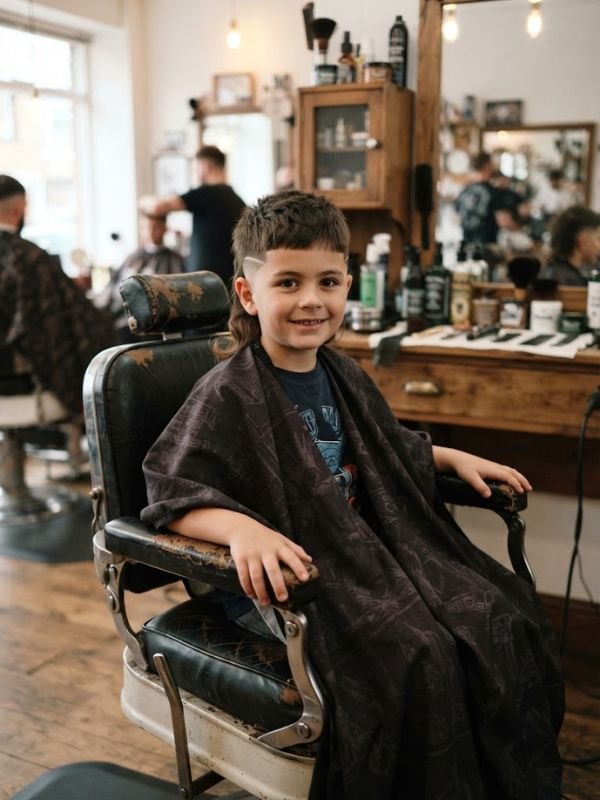
A burst fade mullet kids cut uses a curved, arc-shaped fade that wraps around the ear instead of running in a straight line down the side.
That curve is what separates it from a standard fade. It frames the ear and creates a rounded shape that flows directly into the longer back section. It shows up especially well on thicker or coarser hair, where the curve reduces bulk without shortening the crown.
Pro Tip: Ask specifically for the fade to “wrap the ear, not run past it.” Barbers sometimes default to a straight fade unless you say this.
Cool Mullet Styles for Boys
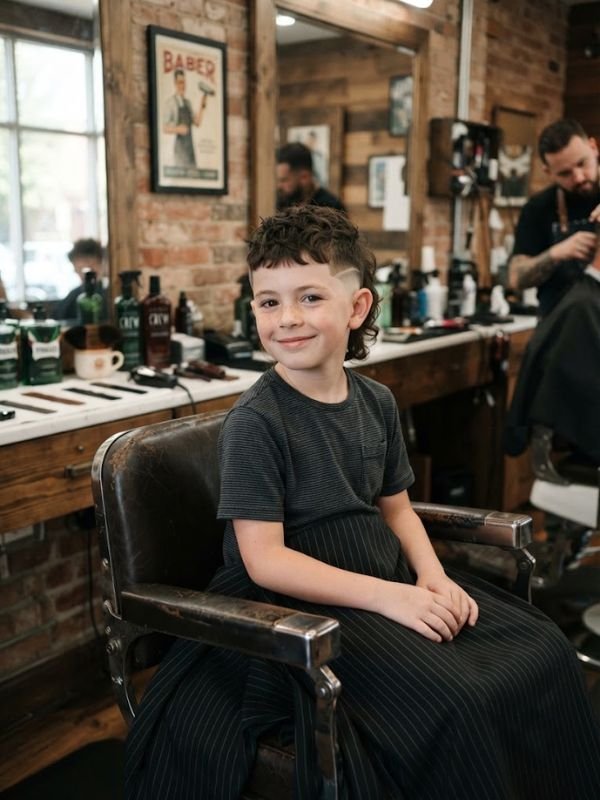
Cool mullet styles for boys are the subtler, everyday versions: short textured layers on top with just enough extra length at the neckline to read as a mullet.
A few specific takes fall under this umbrella. There’s the choppy, textured crop with a plain back, the disconnected version where the top and sides have no blend at all, and the sport-ready cut that keeps hair out of the eyes during recess or practice.
Bring a photo of the exact version you want. “Cool mullet” covers a wide range, and barbers interpret it differently.
Trendy Kids Mullet Ideas
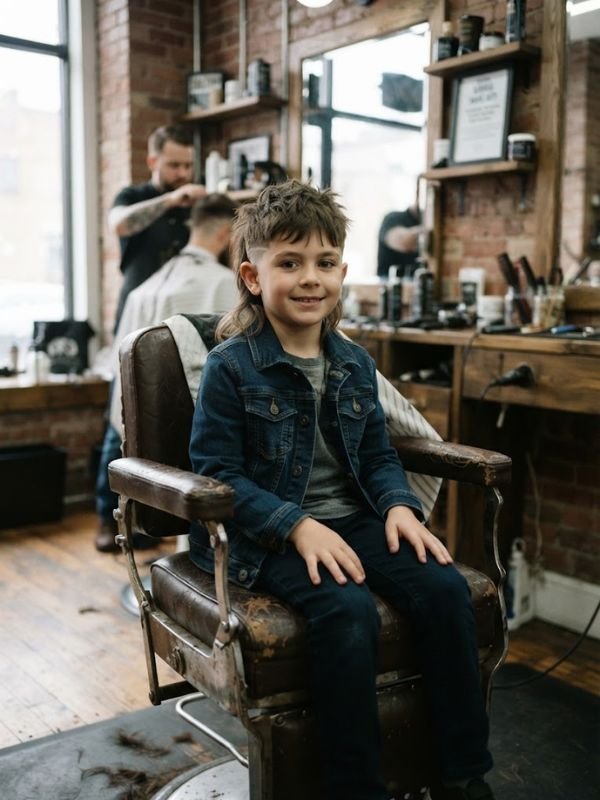
Trendy kids mullet ideas right now lean soft and lived-in, with loose, feathered layers rather than a hard, freshly-cut line.
This softer trend is essentially a wolf-cut/mullet hybrid: choppy movement on top, feathered ends at the back, and none of the sharp contrast of an 80s-style mullet. It suits kids who want the trend without a dramatic change, and parents who aren’t ready for a bold statement cut.
Stylish Mullet Haircut Kids
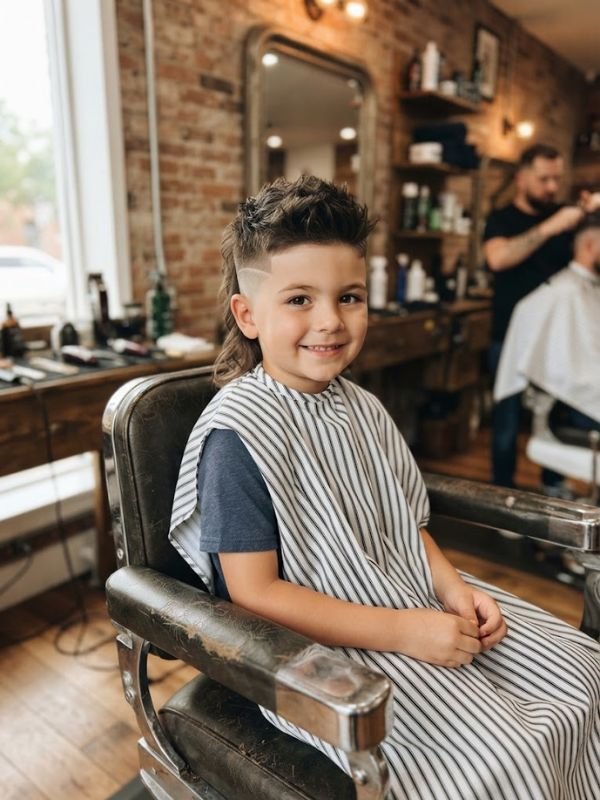
A stylish mullet haircut for kids adds a defined side part or a slightly slicked-back top to the usual mullet shape, making it dressier and more photo-ready.
The back keeps its signature length, but the front is tamed just enough to look intentional at a family event or school photo day. It’s essentially the mullet’s formal-wear version: same silhouette, cleaner finish.
Pro Tip: A small amount of lightweight pomade on the top section is enough to hold the part without making a child’s hair look stiff or greasy in photos.
Also Read This Low Taper Blowout: Styles, Barber Script & Guard Numbers
Fun Mullet Haircut Kids
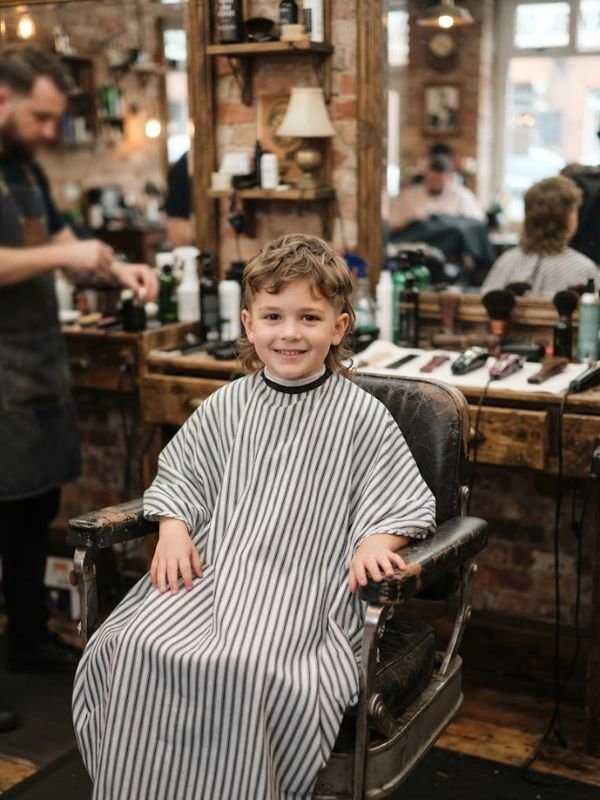
A fun mullet haircut for kids adds a playful detail, like a shaved design, a mini rat tail, or a small color streak, on top of the standard mullet shape.
This version is less about a strict formula and more about letting a child’s personality lead the cut. It stays just as easy to maintain as a plain mullet; the flair is cosmetic, not structural.
Unique Mullet Styles for Kids
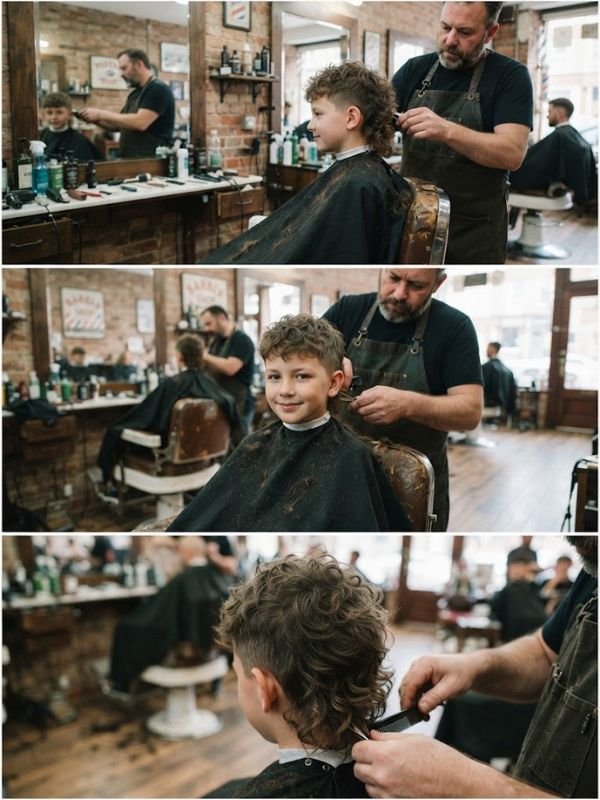
Unique mullet styles for kids combine elements from other cuts, like a faux hawk or an asymmetric fringe, with the traditional short-front, long-back mullet shape.
A faux-hawk mullet raises a strip of hair along the center while keeping the sides short and the back long. A V-cut mullet shapes the back into a sharp V instead of a straight or rounded line, which adds a distinct visual detail without changing the core cut.
Shag Mullet Kids
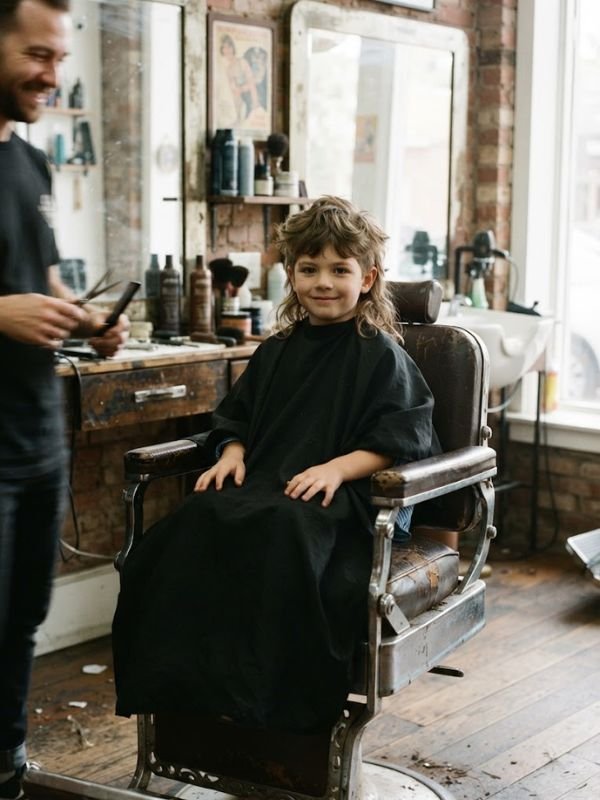
A shag mullet for kids replaces sharp, clean lines with soft, heavily texturized layers throughout the top and back for a loose, lived-in finish.
There’s no hard fade line to maintain here, which makes it one of the lowest-effort mullet versions day-to-day. It works especially well on hair with natural wave or thickness, since the layering controls volume instead of fighting it.
Pro Tip: Ask for point-cutting (not blunt scissor cuts) on the ends. It’s what creates the texture without making hair look thinner overall.
Tapered Mullet Kids
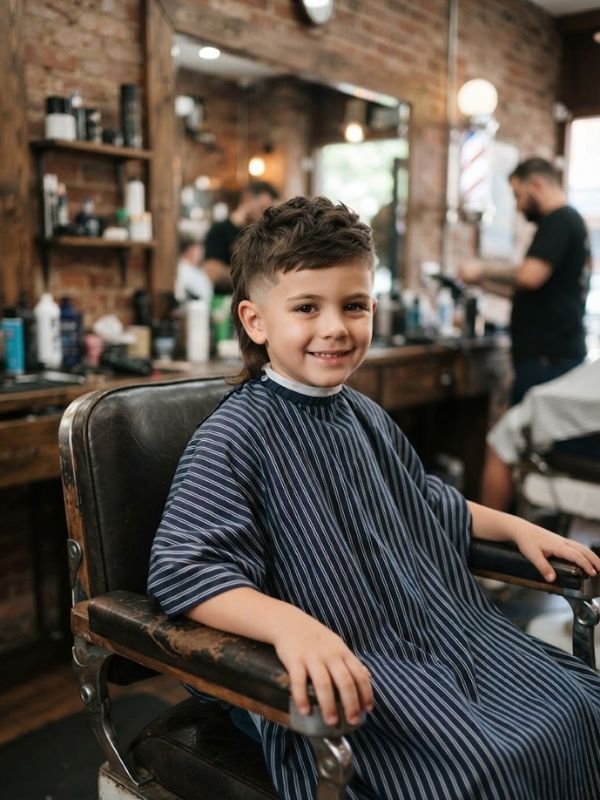
A tapered mullet skips the skin fade entirely, using a gradual, blended taper on the sides instead of a hard clipper line.
This is generally the safest first mullet for school-age kids, since it reads as a neat, traditional short haircut from the front and sides while still keeping the longer back. Strict dress-code schools tend to have the fewest issues with this version.
Undercut Mullet Kids
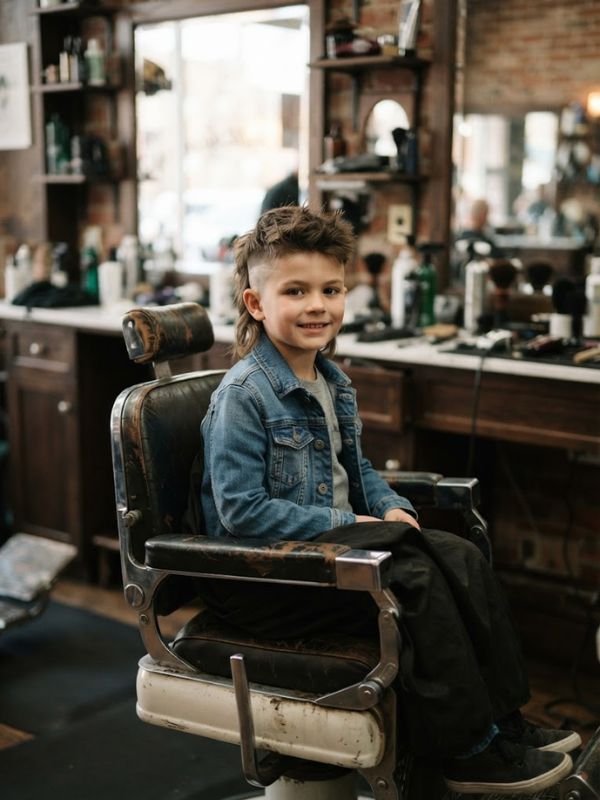
An undercut mullet kids cut shaves or closely clips the hair underneath while leaving the top and back at full, uncut length.
The contrast is much sharper than a standard fade, since there’s a visible line where the short guard meets the long hair rather than a gradual blend. It suits confident, older kids who want their haircut to make a real statement, and it holds its shape well between trims since there’s no fade line to maintain.
Modern Shaggy Mullet Kids
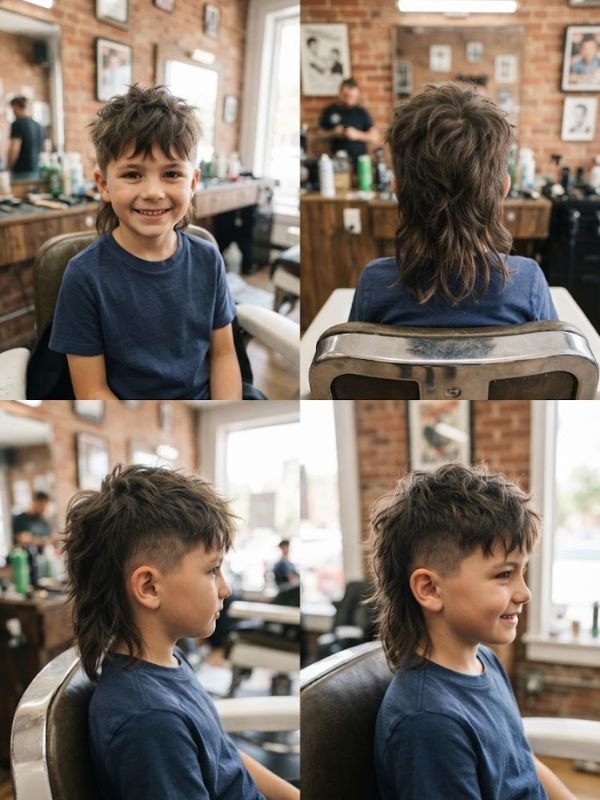
The modern shaggy mullet kids trend blends shag-style texture with a slightly more deliberate shape, favoring movement over sharp precision.
Soft, piecey layers fall naturally instead of sitting in a fixed style, and the cut is designed to look intentionally undone. Because there’s no clean line to grow out of shape, this version actually stretches the time between trims longer than most other mullet styles.
Kids Mullet Haircuts by Hair Type
The right mullet cutting technique changes depending on whether a child’s hair is straight, wavy, curly, or coily. The same haircut name can look completely different across textures.
Curly Kids Mullet
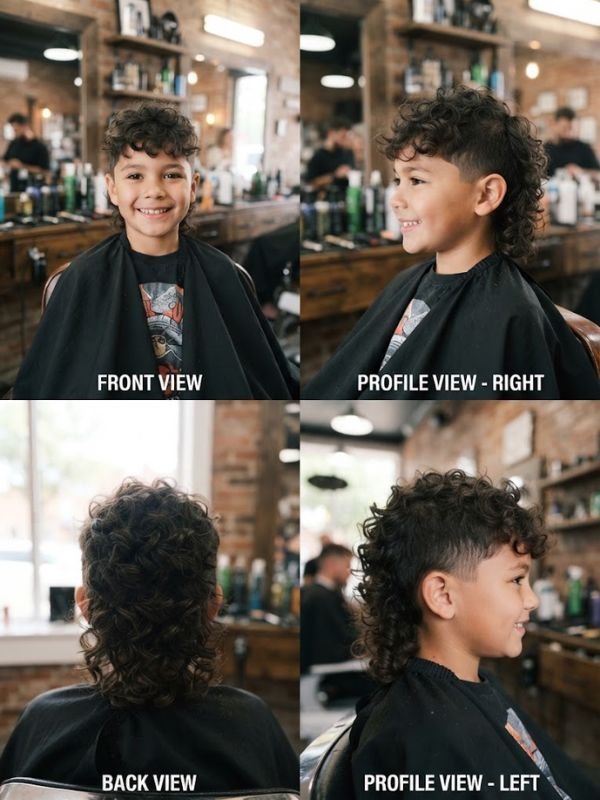
A curly kids mullet uses heavy layering cut while the hair is dry, so the natural curl pattern, not a comb, decides the final shape.
Curls add volume on their own, so a mullet on curly hair rarely needs a hard fade to look defined; the texture does most of the visual work. Cutting curls wet almost always leads to a shape that looks too short once it dries and springs back up.
Pro Tip: Always have curly hair cut dry, or at minimum dry-checked before the final trim. Wet-cut curls shrink unpredictably and the length can come out shorter than planned.
Straight Hair Kids Mullet
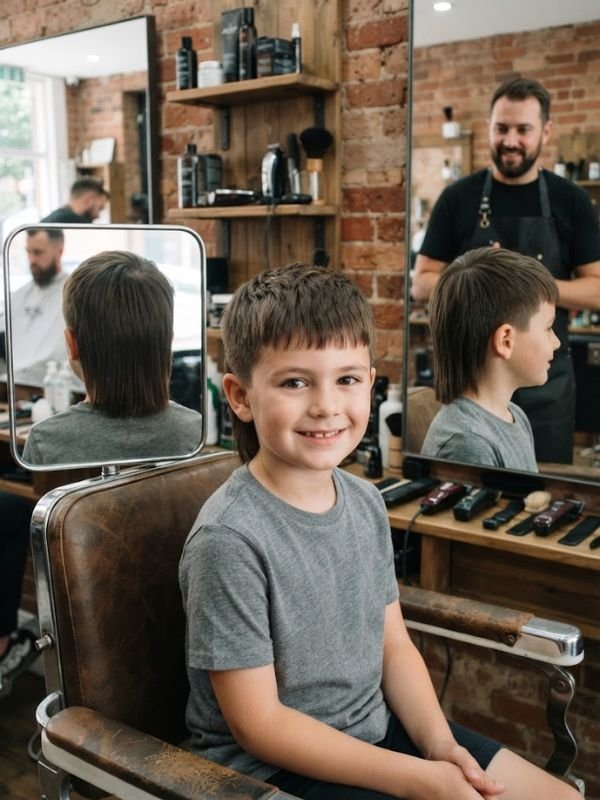
A kids mullet on straight hair holds a clean fade line better than any other texture, since there’s no natural wave to soften the edge.
The front lies flat with minimal effort, the sides taper cleanly, and the back falls straight down instead of curling or flipping outward. That makes straight-hair mullets the lowest-effort version to style day to day. A comb-through is usually all it needs.
Short Kids Mullet Haircut
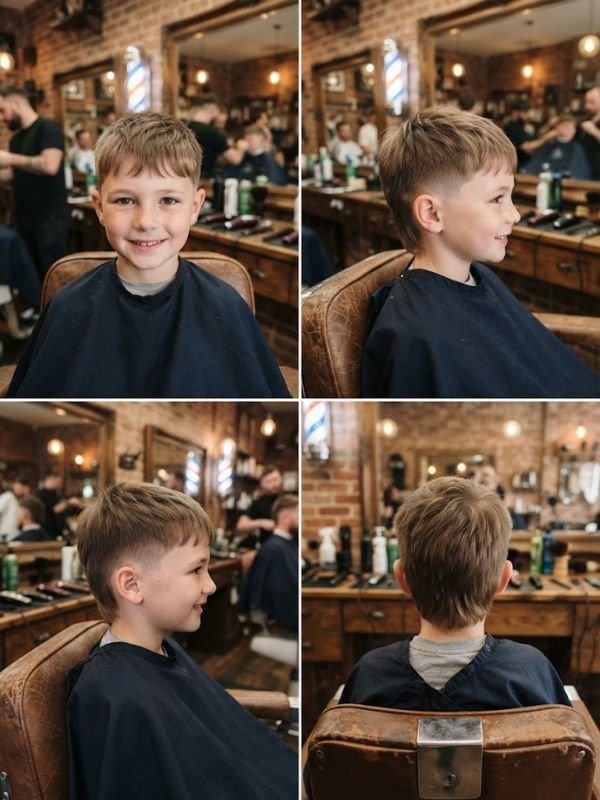
A short kids mullet haircut keeps the back length modest, just past the collar rather than shoulder-grazing, for a subtler, easier-to-manage take on the style.
This version suits younger kids getting their first mullet, since there’s less length to tangle or catch during play. It also grows into a regular short haircut with fewer trims if a family decides not to continue the style.
Long Kids Mullet Hair
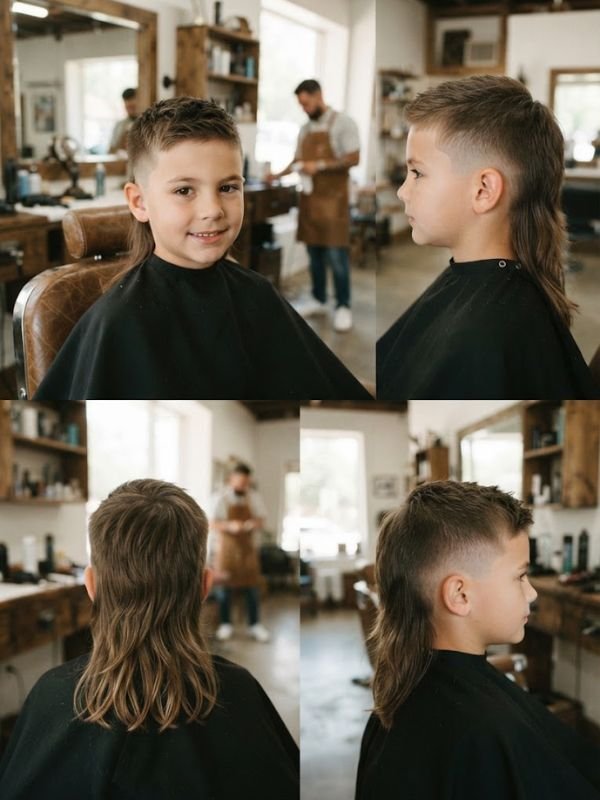
A long kids mullet lets the back grow well past the collar, often to shoulder length, while the front and sides stay short and fully maintained.
This is the boldest version of the cut and usually suits older kids or teens who specifically want the dramatic contrast. It needs more frequent brushing to prevent tangles, since the longer strands catch more easily during active play.
Modern Kids Mullet Variations
Modern takes on the kids mullet trade the sharp, dated 80s silhouette for softer edges, blended fades, and deliberate texture work.
Modern Kids Mullet
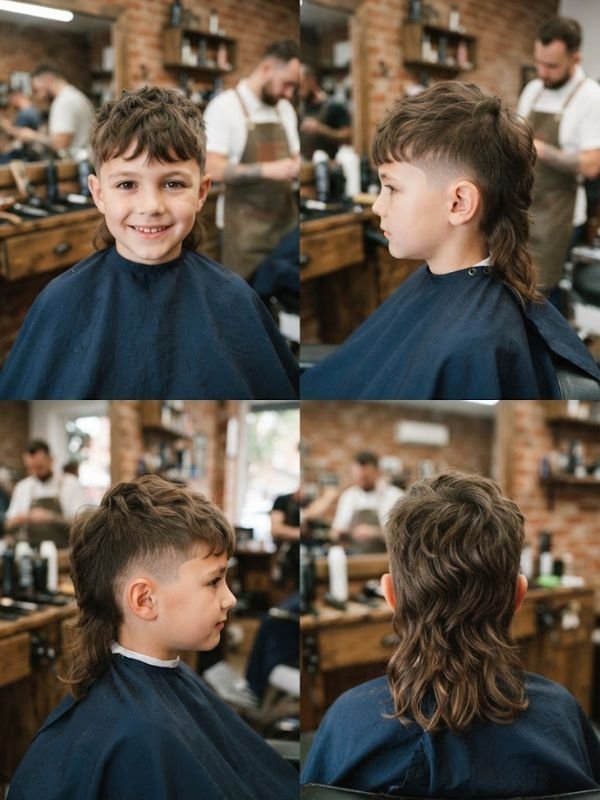
A modern kids mullet keeps the short-front, long-back structure but replaces the old hard lines with a soft, blended fade and textured top.
Where the original 80s mullet had almost no transition between front and back, the modern version blends everything gradually, so it reads as a deliberate haircut rather than an accident of not trimming evenly.
Modern Kids Mullet Fade
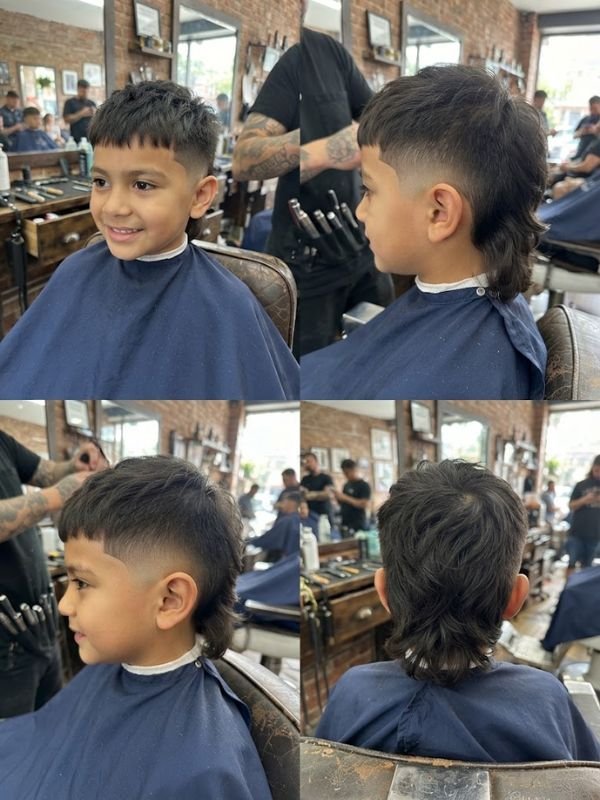
A modern kids mullet fade pairs a clean, barbershop-style skin or mid fade on the sides with a textured, piecey top and a defined back section.
This is the version most barbers picture when a parent says “modern mullet.” It’s polished enough for school photos but still carries the mullet’s signature length at the back.
Girls’ Kids Mullet Haircut
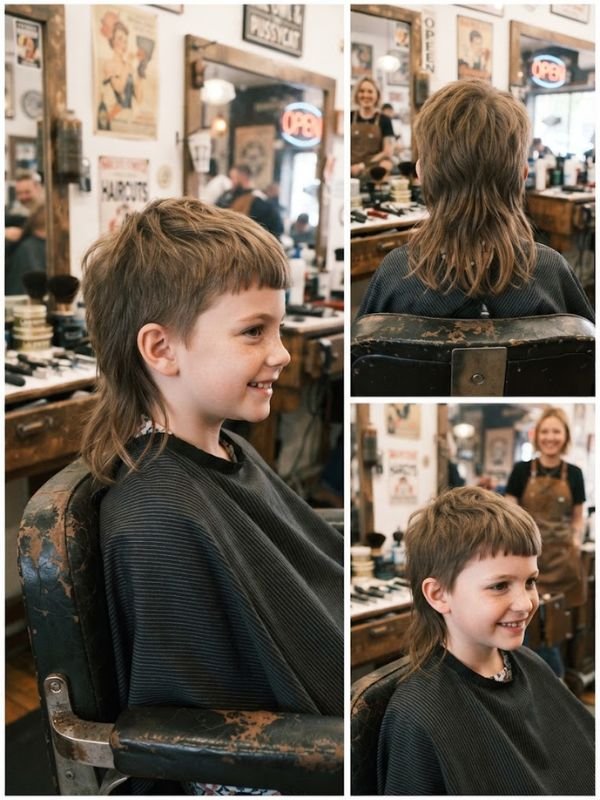
A girls’ kids mullet haircut uses the same short-front, long-back shape as the boys’ version, usually softened with face-framing layers or curtain bangs.
Girls’ mullets typically skip the hard skin fade in favor of a soft taper or simply shorter layers on top, which keeps the cut feeling feminine without losing the core mullet silhouette. Adding subtle curtain bangs at the front is one of the most requested customizations for girls specifically.
Pro Tip: If a full mullet feels like too big a change, ask for a “mullet-inspired shag”: longer layers at the back with soft, face-framing pieces up front and no dramatic length difference.
How to Choose the Best Kids Mullet Haircut
Choosing the right kids mullet comes down to four things: face shape, hair texture, how much daily maintenance a family can realistically manage, and the child’s age.
Best Kids Mullet for Face Shape
Face shape can help narrow down which mullet style will look most balanced, though it’s a starting point, not a strict rule.
| Face Shape | Works Well With | Why |
| Round | More height on top, shorter back | Adds visual length to the face |
| Oval | Almost any mullet variation | Naturally balanced proportions |
| Square | Softer, textured layers | Softens strong jawline |
| Heart | Fuller back, less top height | Balances a narrower chin |
| Long/Oblong | Fuller sides, less height | Adds width instead of length |
Choosing a Mullet for Your Child’s Hair Texture
The best kids mullet for a child’s hair texture is one that works with their natural pattern instead of fighting it: heavier layers for curls, cleaner lines for straight hair.
Fine, straight hair holds crisp fades and defined lines with almost no effort. Thick, coily, wavy, or very curly hair usually looks better with more aggressive layering, since it removes bulk and lets the natural texture create shape on its own.
Low-Maintenance Kids Mullet Styles
The lowest-maintenance kids mullet styles are the tapered mullet, the shag mullet, and the classic boys mullet. None of them require a sharp fade line to stay looking neat.
These three styles grow out gracefully because there’s no hard edge to maintain between trims. A skin fade or undercut, by contrast, starts looking overgrown and messy within two to three weeks.
Age-Appropriate Kids Mullet Haircuts
Most barbers recommend waiting until a child is around 2-3 years old for a defined kids mullet, once hair has grown in thick and even enough to hold the shape.
Toddlers generally suit a shorter, softer version with minimal length difference. School-age kids can handle more defined fades and longer backs, while teens are usually the ones asking for the boldest undercut or skin-fade versions.
Kids Mullet Length Guide (Guard Numbers & Inches)
Most kids mullet fades use a #1 to #3 guard on the sides (roughly 1/8 to 3/8 inch) and leave 2 to 4 inches of length at the back and crown.
| Section | Guard Number | Approx. Length |
| Sides (skin fade) | Skin/0 blending up to #2 | 0 to 1/4 in |
| Sides (low/mid fade) | #1-#3 | 1/8 to 3/8 in |
| Top | Scissor length | 1.5 to 2.5 in |
| Back/crown | Scissor length | 2 to 4 in |
These numbers are a starting range, not a fixed rule. A barber will always adjust based on how thick or fine the hair actually is.
Pro Tip: Write the guard number down in your phone after the first cut you like. It’s the single easiest way to get a consistent result at every future appointment, even with a different barber.
How to Ask a Barber for a Kids Mullet Haircut
The clearest way to ask for a kids mullet is to describe the exact contrast you want between the sides and the back, using a guard number and a length, not just the word “mullet.”
What to Tell Your Barber
Say this to your barber for a reliable result:
“Short on the top and sides, a #2 guard, blended into a low fade, and leave the back at about 3 inches, just trimming the ends to keep it neat.”
Bring a reference photo too. “Mullet” means different things to different barbers, and a photo removes any guesswork.
Fade or Taper: Which Is Better?
A fade uses clippers to gradually shorten hair down to the skin or a very short guard, while a taper blends the sides shorter without ever reaching skin-level shortness.
A taper is the safer, more school-friendly choice since it never creates a hard line. A fade looks sharper and more defined but needs a touch-up every 2-3 weeks to stay looking fresh, versus 4-6 weeks for a taper.
Recommended Hair Length for a Kids Mullet
A workable kids mullet needs at least 2 inches of length at the back to show a visible contrast against the shorter sides and top.
Anything shorter than that and the “mullet” effect barely reads. It just looks like a slightly uneven short haircut. Three to four inches at the back gives the clearest, most photogenic contrast without becoming hard to manage.
Kids Mullet Haircut Cost: What to Expect
A kids mullet typically costs the same as any other kids’ haircut at a given barbershop. There’s no extra charge just for the style itself.
Expect the standard kids’ haircut price at your regular barbershop, though a first-time fade or an undercut may cost a little more if it takes extra time. Recurring 4-6 week trims are the real ongoing cost to budget for, not the initial cut.
How to Style and Maintain a Kids Mullet
Keeping a kids mullet looking sharp between barber visits comes down to three habits: regular trims, the right lightweight products, and daily detangling.
Easy Daily Styling Tips
A kids mullet needs about 60 seconds of daily styling: a quick brush-through of the back and a light finger-comb of the top is usually enough.
Letting hair air-dry preserves natural texture on curly and wavy mullets, while straight-hair versions just need a comb-through to lie flat. Avoid heat tools on young hair altogether; they’re not necessary for this style and add unneeded damage risk.
Best Hair Products for Kids
The best products for a kids mullet are lightweight: a texturizing spray for hold on top, and a leave-in conditioner or light cream for the longer back section.
Heavy gels and waxes tend to look stiff or greasy on kids’ hair and can be harder to wash out. A small amount of texturizing spray, pomade, or leave-in conditioner goes a long way on fine or thin hair especially.
How Often Should a Kids Mullet Be Trimmed?
A kids mullet needs a trim every 4 to 6 weeks to keep the fade sharp and stop the back from growing out uneven.
Faded and undercut versions lean toward the 4-week end of that range, since the fade line grows out fastest. Tapered and shag versions can often stretch to 6 weeks without looking messy.
Growing Out a Kids Mullet: What to Expect
A kids mullet typically looks its messiest around week 3 to 4, when the fade or taper has softened but the back hasn’t grown long enough to look intentional yet.
During that in-between stretch, a light trim just on the sides, without touching the back length, can reset the shape without losing the length parents are growing out. If the goal is eventually letting the whole cut grow into a longer, all-over style, skipping just one side-trim cycle lets the contrast fade naturally instead of abruptly.
Pro Tip: If you’re growing the mullet out completely, tell your barber that upfront. They’ll taper the sides more gradually each visit instead of cutting them back down to a fresh, sharp line.
What Is a Kids’ Mullet Cut?
A kids’ mullet cut is a haircut that’s short on the top and sides and noticeably longer at the back, the same “business in front, party in back” shape as the adult version, scaled for children.
The defining feature is the contrast, not any single fade type or length. That contrast can be created with a sharp skin fade, a soft taper, or even just simple scissor-cut layering, which is why the style adapts so easily to different ages and hair textures.
The Evolution of the Kids’ Mullet Haircut
The mullet’s most famous era was the 1970s and 80s, when it symbolized rebellion in music and pop culture before falling out of fashion through the 90s and 2000s.
Its comeback for kids started in the mid-2010s alongside the adult mullet revival, then accelerated sharply once short-form video made barbershop transformation clips go viral. Modern barbering technique, including clean fades, deliberate texturing, and precise blending, is what separates today’s version from the rougher, less intentional cuts of the original era.
Common Mistakes Parents Make With Kids Mullet Haircuts
The most common mistake parents make is asking for “a mullet” without specifying a guard number or bringing a photo, which leads to wildly inconsistent results between barbers.
A few other common ones: picking a high skin fade without checking the school handbook first, skipping trims until the back gets tangled, and using heavy adult styling products on a child’s fine, thinner hair. Each of these is easy to avoid just by being specific during the appointment and sticking to the 4-6 week trim schedule.
Pro Tip: Take a phone photo of the finished cut from the back at every appointment. It becomes your own reference photo for the next barber visit, even if you switch barbershops.
Also Read This Low Taper Blowout: Styles, Barber Script & Guard Numbers
Kids Mullet Haircuts for School and Special Occasions
The most school-appropriate kids mullet is a tapered or low-fade version, since it reads as a neat, traditional short haircut from the front and sides.
For special occasions, like family photos, weddings, or holidays, a side part or slightly slicked-back top (the stylish mullet haircut kids variation) dresses the same cut up without a trip to the barber. Always check a school’s specific dress-code wording before a bold undercut or skin-fade version, since some schools do restrict hard-line fades.
Modern kid mullet
A modern kid mullet built for toddlers and very young children uses a soft, guard-blended taper with no visible line at all, since younger scalps and hair don’t yet hold a sharp fade well.
This toddler-friendly take skips the skin fade entirely in favor of a gentle #3-#4 guard blend, keeping the whole cut forgiving as fine baby hair continues to thicken and change over the following year.
Modern kid Mullet curly
A modern kid mullet curly look pairs natural curls with one deliberate modern detail, a low skin fade on the sides, rather than leaving the sides at the same length as the curly top.
That contrast between a crisp fade and loose, bouncy curls at the crown and back is what makes this specific combination read as “modern” rather than just “curly hair left long.” It’s a more styled, barbershop-finished take than a plain curly mullet with no fade at all.
Kids mullet boy
A kids mullet boy cut built for sports and everyday play keeps the sides short enough to stay out of the eyes during activity, with just enough extra length at the back for personality.
Unlike the dressier or more dramatic mullet versions, this one prioritizes function. Sweat doesn’t stick to the neck as easily, and coaches rarely have an issue with it since it stays tidy during a game. It’s the version most requested by active kids who play a sport year-round.
Frequently Asked Questions
At what age can a child get a mullet haircut?
Most barbers recommend waiting until around age 2 to 3, once a child’s hair has grown in thick and even enough to hold the shape.
There’s no strict rule, though. Some toddlers with thick hair can get a soft version even earlier, while fine or slow-growing hair may need a bit longer.
Is a kids mullet appropriate for school?
Yes, tapered and low-fade kids mullet versions are generally school-appropriate since they read as a neat, traditional haircut from the front.
Skin fades and undercuts are bolder and more likely to run into stricter dress-code policies, so it’s worth checking your school’s specific handbook first.
How often does a kids mullet need to be trimmed?
A kids mullet needs a trim every 4 to 6 weeks to keep the fade or taper looking sharp and the back growing in evenly.
Faded and undercut versions tend to need the 4-week end of that range, while tapered and shag versions can usually stretch closer to 6 weeks.
Does a kids mullet work with curly hair?
Yes, curly hair actually suits a kids mullet especially well, since the natural volume and texture do most of the styling work on their own.
The key is having curls cut dry rather than wet, so the barber can see the true curl pattern and shrinkage before trimming.
What’s the difference between a kids mullet and a wolf cut?
A kids mullet has a clear, defined length contrast between a short front and a long back, while a wolf cut blends choppy, textured layers all over with no hard length break.
Many “trendy” mullet styles today actually sit somewhere between the two: a softened mullet with wolf-cut-style texture on top.
Can girls get a kids mullet haircut?
Yes, girls’ kids mullet haircuts are increasingly common, usually softened with face-framing layers or curtain bangs rather than a hard skin fade.
The core short-front, long-back shape stays the same as the boys’ version. Only the styling details typically change.
How much does a kids mullet haircut cost?
A kids mullet usually costs the same as any other kids’ haircut at your regular barbershop, since the style itself doesn’t carry an extra fee.
The real ongoing cost is the 4-6 week trim schedule needed to keep the shape looking intentional rather than just overgrown.
Final Thoughts
A kids mullet works because the core idea is simple: short and tidy where it needs to be, longer and expressive where a child wants some personality to show. From a soft toddler taper to a bold burst fade, there’s a version that fits nearly any age, hair texture, and school dress code.
The easiest way to get a consistent result is to be specific: bring a photo, mention a guard number, and stick to the 4-6 week trim schedule. Do that, and a kids mullet stays looking sharp and intentional at every stage of growing it out.
Hi, I’m Jake Miller a passionate barber based in Los Angeles, California, with over 3 years of hands-on experience in the craft. I specialize in modern fades, clean cuts, precision beard grooming, and classic barbering techniques, blending sharp technical skill with a relaxed, personal touch.
Over these years, I’ve had the opportunity to work with all kinds of clients, each with their own style and personality and that’s exactly what I love about this craft. For me, it’s never just about a haircut. It’s about understanding who you are and bringing that out through precision and care.
Every client who sits in my chair gets my full attention and expertise, because I believe great barbering is where confidence meets individuality. My goal is simple: to make sure you walk out looking sharp and feeling like the best version of yourself.

1 thought on “22+ Best Kids Mullet Haircuts for Boys & Girls (2026)”